
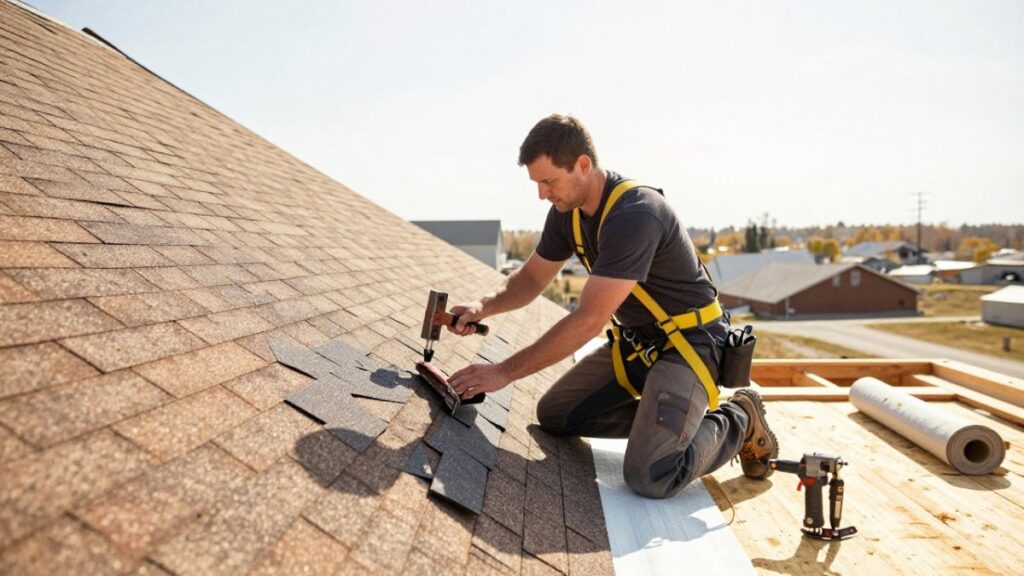
Last Updated: November 10, 2026
Quick Summary
The average roof replacement cost in Alberta depends on home size, roofing material and tear-off work. A small bungalow typically runs about $9,000 to $14,000, while a large two-storey home can reach $24,000 to $38,000, all in Canadian dollars before GST.
- Asphalt shingle replacement commonly lands between $6 and $11 per square foot installed, including tear-off and disposal.
- Architectural asphalt shingles cost about $450 to $750 per square and last roughly 25 to 30 years.
- Metal roofing costs about $1,200 to $2,200 per square and can last 40 to 50 years or more.
- Ask every contractor to itemize materials, labour, tear-off, disposal, permits and contingency so quotes compare fairly.
- A quote far below the typical ranges often means a missing item such as disposal, underlayment or flashing.
Table of Contents
- What the Average Roof Replacement Cost in Alberta Looks Like in 2026
- What Drives the Price of a Roof Replacement
- Roof Shingle Replacement Cost Compared to a Full Replacement
- Signs You Need a New Roof Rather Than Repairs
- Roof Replacement Timeline From Quote to Finished Work
- How Insurance, Hail Claims and Deductibles Affect Your Costs
- Booking Your Free Estimate With HighLow Roofing
- Frequently Asked Questions
What the Average Roof Replacement Cost in Alberta Looks Like in 2026
Homeowners across Southern Alberta often ask how much a new roof will cost. The honest answer is that roof replacement cost in Alberta depends on the size of the house, the roofing material, and how much work is needed to remove the old roof. At HighLow Roofing & Exteriors, we walk every homeowner through these factors before any work starts, so the number on the quote makes sense.
A roof replacement is the full removal of the existing roofing system and the installation of a new one. It covers the shingles, the underlayment, the flashing, and the ventilation. Because the price is built from several parts, two houses on the same street can have very different quotes.
Typical Price Ranges by Home Size
Most practitioners find that a standard asphalt shingle replacement on a single-family home falls into a predictable band once roof size is known. The figures below are planning ranges, not quotes, and assume a complete tear-off with new underlayment and flashing. They are stated in Canadian dollars before GST.
| Home profile | Approximate roof area | Typical planning range (CAD, before GST) |
|---|---|---|
| Small bungalow | 1,200-1,500 sq ft | $9,000-$14,000 |
| Mid-size bungalow | 1,500-2,000 sq ft | $12,000-$18,000 |
| Two-storey home | 2,000-2,800 sq ft | $16,000-$26,000 |
| Large two-storey or walkout | 2,800-3,500 sq ft | $24,000-$38,000 |
Typical planning range (CAD, before GST)
Pricing depends on roof pitch, complexity, and material choice, and current figures come from a project-specific quote.
Cost per Square Foot
Contractors price roof work by the “square,” where one square covers 100 square feet of roof surface. On a like-for-like basis, asphalt shingle replacement in the province commonly lands somewhere between $6 and $11 per square foot installed, including tear-off and disposal. That per-square-foot figure is the fastest way to sanity-check a quote: divide the total by the roof area and see whether the result sits inside the band.
Material Cost Comparison
Material choice is an important factor in the final price, and the right option depends on your home and budget.
| Material | Approximate installed cost per square (CAD) | Typical service life |
|---|---|---|
| 3-tab asphalt shingle | $350-$550 | 15-20 years |
| Architectural (laminate) asphalt shingle | $450-$750 | 25-30 years |
| Premium architectural shingle | $700-$1,100 | 30-40 years |
| Metal roofing (standing seam or panel) | $1,200-$2,200 | 40-50+ years |
| Cedar shake | $1,100-$1,900 | 30-40 years |
| Synthetic slate or composite | $1,500-$2,600 | 40-50 years |
What a Sample Estimate Looks Like Line by Line
Published ranges vary widely, so a transparent breakdown helps you compare quotes fairly. A representative mid-size bungalow replacement might break down roughly as follows, in Canadian dollars before GST:
- Materials (shingles, underlayment, flashing, vents): $5,500-$8,000
- Labour and installation: $4,500-$7,000
- Tear-off of old roofing: $1,200-$2,000
- Disposal and dump fees: $600-$1,200
- Permits and inspection: $150-$500
- Contingency for decking repair: $500-$2,000
Ask any contractor to present their quote with each line item shown separately. A bid that lumps everything into one number is harder to compare.
Regional Differences Across the Province
Costs also move with local labour rates, material supply, and disposal fees. Before comparing quotes, make sure each one covers the same scope of work.
- Full replacement includes tear-off, disposal, underlayment, and new shingles
- Partial repairs address only damaged areas and cost less upfront
- Quotes that leave out disposal or flashing may look cheaper but cost more later
Watch out: a quote that lands far below the ranges above usually signals a missing line item, often disposal, underlayment, or flashing, rather than a genuine bargain.
What Drives the Price of a Roof Replacement
Several factors shape the final price. Some are fixed by the house itself, while others depend on the choices you make. Knowing them helps you read a quote with confidence, and knowing roughly how much each one adds lets you spot a bid that is padded or one that is missing scope.
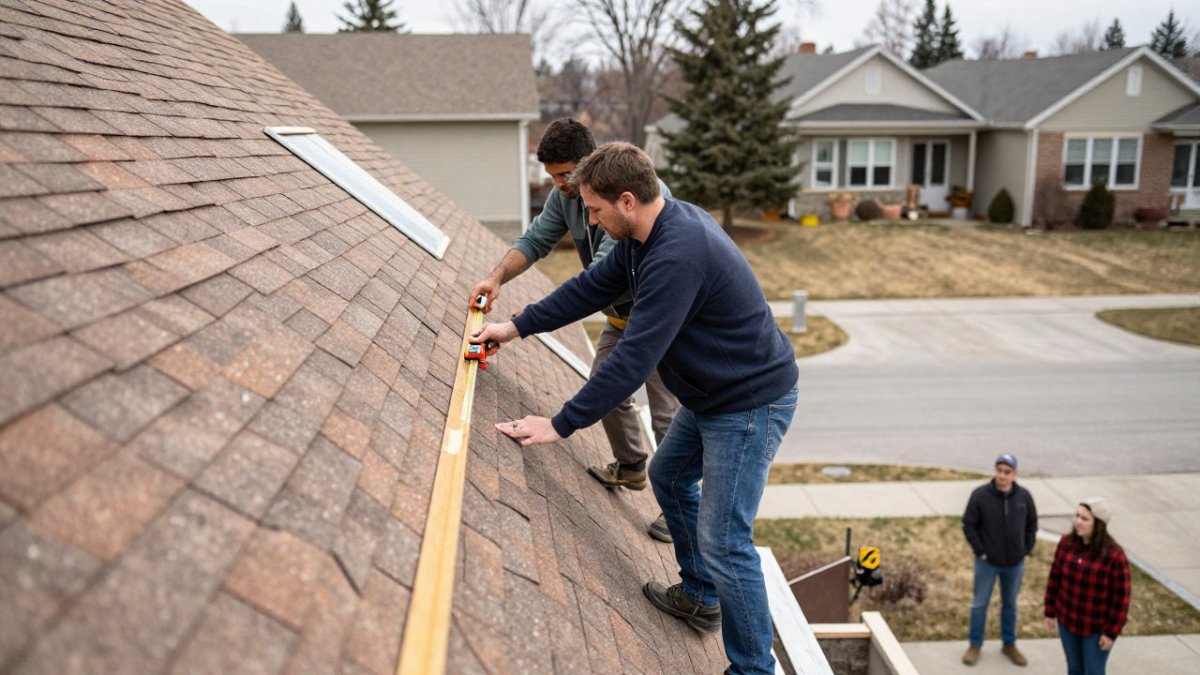
Roof size is the biggest driver. Contractors measure in squares, where one square covers 100 square feet of roof surface. More squares mean more materials and more labour hours.
Roof Size, Pitch and Complexity
A steep roof takes longer to work on and needs extra safety equipment. Steep pitches require extra staging and safety equipment, and multiple dormers, valleys, and skylights add cutting and flashing work.
A simple gable roof is usually the least expensive shape to replace. A hip roof with many planes, or a roof with several penetrations, sits at the top of its size band.
Access also matters. A home with tight side yards or a difficult drive for equipment may need more time on site, and a bin or lift that cannot be placed close to the house adds handling time.
Watch out: a roof that looks simple from the street can hide extra framing or decking repairs once the old shingles come off. Ask your contractor how they plan to handle hidden damage before work begins, and whether decking repair is priced per sheet or as a contingency.
Tear-Off, Disposal and Underlayment
Removing the old shingles is labour-intensive, and the debris has to go somewhere. A roof with two or three existing layers takes more time to strip and produces more debris.
Underlayment is the protective layer under the shingles. Standard felt is the baseline; upgrading to a synthetic or ice-and-water membrane improves protection against wind-driven rain and ice dams common in Alberta winters. In areas prone to ice damming, a membrane along the eaves is often worth the extra cost.
Ventilation and Flashing
Ventilation is easy to overlook but affects both cost and roof life. Ridge vents, soffit vents, and intake baffles may need to be added or replaced. Poor ventilation shortens shingle life and can void a manufacturer’s warranty, so confirm the quote addresses it.
Flashing around chimneys, skylights, and wall intersections is a common source of leaks. Replacing flashing depends on the number of penetrations in the roof. A quote that reuses old flashing to save money is a false economy.
Season, Scheduling and Contractor Availability
Roofing demand peaks from late spring through early fall, and quotes in peak season can run higher than in shoulder months. Winter work is possible but slower and sometimes carries a premium for cold-weather handling. Booking in early spring or late fall can sometimes secure better pricing and faster scheduling.
How These Drivers Combine
Roof pitch, dormers, a chimney, and additional layers of old shingles all affect the scope of work, which is why two houses of identical square footage can receive different quotes. Comparing totals without comparing scope is misleading.
Roof Shingle Replacement Cost Compared to a Full Replacement
Shingle repair covers fixing a limited section of shingles, usually after a storm or a fallen branch. It is typically less costly than a full replacement and suits roofs that are otherwise in good condition.
Full replacement makes sense when shingles are widely cracked, curling, or missing across large areas. Patching many small sections on an aging roof can become impractical, so replacing the whole system is often the better choice.
Signs You Need a New Roof Rather Than Repairs
Some warning signs point to a roof that has reached the end of its useful life. Catching them early can prevent water damage inside the home.
- Shingles that are curling, cracking, or losing granules
- Dark streaks or moss growing across the roof surface
- Daylight visible through the roof boards in the attic
- Water stains on ceilings or walls after rain or snowmelt
- Sagging areas along the roofline
If several of these appear at once, a full replacement is usually the more practical choice. Repairs can still make sense when the damage is limited and the rest of the roof is sound.
Roof Replacement Timeline From Quote to Finished Work
Most residential roof replacements move through a few clear stages. Knowing them helps you plan around the weather and your schedule. You can compare your options in Roof Repair Versus Replacement before you book.
- Site visit and measurement
- Written quote with materials, labour, and disposal listed
- Scheduling, which depends on material supply and weather
- Tear-off and installation
- Final inspection and cleanup
Weather is the main source of delays in Southern Alberta. Strong winds, rain, or cold temperatures can push work back. Review Roof Replacement Before And After Results to see how finished projects look and what to expect on site.
How Insurance, Hail Claims and Deductibles Affect Your Costs
Hail damage is a common cause of roof replacement in Alberta. If your home insurance covers hail, the claim may pay for part or all of the new roof, minus your deductible. Your deductible is the amount you pay before the insurer covers the rest.
Start by documenting the damage with photos and dates. Then contact your insurer and ask for an adjuster to inspect the roof. Keep copies of every quote and report.
For a real example of how a claim plays out, see the Hail Damage Roof Claim Example. If you are also reviewing exterior repairs, our Siding Replacement Cost: A 2026 Guide explains what to expect for related work.
Read your policy carefully. Some policies set a separate hail deductible, and some limit coverage based on the age of the roof. Ask your insurer to explain these terms in plain language before you sign a contract.
Booking Your Free Estimate With HighLow Roofing
A clear quote is the best way to understand the true cost of your roof. At HighLow Roofing & Exteriors, we measure your roof, inspect for damage, and explain each line of the estimate. Use our free estimate request to start the process.
Before you call, have these details ready:
- The age of your current roof, if you know it
- Any leaks, stains, or storm damage you have noticed
- Photos of the roof or attic, if available
- Your insurance information, if you plan to file a claim
To request your estimate, follow the steps in Get a Free Roofing Estimate: A Step-by-Step Guide. We will walk you through the options and answer your questions before any work begins.
Frequently Asked Questions
What is the average cost to replace a roof in Alberta?
Roof replacement cost in Alberta varies with home size, roof pitch, the material chosen and how much old roofing must be removed. Because pricing depends on these factors and on current material and labour rates, HighLow Roofing & Exteriors provides a project-specific figure after an on-site inspection. Visit the website or request an estimate to get a current quote for your home.
What factors influence the total price of a roof replacement?
The main factors are roof area, pitch and complexity, the number of layers to tear off, disposal fees, underlayment and flashing condition, and the roofing material selected. Accessibility of the site and any structural or decking repairs found during the job also affect the total. Comparing quotes line by line makes these differences easier to see.
How do I know if my roof needs a full replacement or just repairs?
A full replacement is usually worth considering when shingles are curling or missing across several areas, when the roof has multiple layers, or when decking shows soft spots. Isolated damage from a single storm may only need targeted repairs. A roofing inspection can confirm which option fits your home.
