
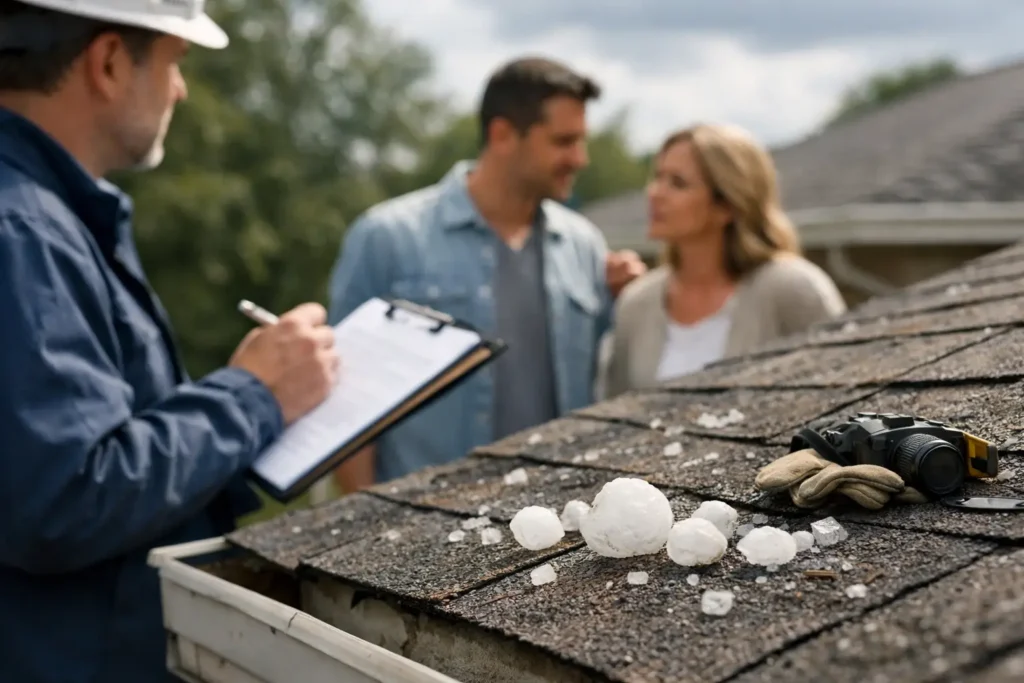
A hailstorm can leave a roof looking almost unchanged from the driveway while causing enough damage to shorten its service life. A practical hail damage roof claim example helps show why a professional inspection, clear photos, and careful communication matter before you make repair decisions or sign a contract.
For homeowners in Southern Alberta, hail is not a rare inconvenience. It is one of the weather events most likely to damage asphalt shingles, metal components, gutters, siding, and other exterior surfaces at the same time. The right response is not to assume every hail mark means a full replacement, or to assume a clean-looking roof is undamaged. It is to document conditions promptly and get an honest assessment of what the storm actually did.
A Hail Damage Roof Claim Example, Step by Step
Imagine a homeowner returns after a summer hailstorm and finds dented aluminum downspouts, scattered granules in the gutter area, and several shingles with dark, soft-looking spots. From the ground, the roof does not appear to be missing shingles or leaking. The homeowner contacts their insurer, opens a claim, and schedules a qualified roofing inspection.
During the inspection, the contractor identifies hail impacts across multiple roof slopes. On asphalt shingles, hail can bruise or fracture the mat beneath the granules. Those marks may look like circular dark spots, exposed fiberglass, or areas where granules have been knocked away. The inspector also documents dents on roof vents, flashing, gutters, and soft metal components. These details matter because they help establish the storm’s direction, severity, and impact on the exterior system.
The insurer sends an adjuster to inspect the property. The adjuster agrees that the roof has storm-related damage, but the initial estimate includes replacement for only the shingles and a few accessories. The contractor reviews the scope with the homeowner and identifies items needed to complete the work properly, such as ice and water protection where required, replacement flashing, ventilation components, and code-related materials if applicable. Supporting photos, measurements, and a written explanation are provided to the insurer for review.
After that review, the insurer may revise the estimate, approve a supplement, or explain why a particular item is not covered. The final outcome depends on the policy, the documented damage, local requirements, and whether the additional work is necessary to restore the roof to its pre-loss condition. The homeowner then pays the deductible, chooses a contractor, and the approved work moves forward.
That is the basic pattern. It is straightforward in theory, but every claim has details that can affect the settlement.
What an Insurance Adjuster Looks For
Insurance companies generally look for evidence that damage was caused by a covered weather event rather than age, poor installation, foot traffic, or ordinary wear. Hail damage has recognizable characteristics, but those characteristics vary by roofing material.
On asphalt shingles, an impact can dislodge granules and weaken the shingle’s protective surface. On metal roofing or metal flashing, hail may leave dents. Gutters, vents, fascia, screens, and siding can also show impact marks. When several exterior components have consistent damage, it can support the broader storm-damage picture.
Age still matters. An older roof can sustain legitimate hail damage, but insurers may apply depreciation depending on whether the policy pays actual cash value or replacement cost value. A replacement cost policy commonly pays the first portion of the claim after depreciation, then releases recoverable depreciation after completed work and final documentation. Actual cash value coverage generally pays the depreciated value, which can leave the homeowner with a larger out-of-pocket balance.
Your deductible also applies. If the approved damage is below the deductible, filing a claim may not result in a payment. That does not make an inspection a waste of time. Knowing the condition of your roof lets you plan responsibly, especially if small impacts have compromised shingles but have not yet created an active leak.
Damage Does Not Always Mean Full Replacement
A careful contractor should not promise that an insurer will buy a new roof before the roof and policy have been reviewed. Some hailstorms cause isolated damage that can be repaired. Others affect enough shingles, slopes, or related components that replacement is the practical long-term solution.
Matching is another area where outcomes vary. If a repair requires shingles that are no longer available or cannot reasonably match the existing roof, the policy language and local requirements will determine what is covered. Ask direct questions and keep all insurer communication in writing when possible.
How to Document Damage Before Your Claim
Start with safety. Do not climb onto a wet, steep, or potentially damaged roof. Photos from the ground are useful, but a professional roof inspection provides the close-up documentation needed to identify shingle bruising, granule loss, lifted edges, damaged flashing, and other conditions that cannot be confirmed from a ladder-free view.
Take clear photos of the date-sensitive evidence you can safely see: hailstones if they are still present, dents on gutters or downspouts, damaged window screens, fallen branches, and any interior water staining. Note the date and approximate time of the storm. If you have previous roof photos, invoices, inspection reports, or maintenance records, keep those available as well.
Then notify your insurer according to your policy requirements. Be factual. Describe the storm date and the visible conditions without guessing about the final repair scope. Your contractor can help explain roofing findings and provide an estimate, but the insurer determines coverage under the policy.
Avoid rushing into an agreement with an unfamiliar storm-chasing contractor who appears at the door immediately after a weather event. A reputable local contractor will inspect the home, explain findings in plain language, provide written documentation, and give you room to make an informed decision. They should not pressure you to sign away control of your claim or promise a waived deductible. Deductibles are the homeowner’s responsibility under the insurance contract.
Questions to Ask During the Claim Process
The claim process becomes less stressful when you know what to ask. First, confirm whether your policy is replacement cost value or actual cash value and ask how depreciation will be handled. Next, ask whether the estimate includes all roof slopes, accessories, disposal, permits where needed, and code-related upgrades that apply to the work.
It is also reasonable to ask your contractor whether the proposed scope will allow for a complete, weather-ready installation. A roof is a system, not just a layer of shingles. Flashing, underlayment, ventilation, drip edge, gutters, soffit, and fascia all affect how water is managed around your home.
If the insurer’s scope seems incomplete, do not assume the first estimate is the final word. Contractors often identify legitimate items after reviewing measurements, material requirements, or concealed conditions discovered during tear-off. That does not guarantee an adjustment, but clear documentation gives the insurer the information needed to evaluate the request.
When Repairs Should Not Wait
A claim decision can take time, but active water intrusion needs attention now. If hail has cracked a skylight, loosened flashing, punctured a roof surface, or caused a leak, take reasonable steps to prevent further damage. Temporary protection may be necessary, and you should keep receipts and photos of emergency work.
Do not cover or alter visible damage before it has been documented unless doing so is necessary to protect the property. If you must make a temporary repair, photograph the damage first, take photos during the work if possible, and save any damaged materials that can be safely retained.
A Better Way to Move Forward After Hail
The strongest claim is not built on dramatic language. It is built on timely reporting, accurate documentation, and a repair plan that protects the home for the long haul. HighLow Roofing & Exteriors approaches storm damage with that same practical standard: inspect carefully, explain the findings honestly, and help homeowners understand the work their roof needs.
After a hailstorm, a dependable inspection gives you something more useful than a guess. It gives you a clear starting point for protecting your home, speaking confidently with your insurer, and making the next decision with your family’s long-term comfort in mind.