
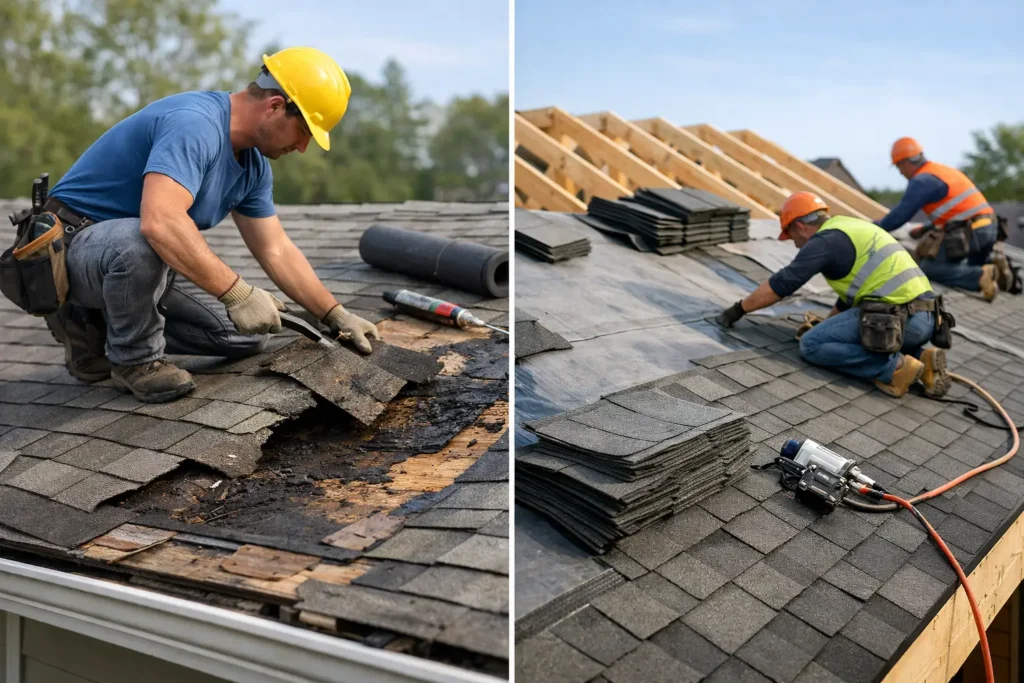
A roof problem rarely shows up at a convenient time. It starts with a stain on the ceiling, a few shingles in the yard after a windstorm, or that uneasy feeling when you notice your roof just looks tired. When homeowners start weighing roof repair versus replacement, the real question is not just what costs less today. It is what protects your home best over the next several years.
That decision deserves more than a quick guess. A repair can absolutely be the right move in some cases, but there are also times when putting money into an aging roof only delays a bigger and more expensive problem. The right answer depends on the condition of the roof, the extent of the damage, and how long you plan to stay in the home.
How to think about roof repair versus replacement
The simplest way to look at it is this: repair makes sense when the roof is still doing its job overall and the problem is limited. Replacement makes sense when the roof is near the end of its life, damage is widespread, or recurring issues are turning into a pattern.
A good roof system works as one complete layer of protection. If one area is compromised but the rest of the system is sound, a targeted repair can restore performance. If multiple parts are failing at once, patching one section may not solve the underlying issue.
That is why inspections matter. Homeowners often see the visible symptom, but not the full extent of what is happening beneath the shingles. Moisture intrusion, flashing failure, soft decking, and poor ventilation can all influence whether a repair is enough.
When a roof repair is the smarter choice
Repairs are often the better option when damage is isolated and the roof still has useful life left. If a few shingles have blown off, flashing around a vent has loosened, or a small section has been damaged by hail or debris, a repair may restore the roof without the cost of a full replacement.
This is especially true for newer roofs. If your roof is well under its expected lifespan and the materials around the damaged area are still in solid condition, repairing the affected section is usually the most practical path.
A repair can also be the right choice when the issue is caught early. A small leak handled promptly is very different from a leak that has been active for months. Fast action can prevent insulation damage, mold concerns, drywall repairs, and structural deterioration.
Homeowners also appreciate that repairs typically involve less disruption. The work is faster, the upfront cost is lower, and if the repair is done properly, it can buy meaningful time before replacement becomes necessary.
Signs a repair may be enough
A repair is often worth considering if the damage is limited to one area, the roof is under 10 to 15 years old, the decking is still solid, and the leak source is clearly identified. Matching shingles can also make a difference. If a repair can blend with the existing roof and preserve both function and curb appeal, that adds value.
That said, a cheaper option is not always the better investment. If a repair has to be repeated every season, it stops being cost-effective.
When replacement makes more sense
There comes a point when repairs become temporary fixes on a roof that is simply wearing out. If shingles are curling, cracking, losing granules across large sections, or showing signs of repeated wind damage, the roof may be telling you it is done.
Age is a major factor. Even if a roof is not actively leaking everywhere, older materials become more vulnerable to storms, temperature swings, and moisture. A roof that is near the end of its service life may not respond well to another patch, especially if the surrounding areas are brittle or weak.
Replacement is also usually the better option when leaks are showing up in more than one place. Multiple leak points often mean the issue is not isolated. It may involve broader material failure, aging underlayment, worn flashing, or hidden deck problems.
Another factor is resale and long-term value. If you plan to stay in the home, a new roof offers peace of mind and predictable performance. If you plan to sell, replacement can improve buyer confidence and reduce the chance of negotiations tied to roofing concerns.
Signs it may be time to replace
If your roof has widespread shingle deterioration, sagging areas, repeated repairs, persistent leaks, or visible storm wear across multiple slopes, replacement should be taken seriously. The same goes for roofs with soft spots or signs of trapped moisture below the surface.
At that stage, repair money often becomes sunk cost. You are paying to keep an aging system limping along instead of investing in dependable protection.
Cost matters, but so does timing
It is natural to focus first on price. Repairs are less expensive upfront, sometimes by a wide margin. But the real financial question is whether that repair extends the roof in a meaningful way or just postpones replacement for a very short time.
If a repair gives you another five to ten years on a fundamentally healthy roof, that can be excellent value. If it gives you six months before another leak appears, it may not be.
Timing also matters with weather exposure. In areas that see strong wind, hail, snow load, and freeze-thaw cycles, small vulnerabilities can turn into large ones quickly. Waiting too long to decide can expand the damage from roofing materials to insulation, ceilings, walls, and even framing.
That is where a clear, honest assessment matters more than a guess based on surface appearance. Homeowners deserve to know whether the roof is repairable, how long that repair is likely to last, and whether replacement would save money and stress over time.
Roof repair versus replacement after storm damage
Storm damage can make the decision more complicated. After hail or wind, a roof may show obvious damage in one section while hidden issues exist elsewhere. Shingles can be lifted without tearing off completely, seals can break, and flashing can shift just enough to let water in later.
In these cases, the age of the roof becomes even more important. A relatively newer roof with defined storm damage may be a strong candidate for repair. An older roof with storm damage on top of existing wear may be better served by replacement.
Insurance can also affect the path forward, depending on the cause and extent of damage. What matters most for the homeowner is making sure the decision is based on the roof’s actual condition, not just the most convenient short-term option.
Why a professional inspection changes the answer
Most homeowners are not expected to diagnose roofing systems from the ground, and they should not have to. The difference between repair and replacement often comes down to things that are easy to miss, including failed flashing details, damaged underlayment, poor attic ventilation, and hidden moisture.
A professional inspection should do more than point at a problem. It should explain what is happening, what the risks are, and what each option realistically offers. That kind of guidance matters because every home is different. So is every roof, every storm history, and every budget.
At HighLow Roofing & Exteriors, that is the standard homeowners should expect from any roofing contractor: straightforward recommendations, quality workmanship, and a plan built around protecting the home for the long term.
The best choice is the one that holds up
There is no universal rule in roof repair versus replacement. Sometimes a focused repair is the smart, responsible answer. Sometimes replacement is the move that saves money, protects the home better, and ends the cycle of repeat problems.
What matters is not choosing the cheapest option or the biggest project. It is choosing the solution that matches the roof’s true condition, your home’s exposure, and your plans for the years ahead. If you are unsure, that is usually your sign to get a professional opinion before a manageable problem becomes a much larger one.