
Last Updated: November 17, 2026
Quick Summary
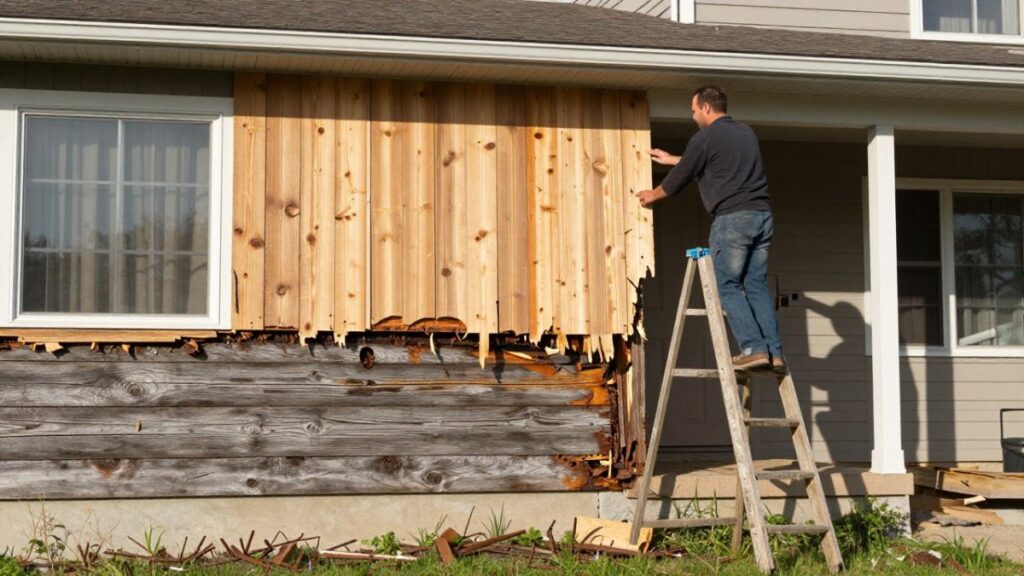
If you don’t replace damaged siding, water gets behind the wall and the problem spreads from the surface into the wall cavity. Wet sheathing softens, insulation stops holding heat, wood rot reaches the framing, and mold grows in damp cavities. Repair costs grow with every season of exposure.
- Water behind the wall first bypasses housewrap and flashing, then soaks sheathing and framing.
- A single wet season is often enough to turn a panel repair into a sheathing repair.
- Wet insulation loses its ability to hold heat, so heating bills climb before interior damage shows.
- Repair suits small localized damage; full replacement suits rot in framing or mold in the cavity.
- Leave ladder work to a professional and call for help if you see sagging, mold, or interior staining.
Table of Contents
- Why a Small Siding Problem Doesn’t Stay Small
- Signs Siding Needs to Be Replaced
- Water Damage Behind Siding: Where It Goes and What It Ruins
- How to Inspect Siding for Damage Safely
- Consequences of Waiting: Rot, Mold, Structure, and Energy Bills
- Siding Repair or Replacement: How to Decide
- Request an Estimate Before the Damage Spreads
- Frequently Asked Questions
Why a Small Siding Problem Doesn’t Stay Small
A cracked panel or loose board looks minor. It rarely stays that way. Water finds every gap in damaged siding, and once it gets behind the wall, the repair bill climbs fast.
Damaged siding is an opening. Wind-driven rain, snowmelt, and freeze-thaw cycles push moisture through it. Alberta’s weather swings make that worse. Water gets in, then freezes, then expands, and the gap grows wider.
So what happens if you don’t replace damaged siding? The short answer: the problem spreads from the surface into the wall cavity. This guide explains the signs, the damage, and how to decide between repair and replacement.
Signs Siding Needs to Be Replaced
Look for visible changes on the surface first. The clearest signs siding needs to be replaced include:
- Cracks and splits in panels or boards
- Loose boards that move when you press them
- Missing panels or pieces torn off by wind
- Warped siding that no longer sits flat
- Failed joints where seams have opened
- Fading or chalky texture from sun damage
- Bubbles or soft spots that suggest water behind the panel
Watch out: soft spots often mean the sheathing underneath is already wet. A panel that crumbles or feels spongy is a sign of deeper trouble, not just a surface flaw.
Water Damage Behind Siding: Where It Goes and What It Ruins
Water behind the wall follows a predictable path. It slips past the siding, then hits the housewrap. If the housewrap or flashing is intact, water drains down and out. If not, it soaks into the sheathing and wall framing.
The damage order usually looks like this:
- Housewrap and flashing fail or get bypassed at joints
- Sheathing absorbs moisture and softens
- Wall framing starts to rot
- Insulation gets wet and stops working
- Interior shows stains, mold, or peeling paint
Flashing and drainage details matter here. A gap at a window head or a failed joint lets water in even when the siding looks fine. For a closer look at hidden moisture, see our guide to the signs of moisture under siding you shouldn’t ignore.
How to Inspect Siding for Damage Safely
Walk the perimeter and check each wall from a safe distance.
Here is a simple inspection routine:
- Look for cracks, gaps, and loose panels from the lawn
- Check joints around windows, doors, and corners
- Look for stains, streaks, or bubbling under the surface
- Press gently on low panels to test for softness
- Check where the siding meets the roof and gutters
- Note any spots that stay wet after rain
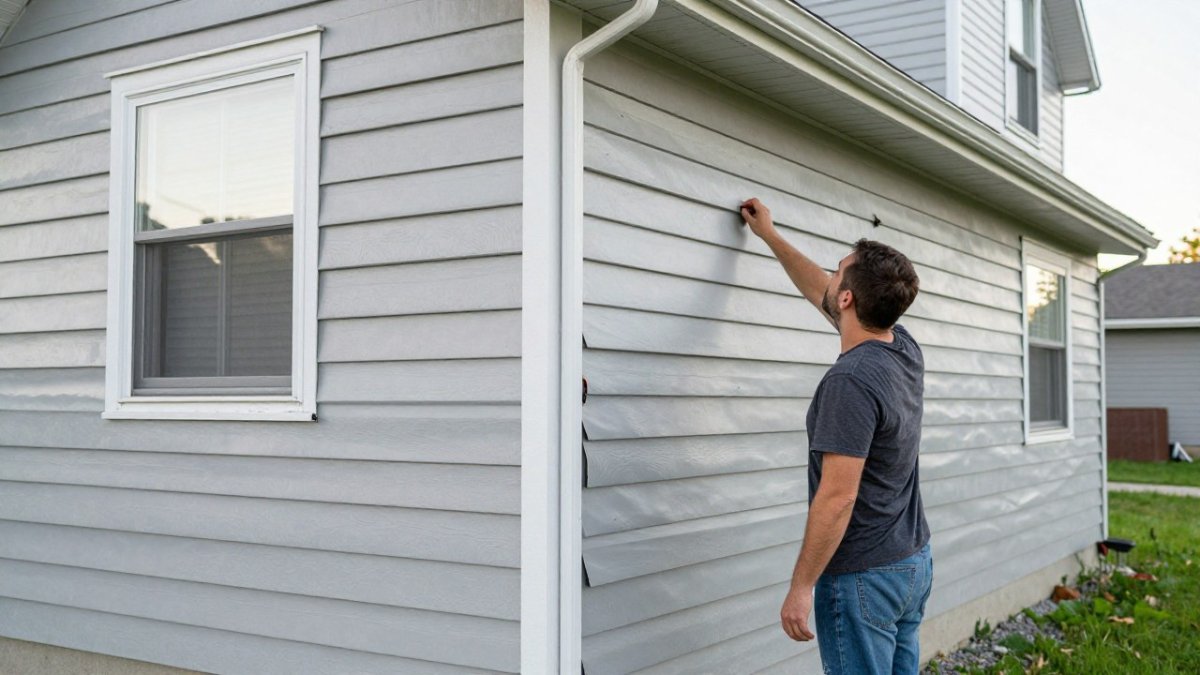
A common mistake is poking at damaged areas from height. Leave ladder work to a professional. If you see sagging, mold, or water staining inside the house, call for help right away.
For a deeper detection walkthrough, read our siding moisture damage detection guide.
Consequences of Waiting: Rot, Mold, Structure, and Energy Bills
Delay turns a surface repair into a structural one. The pace depends on the size of the opening, the weather, and how the wall assembly was built, but the sequence is predictable. Here is what tends to happen immediately, over weeks, and over seasons.
Immediately (first rain or snowmelt): Water enters behind the damaged panel. If the housewrap and flashing are intact, most of it drains away. If not, the sheathing starts absorbing moisture. You may see nothing from the inside yet.
Over weeks: Wet sheathing softens. Insulation in the wall cavity takes on water and loses its ability to hold heat. Paint or stain on the interior wall may start to bubble or peel. A musty smell can appear in nearby rooms.
Over seasons: Freeze-thaw cycles widen cracks and loosen fasteners. Wood rot spreads from sheathing into framing. Mold and mildew establish in damp cavities (Mould). Window and door frames can shift as the wall structure weakens. Energy bills climb as wet insulation stops working.
Watch out: a single wet season is often enough to turn a panel repair into a sheathing repair. The visible damage is rarely the full extent.
Here is what waiting costs you, in order of severity:
- Wood rot spreads through sheathing and framing
- Mold and mildew grow in damp wall cavities
- Structural damage weakens walls and window frames
- Energy bills rise as wet insulation loses its value
- Repair costs grow with every season of exposure
Wet insulation is the quiet problem. It stops holding heat, so your furnace works harder all winter. That shows up on your heating bills before you notice any interior damage.
Rot is the bigger risk. Once framing softens, repairs move from siding to structure. A prevention plan now is far cheaper than a rebuild later. Our wood rot prevention plan for siding walks through the steps.
If you see active leaks, soft sheathing, or widespread mold, treat it as urgent and get a professional assessment promptly. Those signs mean water is already past the surface.
Siding Repair or Replacement: How to Decide
Repair generally suits small, localized damage. Replacement generally suits widespread or hidden damage. The decision hinges on whether water has reached the sheathing and whether the wall’s water-management details are still working.
Siding is part of a wall system. It sheds most water, but housewrap, flashing, and drainage details handle what gets behind it. A surface-only repair can be ineffective if the flashing at a window head or the joint at a corner is also failing. Before deciding, confirm that the water-management layers are intact.
Use this guide to sort out common damage types:
| Damage Type | Typical Fix | Urgency |
|---|---|---|
| One cracked or warped panel | Localized repair | Low |
| A few loose boards at one corner | Re-secure and seal | Low |
| Failed joints letting water in | Repair flashing and joints | Medium |
| Soft sheathing under one area | Repair plus sheathing check | Medium |
| Rot in framing or multiple walls | Full replacement | High |
| Mold inside the wall cavity | Full replacement and cleanup | High |
Cracks and splits: A single hairline crack in a panel can often be sealed if the sheathing behind it is dry. If the crack is at a joint or near a window, check the flashing before sealing.
Missing panels: Replace the panel and inspect the exposed housewrap. If the housewrap is torn or the sheathing is soft, a simple panel swap will not solve the problem.
Loose boards: Re-secure and seal, but find out why they loosened. Repeated loosening often points to fastener corrosion or movement in the framing.
Failed joints: These are water entry points. Repair the joint and the flashing detail together, or water will keep getting in.
Hidden moisture: If you see bubbling paint, soft spots, or a musty smell but no visible damage, assume moisture is present until a professional confirms otherwise.
Patching over wet wood just traps the problem.
At that decision point, it helps to review the full home siding replacement guide before you commit either way.
Request an Estimate Before the Damage Spreads
Every week of delay gives water more time to work. The smart move is a professional inspection now, while the repair is still small. HighLow Roofing & Exteriors offers roofing, siding, and gutter services for homeowners in Lethbridge and Southern Alberta.
We serve homeowners across Lethbridge and Southern Alberta. We offer Hardie Board and vinyl siding, plus roof repairs and replacements. Our focus is on expert craftsmanship, integrity, and customer care.
Do not wait for the next storm to make the decision for you. Get cost context from our siding replacement cost guide, then request an estimate. Get started with HighLow Roofing & Exteriors and protect your home before the damage spreads.
Water behind damaged siding rarely announces itself. It works quietly until the rot and mold show up inside. A quick inspection now, and a call when the signs are clear, keeps a small repair from becoming a structural one. HighLow Roofing & Exteriors can inspect your siding, roof, and gutters together and give you a straight answer on repair versus replacement. Get started with HighLow Roofing & Exteriors and get an estimate before the next storm season.
Frequently Asked Questions
What happens if you leave damaged siding unrepaired?
Water gets behind the panel and stays there. Damaged siding with cracks, warped sections or failed joints lets rain and snowmelt past the outer layer, and that moisture reaches the sheathing, housewrap and wall framing. From there the sequence is predictable: wood rot, mold and mildew growth, and eventually structural damage to the wall assembly. Energy efficiency also drops as insulation gets wet. Southern Alberta’s freeze-thaw cycles speed this up, since water that seeps in during the day freezes overnight and pries materials further apart.
Can damaged siding lead to wood rot or mold inside the house?
Yes. Once water damage behind siding goes unchecked, the sheathing and framing stay damp long enough for wood rot fungi and mold to establish. You may notice musty odours indoors, staining on interior walls or paint that bubbles near the ceiling line before you see anything outside. Because the damage sits inside the wall cavity, it is often well advanced by the time it is visible. Catching it during a siding inspection is far cheaper than opening up a wall later.
How do you know if siding needs repair or replacement?
It comes down to how much of the wall is affected and what is underneath. A single cracked or missing panel with sound material behind it is usually a candidate for localized repair. Widespread warping, multiple failed joints, soft sheathing or rot around windows and corners point toward full replacement. A contractor should check the flashing, housewrap and nailing pattern before recommending either path, since a repair that leaves a moisture path open will fail again.
Can one missing piece of siding cause problems?
It can. A single missing panel exposes the housewrap and sheathing to direct weather, and wind-driven rain in an Alberta storm pushes water sideways into that opening. The exposed area also lets sun degrade the materials underneath. One panel is a small repair now, but left through a season of freeze-thaw and rain it can rot the sheathing behind it and spread to neighbouring panels. Get it closed up promptly rather than waiting for a larger project.
