
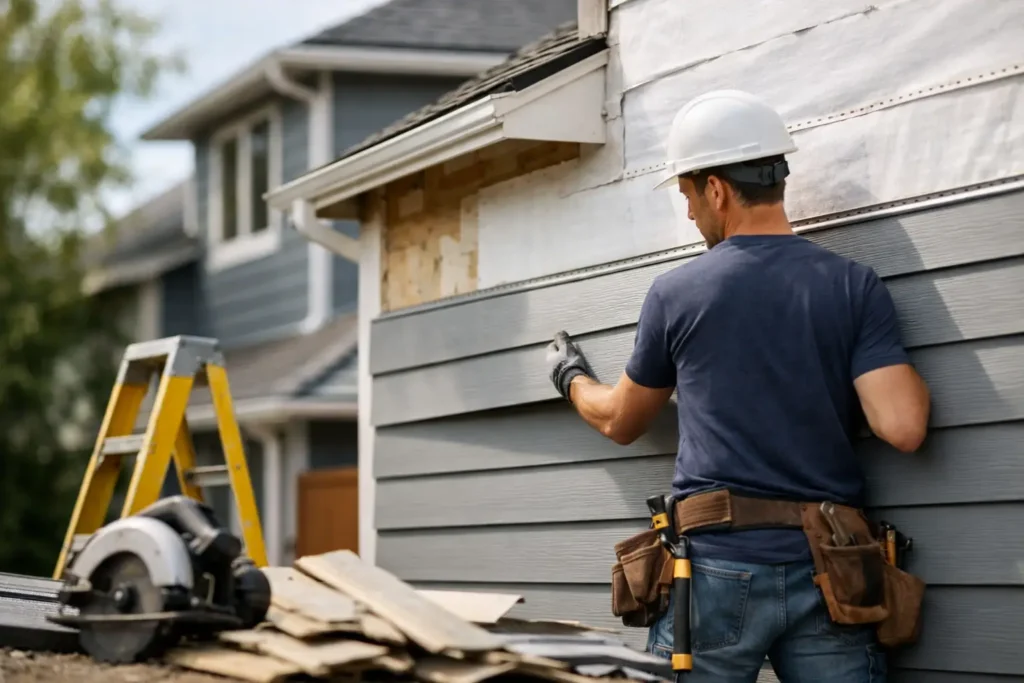
A lot of siding projects start the same way – a few warped boards, fading color, or one section that took a hit from wind or hail. Then the bigger question shows up: patch it, or replace it all? This home siding replacement guide is built to help you make that call with a clear head, especially if your home has been taking the full force of Southern Alberta weather.
Siding does more than improve curb appeal. It protects the structure beneath it, helps manage moisture, supports energy efficiency, and gives your home a finished look that holds its value. When siding starts to fail, the problem is rarely just cosmetic.
When siding replacement makes sense
Some siding issues are isolated. A few cracked panels after a storm or a small area of impact damage may only need repair. But widespread wear usually points to a bigger problem. If multiple areas are loose, brittle, rotting, faded, or letting water in, replacement often makes more financial sense than chasing repairs year after year.
Age matters too. Even durable siding has a service life, and older products may not perform well against repeated freeze-thaw cycles, strong winds, and moisture exposure. If your siding is nearing the end of its lifespan, replacing it before water reaches the sheathing or framing can save you from far more expensive repairs later.
Another common reason for replacement is uneven appearance. If part of your siding has been repaired before, finding a perfect color and profile match can be difficult. In that case, a full replacement can give you a cleaner result and a more consistent finish across the whole home.
A home siding replacement guide to common warning signs
The clearest sign of trouble is moisture. If you see swelling, soft spots, bubbling paint, mildew near seams, or water stains inside exterior walls, siding may no longer be doing its job. Moisture problems tend to spread quietly, so surface damage should never be brushed off as minor.
You should also pay attention to movement. Siding that is loose, rattling in the wind, pulling away from the house, or showing gaps around joints can allow water and pests to get behind the surface. In a climate with sharp temperature swings, those small openings can become bigger structural problems over time.
Energy bills can be another clue. Siding itself is not insulation, but damaged or aging siding can expose weaknesses in the wall system. During replacement, homeowners often discover house wrap issues, old trim failures, or poorly sealed penetrations that were contributing to drafts and heat loss.
Choosing the right siding material
The best siding is not always the most expensive one. It is the one that fits your climate, maintenance expectations, budget, and the look of your home.
Vinyl siding remains popular because it offers solid value and relatively low maintenance. It resists moisture well, comes in many colors and profiles, and does not need frequent painting. The trade-off is that lower-grade products can be more vulnerable to cracking in extreme cold or impact damage from hail and debris. Product quality and proper installation make a big difference.
Fiber cement siding is known for durability and a more substantial appearance. It handles moisture well, stands up to many weather conditions, and can offer a strong return in both curb appeal and longevity. It does cost more than vinyl in many cases, and installation is more labor-intensive, so the upfront investment is usually higher.
Engineered wood siding can be a good fit for homeowners who want the warmth of a wood look with less upkeep than traditional wood. It can perform well when installed correctly and maintained properly. That said, long-term performance depends heavily on moisture management, so flashing, trim details, and ventilation all matter.
Traditional wood siding has undeniable character, but it also asks more from the homeowner. It requires regular maintenance and close attention to moisture. For some homes, especially older or more architectural styles, that extra care is worth it. For others, a lower-maintenance material is the more practical choice.
What affects siding replacement cost
Homeowners understandably want a number early, but siding replacement cost depends on more than square footage. Material choice is a major factor, but so are wall height, trim complexity, window and door details, corners, soffit connections, and access around the home.
The condition of what sits behind the siding matters too. Once old siding is removed, the contractor may find damaged sheathing, missing weather barrier, or areas that need reframing or moisture repair. Those are not ideal surprises, but they are important ones. Covering over hidden damage only delays the problem.
There is also a difference between a basic replacement and a full exterior upgrade. Some homeowners replace siding at the same time as soffit, fascia, eavestroughs, or exterior trim because the systems work together. That can increase the project size, but it can also improve the overall finish and reduce the chance of mismatched components.
Why installation quality matters as much as material
Even the best siding product can fail if it is installed poorly. Fastening methods, flashing, caulking, starter strips, trim transitions, and water management details all affect how the finished exterior performs. This is especially true in areas with strong wind, snow, and seasonal moisture changes.
A proper siding installation is not just about attaching panels to a wall. It is about building a weather-resistant system. That means the installer should be looking closely at vulnerable areas like roof-to-wall intersections, windows, doors, corners, and penetrations for vents or fixtures.
This is one reason many homeowners prefer working with an exterior contractor who understands the full envelope of the home, not just one product line. Siding does not exist on its own. It connects to roofing edges, gutters, soffit, fascia, and trim, and those transitions are where a lot of leaks begin.
How to prepare for a siding project
A good estimate should cover more than the material you picked from a sample board. It should explain what will be removed, what will be inspected underneath, what trim elements are included, and how the contractor plans to handle weather protection during the project.
Ask practical questions. How will landscaping be protected? Will old siding be hauled away? What happens if hidden water damage is found? Will color-matched accessories be used? These details matter because they affect both the final appearance and the total project cost.
It also helps to think about timing. Exterior work is weather-dependent, and scheduling can get tighter after storms or during peak renovation season. If your siding is already showing signs of water entry, it is better to get an inspection sooner rather than wait until a small issue turns into a larger repair.
Making the right choice for your home
Every home has a different priority. Some homeowners want the most durable, low-maintenance option available. Others are balancing appearance, resale value, and budget. Some need to address storm damage quickly, while others are planning a long-term exterior upgrade.
That is why a good home siding replacement guide should not promise one perfect answer for everyone. The right decision depends on your home’s age, the condition of the existing exterior, your maintenance goals, and the weather demands in your area. What matters most is choosing a solution that protects the home properly and gives you confidence that the work was done right.
For homeowners in Lethbridge and across Southern Alberta, durability is not a luxury. It is part of the job. Your siding needs to handle wind, temperature swings, moisture, and the wear that comes with real seasons. A well-planned replacement can improve curb appeal, reduce future maintenance, and strengthen your home from the outside in.
If you are weighing repair versus replacement, the best next step is a clear, honest assessment of the siding you have now. A trustworthy contractor should be able to tell you what can be fixed, what should be replaced, and where it makes sense to invest for the long run. Peace of mind starts with good information, and the right exterior work should leave your home better protected every season that follows.