
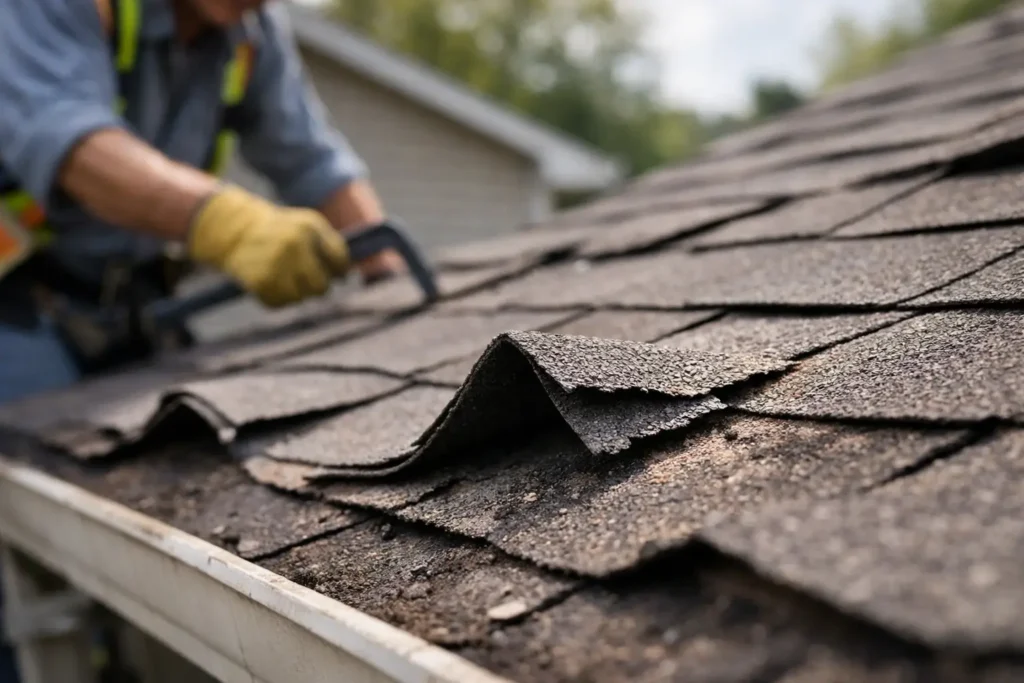
A curled shingle is more than a cosmetic flaw. Once its edges lift away from the roof, wind can catch underneath, rain can reach vulnerable areas, and the roof may lose its ability to shed water as designed. For homeowners wondering what causes shingles to curl, the answer is usually a combination of age, heat, moisture, installation details, and the demanding weather a roof faces year after year.
Curling does not always mean every shingle needs immediate replacement. But it is a clear signal that the roof deserves a closer look. The right repair depends on why the shingles are moving, how widespread the issue is, and whether the roof is otherwise nearing the end of its service life.
What Causes Shingles to Curl on a Roof?
Shingles generally curl in one of two ways. Cupping happens when the edges turn upward, creating a concave shape. Clawing occurs when the center of the shingle rises while the edges point down. Both conditions can expose more of the shingle to wind and weather, but they may point to different underlying problems.
1. Natural aging and material wear
As asphalt shingles age, the oils that help them remain flexible gradually dry out. The shingle becomes more brittle, shrinks slightly, and has a harder time lying flat through temperature changes. Granule loss often appears alongside curling, leaving bare or smooth-looking areas that have less protection from sunlight.
A few curled shingles on an older roof may be expected wear. Widespread curling, especially on a roof approaching the end of its expected lifespan, often means repairs will only buy limited time. A professional assessment can help distinguish a manageable repair from a roof that is ready for replacement.
2. Poor attic ventilation
Heat and moisture trapped in an attic can shorten the life of the roofing system from underneath. In summer, excessive attic heat can bake the shingles above it. In colder months, warm indoor air that enters the attic can create condensation on roof decking and insulation.
This moisture cycle can contribute to curling, decking deterioration, mold growth, and ice dam problems. Ventilation is not simply about adding more vents wherever there is room. Intake and exhaust ventilation must work together, and attic insulation must not block airflow at the eaves. A roof replacement is an ideal time to correct these details, but ventilation problems can often be addressed before then.
3. Moisture beneath the shingles
Shingles are designed to shed water, not sit in it. If moisture gets trapped beneath them because of leaks, condensation, damaged underlayment, or poor drainage, the shingles may distort as they absorb and release moisture over time.
The source is not always obvious from the ground. A roof leak may begin around a flashing detail, vent pipe, skylight, valley, or damaged shingle several feet away from the stain that appears on a ceiling. Curling near one of these areas is worth investigating promptly, especially if the roof feels soft underfoot or there are signs of water inside the home.
4. Harsh sun, wind, and temperature swings
Southern Alberta roofs work hard. Strong sun can dry and age asphalt, high winds can lift vulnerable edges, and rapid temperature changes make materials expand and contract. Winter conditions add another layer of stress when snow, ice, and freeze-thaw cycles keep moisture around roof edges and valleys.
Weather exposure alone does not mean a roof was installed incorrectly. Every roof eventually ages. However, choosing quality materials suited to the local climate and installing them according to manufacturer requirements gives homeowners a much better chance of getting lasting performance from their investment.
5. Installation errors
Even premium shingles can fail early if they are not installed correctly. Common issues include incorrect nail placement, too few fasteners, improper shingle alignment, missing or poorly installed flashing, and inadequate underlayment. Nails driven too high may not secure the shingle properly. Nails driven too deep can cut into the shingle and weaken its hold.
Installation during unsuitable temperatures can also create trouble. Shingles need proper sealing conditions to bond as intended. If sealing strips do not activate and adhere correctly, wind can lift the tabs and begin a cycle of damage that looks like curling or buckling.
This is why workmanship matters as much as the shingle selected. A roof is a system, not just a visible layer of asphalt. The decking, ice and water protection, underlayment, flashing, ventilation, and fastening methods all affect how the finished roof performs.
6. Layering new shingles over old ones
Installing a second layer of shingles over an existing roof can sometimes be permitted, but it comes with trade-offs. The new shingles may not lie as flat over the uneven surface below, and extra layers can hold more heat. More importantly, the old roof remains hidden, making it harder to identify damaged decking, failed flashing, or moisture problems before they get worse.
A tear-off replacement costs more up front than simply covering the old roof. Still, it allows the contractor to inspect the roof deck, replace compromised wood, improve underlayment protection, and start with a clean, properly prepared surface. For a long-term roofing investment, that extra step is often worthwhile.
7. Manufacturing defects or incompatible materials
Less commonly, shingles curl because of a product defect or a mismatch between roofing components. Shingles, underlayment, ventilation products, and accessories should be installed in ways that meet manufacturer specifications. Otherwise, a warranty claim may be more difficult and roof performance may suffer.
A qualified roofer can document the condition of the shingles and look for patterns that suggest a product issue rather than ordinary aging. That assessment is especially valuable when a relatively new roof develops widespread curling without an obvious leak, storm event, or ventilation concern.
How Serious Are Curled Shingles?
The seriousness depends on the location, number, and condition of the affected shingles. One curled tab after a windstorm may be repairable if the surrounding shingles are still flexible and sealed. Curling across multiple roof slopes is more concerning, particularly when accompanied by cracking, missing granules, exposed nail heads, leaks, or shingles that lift easily in the wind.
Curled shingles can allow wind-driven rain beneath the roof covering. They also create places where debris, snow, and ice can collect. Left alone, a small issue can become wet insulation, damaged decking, interior staining, or a more extensive replacement than would have been necessary earlier.
Do not try to flatten brittle shingles with adhesive or nails as a quick fix. Older shingles can crack when handled, and fastening through the wrong area may create another path for water. A temporary repair has a place during an emergency, but it should not replace a proper inspection.
What Homeowners Should Check From the Ground
A visual check from the ground after major wind, hail, or heavy snow can help catch roofing concerns early. Look for dark or uneven sections, lifted edges, missing shingles, granules collecting near downspouts, bent flashing, and debris buildup in valleys or gutters.
Inside the home, watch for ceiling stains, peeling paint near exterior walls, musty attic odors, damp insulation, or daylight visible through the roof deck. These signs do not always mean curled shingles are the cause, but they make a professional roof inspection more urgent.
Avoid climbing onto the roof to inspect curling yourself. Sloped roofs are hazardous, and walking on aged shingles can cause further damage. A contractor can assess the condition safely while checking the roof’s most vulnerable details.
Repair or Replacement: Making the Practical Call
A repair can make sense when curling is limited to a small area and the roof still has meaningful life left. Replacing damaged shingles, correcting a flashing issue, or improving ventilation may protect the home without requiring a full replacement.
Replacement is usually the more dependable option when curling is widespread, shingles are brittle across the roof, leaks have affected the decking, or the roof is near the end of its lifespan. It also gives homeowners the opportunity to address gutters, soffit, fascia, and ventilation details that affect long-term water management and curb appeal.
At HighLow Roofing & Exteriors, the goal is to give homeowners a straightforward assessment of what the roof needs now and what can reasonably wait. A timely inspection can turn a curled shingle from a growing concern into a clear, manageable plan for protecting your home.