
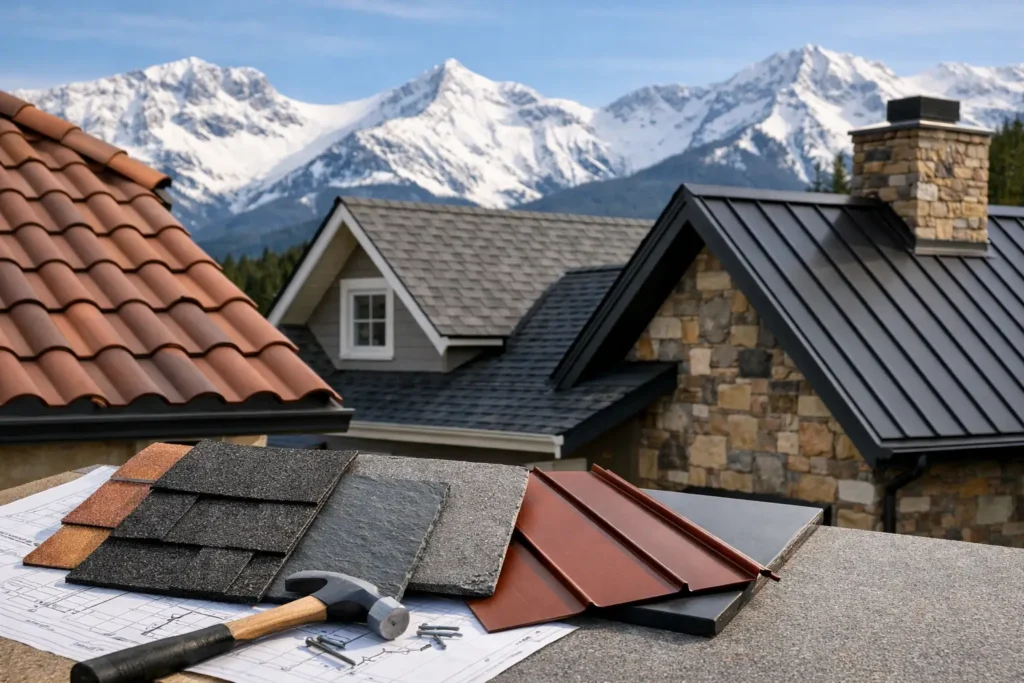
A roof in Southern Alberta has to handle more than a passing rainstorm. Strong winds, hail, heavy snow, sharp temperature swings, and intense sun all put materials and installation details to the test. This residential roofing materials guide helps homeowners compare the options that make the most sense for protection, maintenance, curb appeal, and long-term value.
The right roof is rarely the one with the highest price tag or the longest advertised warranty. It is the one that suits your home’s structure, slope, budget, neighborhood style, and exposure to local weather. Just as importantly, it needs to be installed correctly, with attention paid to ventilation, flashing, underlayment, drainage, and the roof-to-wall details that keep water out.
Residential Roofing Materials Guide: Start With Your Home
Before choosing a material, consider the condition and design of your existing roof. A simple gable roof with an average pitch gives you more material options and usually keeps labor costs more predictable. Roofs with multiple valleys, dormers, skylights, chimneys, or low-slope sections require more detailed planning because those transitions are common locations for leaks when they are not properly flashed.
Weather exposure also matters. A home in an open area may see higher wind loads than a sheltered property. Mature trees can create shade and debris buildup, while homes with limited sun exposure may hold snow longer. If your current roof has frequent ice buildup, attic moisture, or uneven snow melt, the material choice is only part of the conversation. Improving ventilation and addressing insulation gaps can help the new roof perform as intended.
A contractor should inspect the deck beneath the old shingles as well. New roofing cannot correct rotted sheathing, inadequate ventilation, or damaged fascia by itself. A careful assessment before installation protects your investment and avoids surprises once the old roof is removed.
Asphalt Shingles: A Practical Choice for Most Homes
Asphalt shingles remain the most common residential roofing material because they balance upfront cost, appearance, and dependable performance. They are available in many colors and profiles, from clean three-tab styles to dimensional architectural shingles that create more depth and visual texture.
For many Southern Alberta homeowners, architectural asphalt shingles are the practical middle ground. They offer a stronger, more substantial look than basic shingles and can provide improved wind resistance when paired with the proper installation system. They also work well on a broad range of home styles, whether the goal is a traditional appearance or a more updated exterior.
Asphalt is not maintenance-free. Wind can lift poorly secured shingles, hail can reduce their service life, and granule loss may signal that an older roof is nearing replacement. Still, repairs are often more straightforward than with specialty materials, especially when matching replacement shingles are available.
The value of an asphalt roof depends heavily on the quality of the system beneath it. Underlayment, ice and water protection in vulnerable areas, properly installed flashing, and balanced attic ventilation all support the life of the shingles above. Choosing a good shingle matters, but craftsmanship determines whether the roof works as a complete weather barrier.
Metal Roofing: Built for Durability and Snow Shedding
Metal roofing is a strong option for homeowners who want a long-lasting, low-maintenance roof with a distinctive appearance. Standing-seam metal panels offer crisp lines and concealed fasteners, while exposed-fastener panels can provide a more economical metal-roofing option. The best fit depends on the home’s design, budget, and desired finish.
One advantage of metal is its ability to shed snow and resist wind when installed properly. Its smooth surface can help reduce prolonged snow load, though that snow can slide off in larger sheets. Snow guards may be needed above entryways, walkways, decks, or areas where falling snow could create a hazard.
Metal roofs are also lightweight compared with some other premium materials and can perform well through repeated freeze-thaw cycles. They do require specialized installation methods. Panel layout, trim work, fastener placement, expansion allowance, and flashing around penetrations all need to be handled with precision. A poorly installed metal roof can be noisy, vulnerable at seams, or difficult to repair.
The initial cost is typically higher than asphalt, but the long service life and limited maintenance needs may make metal worthwhile for homeowners planning to stay in their homes for many years. It can also be a smart fit for rural properties, modern home designs, and homeowners who value a clean, durable exterior.
Cedar, Slate, Tile, and Other Premium Options
Cedar shakes and shingles bring natural warmth and character that is difficult to duplicate. They can look exceptional on the right home, particularly traditional, rustic, or custom-designed properties. However, cedar needs regular care and is more sensitive to moisture, debris, weathering, and fire-rating requirements than asphalt or metal. It is not usually the easiest choice for homeowners seeking minimal maintenance.
Slate and concrete or clay tile offer exceptional visual appeal and long potential service lives, but they are heavy. A home may need structural evaluation before either material is installed. These materials can also be costly to repair and require experienced crews familiar with their specific installation needs. In a region where hail and freeze-thaw conditions are real considerations, homeowners should weigh appearance against practical maintenance and replacement costs.
Composite roofing products can imitate slate, cedar, or tile while reducing weight and maintenance. Quality varies between products, so homeowners should look beyond appearance and ask how the material performs in cold temperatures, wind, impact exposure, and local conditions.
Cost Means More Than the Installed Price
Roofing estimates should be compared line by line, not simply by the final number. Two proposals for the same material may include very different scopes of work. One may account for tear-off, deck repairs, upgraded underlayment, ventilation improvements, new flashing, disposal, and cleanup. Another may leave some of those costs to be addressed later.
Ask what happens if damaged sheathing is found after tear-off. Confirm whether drip edge, valley protection, pipe boots, chimney flashing, and ventilation components are included. These are not small extras. They are essential parts of a roof system that prevent water from reaching the structure of your home.
Also consider the relationship between the roof and the rest of the exterior. Gutters need to collect water effectively, fascia needs to remain protected, and siding transitions must be properly sealed. When several exterior systems are aging at once, coordinating the work can reduce disruptions and help ensure the finished details work together.
How to Choose With Confidence
A good material decision starts with honest priorities. If you need an affordable, proven roof with broad color choices, architectural asphalt shingles are often an excellent answer. If you want a longer-lasting roof with a distinctive profile and are comfortable with a higher initial investment, metal may be the better path.
Do not let appearance alone decide the project. Ask about wind resistance, impact ratings, expected maintenance, ventilation needs, and how the material will handle the specific slopes and details on your home. Request samples when possible and view colors outdoors, where sunlight can change how they look.
Most of all, choose a contractor who explains the work clearly and treats questions as part of the process, not an inconvenience. A new roof should leave you with confidence in the materials overhead and the people who installed them. For homeowners across Lethbridge and Southern Alberta, HighLow Roofing & Exteriors can provide a clear assessment and a free estimate built around the protection your home actually needs.