
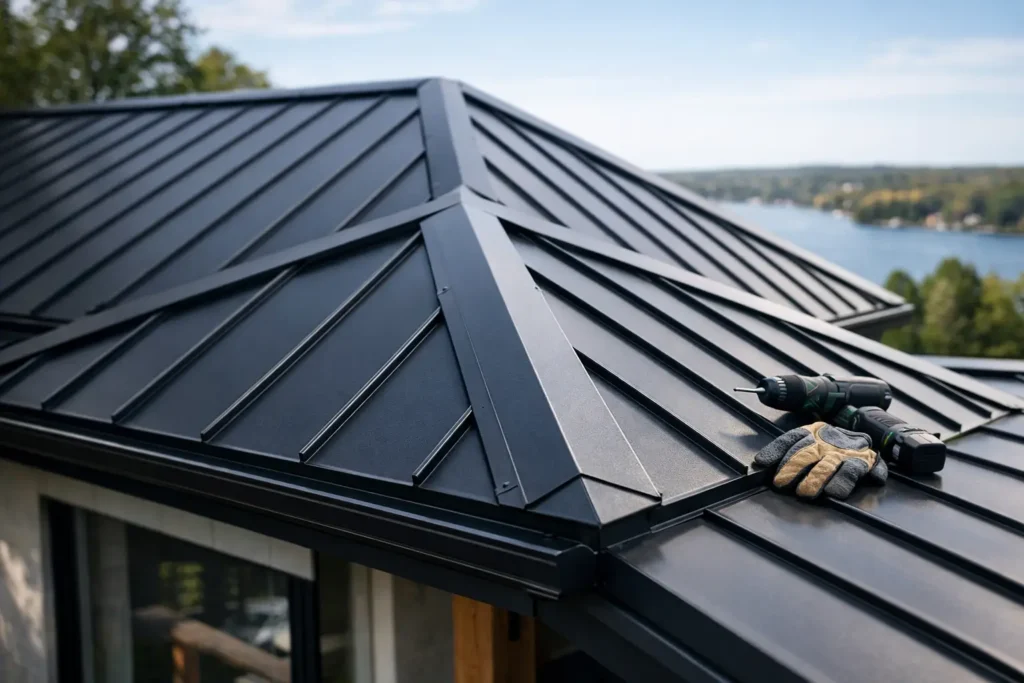
A roof in Southern Alberta has to handle more than just rain. It has to stand up to wind, temperature swings, snow load, hail concerns, and long stretches of sun without wearing out before its time. That is why a standing seam metal roof review matters for homeowners who want more than a basic replacement. You are not just buying a roof. You are choosing how well your home will be protected for decades.
Standing seam metal roofing has earned a strong reputation, and for good reason. It is durable, clean-looking, and built for long-term performance. But it is not the right answer for every home or every budget. A fair review should cover both sides, especially if you are comparing it to asphalt shingles or trying to decide whether the higher upfront cost makes sense.
Standing seam metal roof review: what it is
Standing seam metal roofing uses vertical panels that run from the ridge down to the eaves. The seams between those panels are raised above the flat surface of the roof, which helps direct water away from the connection points. Fasteners are usually concealed, rather than exposed, which is one of the system’s biggest strengths.
That design does two important things. First, it gives the roof a clean, modern appearance that works on a wide range of homes, from newer builds to updated farmhouses and traditional family homes. Second, it reduces the number of exposed points where water can eventually work its way in.
For homeowners, that means standing seam is not just about looks. It is a system built around weather resistance and longevity.
Where standing seam performs well
In this standing seam metal roof review, the strongest point is long-term durability. A properly installed standing seam roof can last several decades, often much longer than a standard asphalt roof. That longer service life is a major reason many homeowners are willing to invest more at the start.
It also performs well in demanding weather. Snow tends to shed more easily from metal than from rougher roofing surfaces. Water drains efficiently. Wind resistance is generally strong when the system is installed correctly and matched to the home’s needs. In areas where weather can change quickly, that matters.
There is also a maintenance advantage. Because the fasteners are hidden and the panels are designed to expand and contract with temperature changes, the roof often avoids some of the common issues seen with lower-grade metal systems. You are less likely to deal with the same level of loosening, gasket wear, or visible screw failure that can show up on exposed-fastener products over time.
Another benefit is curb appeal. Standing seam has a crisp, finished look that many homeowners see as an upgrade. If you plan to stay in your home for years, that visual value matters. If you may sell in the future, it can also make your home stand out.
The trade-offs homeowners should know
The biggest drawback is cost. Standing seam metal roofing usually costs more than asphalt shingles and more than simpler metal panel systems. That does not automatically make it overpriced. It just means the value shows up over time rather than on day one.
Installation also matters more than some homeowners expect. This is not a forgiving roofing system when handled by the wrong crew. Panel alignment, flashing details, underlayment choices, clip systems, and trim work all affect how the roof performs. A poor installation can cancel out the benefits of a premium material.
Noise is another concern people often bring up. In most residential applications, a properly installed standing seam roof with the right roof deck and attic insulation is not dramatically louder than other roofing systems. Still, if someone is expecting total silence during heavy rain or hail, expectations should be realistic.
Denting can be an issue depending on the gauge of metal, the profile selected, and the severity of a hailstorm. Metal roofs are durable, but durable does not mean immune to cosmetic impact. Some roofs may continue performing well even after a storm while still showing visible marks. For some homeowners, that is acceptable. For others, appearance is a major factor.
Cost versus value over time
The fairest way to review standing seam is not to compare sticker price alone. It makes more sense to compare the full life cycle of the roof.
An asphalt roof usually costs less upfront, and for many homes, it remains a practical and responsible choice. But if a homeowner expects to stay in the house long term, standing seam can make financial sense because of its lifespan, lower maintenance needs, and durability. Paying more once can be preferable to replacing a lower-cost roof sooner and dealing with more repairs along the way.
Energy performance may also help the value equation, especially when lighter colors or reflective finishes are used. Some homeowners see lower cooling demands, though actual savings depend on attic insulation, ventilation, home design, and local conditions. It is worth seeing energy benefits as a possible bonus, not the only reason to choose the system.
Insurance and resale value can vary as well. In some cases, a durable roof can be viewed favorably. In others, the return is more about market appeal and homeowner confidence than a direct dollar-for-dollar payoff. That is why the best reason to choose standing seam is usually long-term peace of mind, not a quick financial win.
How it compares to other metal roofing options
Not all metal roofs are the same, and that is where homeowners can get tripped up. A standing seam roof is different from an exposed-fastener metal roof, even though both are made of metal and may look similar from a distance.
Exposed-fastener systems are usually more budget-friendly. They can be a good fit for certain buildings and certain budgets. But because the screws are visible and directly exposed to the weather, those systems may require more ongoing attention over the years. Washers can age, fasteners can loosen, and maintenance needs tend to be higher.
Standing seam is the more premium option. It is designed to better manage expansion and contraction, protect fastening points, and provide a cleaner finished appearance. For a homeowner replacing a primary residence roof, that difference often matters.
Is standing seam right for every home?
Not always. Roof shape, slope, budget, neighborhood style, and homeowner priorities all play a part.
If your top priority is the lowest upfront cost, standing seam may not be the right fit. If your home has architectural features that require careful custom detailing, it can still be a strong option, but the quality of the installer becomes even more important. If you plan to move soon, you may or may not recover enough value to justify the investment.
On the other hand, if you want a roof that is built for the long haul, handles severe weather well, and gives your home a cleaner, more upgraded appearance, standing seam deserves serious consideration. It is especially appealing for homeowners who are tired of short replacement cycles and want to make a more permanent improvement.
What to ask before you commit
A good contractor should be able to explain the panel profile, metal gauge, finish, underlayment, ventilation plan, flashing details, and warranty in plain language. If those answers are vague, that is a red flag.
You should also ask how the roof system is being tailored to your local climate. A roof that performs well on paper still has to be installed for real-world conditions. In places with strong wind, snow, and fast weather changes, small installation details make a major difference.
It is also smart to ask what kind of appearance you should expect over time. Will the finish hold color well? How will the roof age? What kind of storm damage would be cosmetic versus functional? Honest answers matter more than a sales pitch.
At HighLow Roofing & Exteriors, we believe homeowners make the best decisions when they get straightforward information, clear pricing, and recommendations based on how they actually live in their home.
Final take on this roof system
If this standing seam metal roof review has one clear takeaway, it is this: standing seam is a premium roofing system with real long-term advantages, but it only earns that reputation when the materials and installation are both done right. For homeowners who want durability, cleaner lines, lower maintenance, and strong weather performance, it is one of the best options on the market. The right roof should not just look good on install day. It should keep proving its value year after year, through every season your home has to face.