
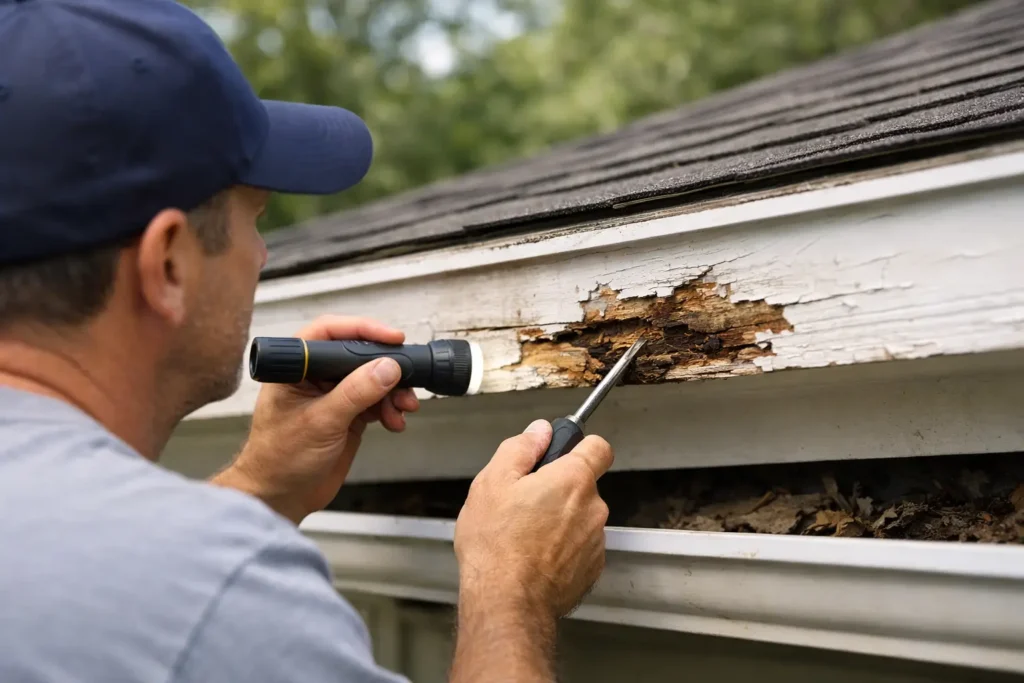
A small stain near the gutter or a strip of peeling paint along the roofline might not look urgent, but fascia problems tend to grow quietly. If you are wondering how to inspect fascia damage, the goal is not to diagnose every structural issue from the ground. It is to catch early warning signs before moisture, pests, or rot spread into more expensive exterior repairs.
Fascia is the long horizontal board that runs along the roof edge, just behind the gutters. It helps support the gutter system, closes off the roofline, and protects the exposed ends of the rafters from weather. In Southern Alberta, that protection matters. Snow loads, wind-driven rain, freeze-thaw cycles, and backed-up gutters can all put extra stress on this part of your home.
Why fascia damage is easy to miss
Most homeowners spend more time looking at shingles, siding, or gutters than they do at the fascia itself. That makes sense. Fascia sits at the edge of your roofline, and unless paint starts flaking or a gutter begins to sag, it often blends into the rest of the trim.
The trouble is that fascia damage rarely stays isolated. Once water gets behind the gutter or into a soft section of trim, the problem can affect soffit panels, roof decking, and even the framing around the eaves. What starts as a cosmetic issue can turn into a repair that involves several connected exterior systems.
How to inspect fascia damage safely
Start from the ground. In most cases, you can spot the first signs of trouble without climbing a ladder. Walk the full perimeter of your home during daylight and look up along the roof edges from a few different angles. A pair of binoculars or your phone camera zoom can help you inspect details more closely.
If you use a ladder, keep it on level ground and avoid leaning out to reach long sections. Never inspect fascia during wet, icy, or windy conditions. If the roofline is high, steep, or hard to access, it is better to stop at a visual inspection and bring in a professional.
What to look for from the ground
The most obvious clue is paint failure. Peeling, bubbling, cracking, or discoloration along the fascia often points to repeated moisture exposure. Paint does not always fail because the wood underneath is rotten, but it is one of the first signs that water is not drying out properly.
Look next at the gutter line. Gutters should sit straight and tight against the fascia. If you notice sagging sections, gaps behind the gutter, loose fasteners, or corners that look pulled away, the fascia may be weakened beneath the brackets. Sometimes the gutter is the problem. Sometimes the gutter is only showing you where the fascia has softened.
You should also watch for staining. Brown streaks, dark patches, and green or black organic growth can all suggest persistent moisture. If one section of fascia looks noticeably darker than the rest, pay attention to what is happening above and below it. Overflowing gutters, roof runoff, or blocked downspouts may be feeding the issue.
Signs of fascia damage up close
If a lower roofline or porch area is easy to reach safely, a closer look can tell you more. Press gently on any suspicious area with a screwdriver handle or similar blunt tool. Solid fascia should feel firm. If it feels soft, spongy, or flaky, that is a strong sign of rot.
Check the joints and corners carefully. Fascia often begins to fail where two sections meet, where water lingers, or where caulking has cracked open. Look for splitting wood, swelling, or nails backing out. These are signs that the material has been expanding and contracting with moisture over time.
Pest activity is another clue. Wasps, birds, squirrels, and insects often exploit gaps around the roof edge. If you see nesting activity near the fascia or soffit, that does not automatically mean the board is rotten, but it does suggest there may be openings or softened areas worth checking.
How gutters can help you spot hidden issues
Because gutters attach directly to the fascia, they often reveal problems before the board itself is clearly visible. If water spills over the front of the gutter during rain, runs behind it, or drips from the back edge, fascia damage may already be developing.
You should also pay attention after storms. If a section of gutter suddenly pulls loose, the fasteners may no longer have solid wood to hold onto. In that case, simply reattaching the gutter will not solve the underlying problem.
This is where inspection gets nuanced. Not every gutter issue means the fascia is bad, and not every damaged fascia board means the gutter system failed first. Sometimes poor drainage causes the damage. Other times aging trim or failed paint leaves the fascia vulnerable, and the gutter only makes the weakness more visible.
Common causes homeowners should keep in mind
Fascia damage usually comes down to moisture, but the source can vary. Clogged gutters are one of the most common causes because standing water sits right against the board. Ice dams and freeze-thaw cycles can have a similar effect, especially in climates with hard winters.
Roof edge problems can also contribute. Damaged drip edge, missing shingles near the eaves, or flashing issues can let water reach areas that should stay dry. In some homes, the fascia material itself may simply be aging out after years of sun, snow, and temperature swings.
That is why inspection should be about the whole system, not just one board. Fascia, soffit, gutters, and roofing all work together. When one part starts to fail, the others can follow.
When the damage is cosmetic and when it is not
A little paint wear does not always mean the fascia needs replacement. If the board is still straight, firm, and dry, maintenance such as scraping, sealing, and repainting may be enough. That kind of upkeep can extend the life of the material and improve curb appeal at the same time.
But if the wood is soft, the gutter is pulling away, or water stains keep returning, it is probably beyond a cosmetic fix. Covering damaged fascia with fresh paint may make it look better for a season, but it will not stop rot that is already spreading underneath.
The same goes for wrap materials like aluminum. They can protect fascia when installed over sound boards, but they are not a cure for hidden deterioration. If the structure beneath is compromised, wrapping over it usually delays the real repair.
How to inspect fascia damage after storms or winter
Seasonal checks are worth the effort, especially after heavy snow, hail, or strong winds. In spring, look for sagging gutters, water stains, and paint damage caused by ice buildup or overflow. In summer, watch for warping, cracking, and sun-related wear. In fall, clear leaves from gutters so trapped moisture does not sit against the fascia all winter.
After a major storm, inspect the roofline as soon as conditions are safe. Debris impact, loosened gutter spikes, and driven rain can all create fresh fascia issues. A quick visual check can help you catch damage before the next round of bad weather makes it worse.
When to call a professional
If your inspection turns up soft spots, active leaks, loose gutters, pest entry points, or widespread staining, it is time for a closer evaluation. The reason is simple. Fascia damage is often part of a broader exterior problem, and the visible section may only be the tip of it.
A professional inspection can determine whether you are dealing with minor trim repair, localized rot, gutter-related damage, or roof edge issues that need a more complete fix. For homeowners who want long-term protection, that matters more than a temporary patch.
At HighLow Roofing & Exteriors, we see fascia problems as part of the home protection system, not a standalone cosmetic detail. When the roofline, soffit, and gutters are working together properly, your home is better protected from water damage and holds its curb appeal much better over time.
The best time to inspect fascia is before it forces your attention. A few careful checks each season can save you from bigger repairs later, and if something does look off, getting clear answers early is one of the smartest ways to protect your home.