
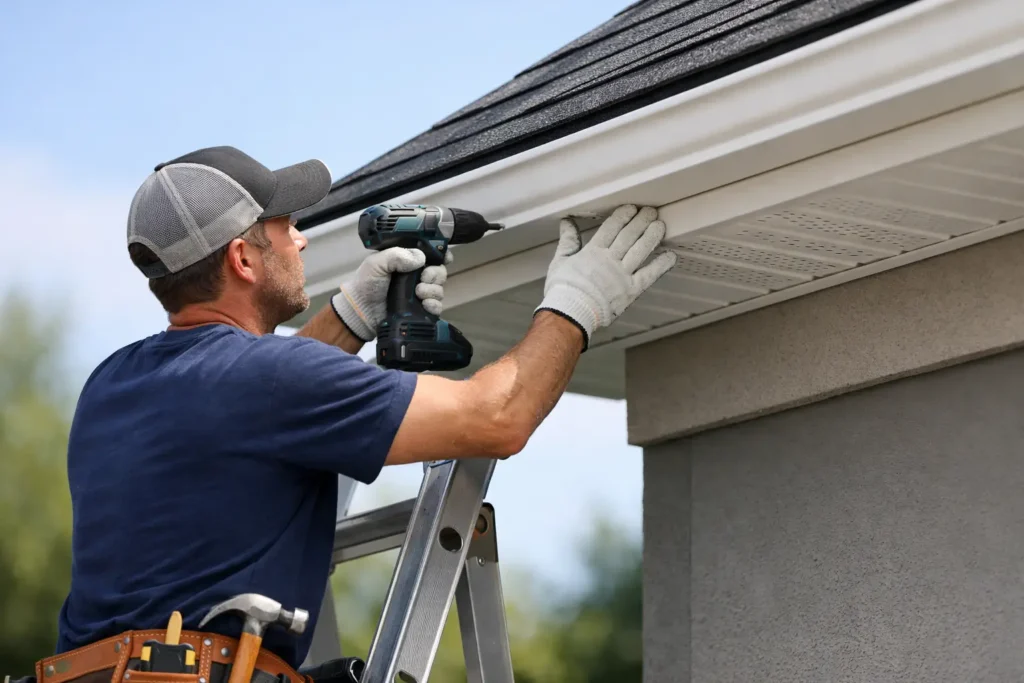
If your gutters keep pulling away, paint is peeling near the roofline, or the underside of your eaves looks stained and tired, the problem may not start with the roof itself. In many homes, soffit and fascia installation is what keeps the roof edge finished, ventilated, and protected from moisture where damage often begins quietly.
Homeowners tend to notice shingles, siding, and gutters first. That makes sense – those are the parts you see every day. But soffit and fascia do a lot of the work that keeps your exterior systems functioning together. When they are installed properly, they help support ventilation, protect roof decking, create a clean edge for gutters, and improve the finished look of the home. When they are installed poorly, small issues can turn into rot, ice problems, pest entry, and recurring maintenance.
Why soffit and fascia matter more than most homeowners think
The fascia is the vertical finishing board along the roof edge. It gives gutters a secure mounting surface and covers the exposed ends of the rafters. The soffit is the horizontal material underneath the roof overhang. In many homes, it also contains intake vents that allow outside air to move into the attic.
That airflow matters. A healthy attic needs balanced ventilation so heat and moisture do not build up. Without proper intake through the soffit, your roof system can run hotter in summer and trap moisture in colder months. In a climate with strong wind, snow, freeze-thaw cycles, and temperature swings, that is not a small detail. It affects roof life, insulation performance, and the condition of the wood around the eaves.
Just as important, fascia helps manage water at the roofline. Gutters are only as reliable as the material behind them. If fascia softens from moisture or was never installed securely in the first place, gutters can sag, pull loose, or stop draining correctly. What looks like a gutter issue is often a fascia issue underneath.
What good soffit and fascia installation should accomplish
A proper installation is not only about making the eaves look clean. It should solve several practical needs at once.
First, it should create a durable, weather-resistant edge at the roofline. That means tight fastening, accurate cuts, and materials suited to local conditions. Second, it should support the attic ventilation plan, especially if vented soffit is part of the system. Third, it should give gutters a stable backing so water can be directed away from the house instead of toward the fascia, foundation, or siding.
Appearance matters too. Straight lines, consistent trim, and color-matched finishes make a noticeable difference in curb appeal. But a clean look should come from solid workmanship, not from covering up underlying damage.
Soffit and fascia installation and attic ventilation
This is one of the most overlooked parts of the job. Homeowners often replace visible exterior components without knowing whether the home is actually getting enough intake air.
Vented soffit helps feed cooler outside air into the attic. That air works with exhaust vents higher on the roof to move heat and moisture out. If the soffit is solid where it should be vented, or if insulation has blocked airflow at the eaves, the ventilation system cannot do its job.
That does not mean every home needs the exact same setup. It depends on roof design, attic layout, insulation levels, and the existing venting system. Some older homes need upgrades beyond new soffit panels. Others mainly need damaged materials replaced and airflow restored. The right approach starts with looking at how the full roof edge and attic system are working together.
Choosing the right materials
Material choice affects maintenance, lifespan, and appearance. For most homeowners, aluminum and vinyl are the common options for soffit, while fascia wraps are often done in aluminum over wood backing. In some cases, engineered materials or custom trim details may also be part of the project.
Aluminum is a strong choice for many homes because it resists rot, handles weather well, and gives a crisp finished look. It is often preferred where durability and low maintenance are priorities. Vinyl can also perform well and is often cost-effective, but product quality and installation quality matter. In harsher conditions, cheaper materials may show wear sooner.
Wood has a classic look, but it brings more upkeep. If a homeowner wants the appearance of wood, it is worth talking through the maintenance trade-off before the work begins. A lower upfront material cost does not always mean lower long-term cost if repainting and repairs become regular needs.
What can go wrong with poor installation
Bad soffit and fascia work usually does not fail all at once. It shows up in small but persistent ways.
You may see peeling paint, dark staining, loose gutters, birds or insects getting into the eaves, or frost and moisture issues in the attic. You may also notice sections that look wavy or uneven from the street. Sometimes the trim itself is not the original problem – roof leaks, failed drip edge, overflowing gutters, or poor ventilation may have caused the damage. If those root causes are not addressed, new materials can fail again.
This is why patching only the visible area is not always the best value. If the wood backing is rotten, if the gutter pitch is wrong, or if water is getting behind the fascia from the roof edge, a cosmetic fix will not last. Good contractors look past the surface and explain what they find in plain language.
When replacement makes more sense than repair
Not every home needs a full replacement. If damage is limited to a short section and the surrounding materials are still sound, a repair may be perfectly reasonable. But if the fascia is soft in multiple areas, the soffit is sagging, pest intrusion is present, or the ventilation setup is outdated, replacement usually makes more sense.
There is also a timing question. If you are already replacing gutters, siding, or roofing, that is often the most efficient time to address soffit and fascia. These systems meet at the same edge of the house. Handling them together can improve fit, finish, and overall performance while reducing the chance of duplicate labor later.
For homeowners thinking long term, coordinated exterior work usually delivers better value than tackling each item in isolation.
What to expect during a professional soffit and fascia installation
A quality installation starts with inspection, not guesswork. The contractor should assess the roof edge, check for rot or moisture damage, review ventilation needs, and look at how the gutters tie into the system.
From there, damaged or outdated materials are removed carefully. Any compromised wood backing should be replaced before new trim goes on. The new soffit and fascia are then measured, cut, and installed to fit the structure cleanly and securely. If vented soffit is being used, airflow pathways need to remain open and functional.
The details matter here. Drip edge placement, fastening methods, corner finishing, and gutter reattachment all affect how the system performs over time. This is not a place for rushed work. A roofline is constantly exposed to sun, wind, rain, snow, and ice. Small installation shortcuts tend to show up fast.
The value of working with a contractor who sees the full exterior system
Soffit and fascia are not isolated trim pieces. They connect roofing, ventilation, gutters, and siding at one of the most vulnerable parts of the home. That is why it helps to work with a contractor who understands how those systems interact rather than treating the job as a simple cosmetic update.
For homeowners in Southern Alberta, weather adds another layer to the decision. Wind exposure, winter ice, spring runoff, and summer heat all put pressure on the roof edge. Materials and installation methods should be chosen with those conditions in mind, not copied from a mild-climate approach.
At HighLow Roofing & Exteriors, that practical mindset shapes how exterior work gets done. The goal is not just to make the home look finished on day one. It is to build a roofline that holds up, drains properly, and supports the rest of the home’s protection system.
If your eaves are showing signs of wear, the best next step is not to guess from the ground. Have the roof edge looked at by someone who can tell the difference between a simple trim issue and a larger moisture or ventilation problem. The right fix at the right time can save you from much bigger repairs later.