
A good-looking exterior can hide expensive problems for years. We see it all the time – fresh paint on trim, a few new light fixtures, and meanwhile the roof, gutters, or siding are already letting moisture and wear build up where homeowners cannot easily see it. A smart house exterior upgrade checklist starts with protection first, then moves to appearance, efficiency, and long-term maintenance.
For homeowners in Lethbridge and across Southern Alberta, that order matters. Wind, hail, snow, freeze-thaw cycles, and strong sun can all take a toll on exterior materials. If you are planning upgrades, the goal is not just to make your home look better this season. It is to make sure every exterior system works together to protect the structure and hold its value over time.
How to use a house exterior upgrade checklist
The best way to approach exterior improvements is to think in layers. Your roof sheds water. Your gutters carry it away. Your siding protects the walls. Your soffit and fascia support ventilation and edge protection. If one part is failing, the rest can suffer faster.
That is why the first question is not, “What will make the biggest visual difference?” It is, “What is most urgent?” A roof near the end of its life should come before cosmetic trim work. Gutters that overflow near the foundation deserve attention before decorative upgrades. It is not always the exciting choice, but it is usually the one that saves the most money.
A practical checklist also helps you separate full replacement needs from repairs that can still buy time. Not every worn exterior needs a complete overhaul right away. Sometimes targeted work is the right move. Sometimes patching one area only delays a larger issue. The difference comes down to age, damage pattern, and how long you plan to stay in the home.
Start with the roof
If your exterior plan does not begin with the roof, there is a good chance you are building around a weak point. Roofing is your home’s first line of defense, and problems there can affect insulation, ventilation, framing, and interior finishes.
Look at the age of the roof first. Even if it is not leaking, an older roof may have enough wear that a major siding or gutter project should be timed around it. Replacing roofing after other exterior work can sometimes create unnecessary disruption or added labor.
Then look for visible warning signs. Missing shingles, lifted edges, granule loss, exposed fasteners, soft spots, and damaged flashing all suggest that the roof needs closer attention. After storms, even small signs of impact can matter. In Southern Alberta, weather exposure is not a minor factor. It is often the reason an exterior upgrade turns into a protection project.
Material choice matters too. Asphalt roofing remains a practical option for many homeowners because it balances cost, appearance, and reliable performance. Metal roofing can make sense when durability and longevity are the priority, but it comes with a higher upfront investment. The right choice depends on budget, design, and how long you want the next roof to last.
Check gutters before they cause bigger problems
Gutters do not usually get top billing in exterior projects, but they should. When they clog, sag, leak, or pull away from the house, water starts going where it should not. That can affect fascia, siding, landscaping, and even the foundation.
A gutter upgrade is worth considering if you notice overflow during rain, staining on siding, standing water near the home, or repeated ice buildup in colder months. Seams that fail often, poor slope, or undersized runs can also point to a system that is no longer doing its job.
This is one of those areas where repair versus replacement depends on the pattern. A loose section or isolated leak may be repairable. Widespread rust, multiple separations, or recurring drainage issues usually mean it is time to replace the system and correct the layout at the same time.
Evaluate siding with both function and appearance in mind
Siding does a lot of visible work, but its real value is protection. It shields the wall assembly from moisture and wind while helping define the look of the home. If you are updating the exterior, siding often delivers one of the biggest curb appeal improvements, but only if the wall system underneath is still sound.
Walk the perimeter and look for cracks, warping, loose panels, fading, rot, impact damage, or spots where moisture may be getting in. Some issues are obvious. Others show up as peeling paint near joints, soft trim boards, or higher energy bills due to air leakage.
Full siding replacement can make sense when the material is aging out, storm damage is widespread, or you want a more durable low-maintenance finish. On the other hand, if damage is limited to one elevation or a few areas around openings, repairs may be enough. Matching older materials can be a challenge, so it helps to know whether appearance consistency matters as much as function for your home.
Do not overlook soffit and fascia
Soffit and fascia are easy to ignore until they start failing. They sit at the roof edge, help support gutter systems, and play an important role in ventilation and moisture control. When they deteriorate, the damage can spread quietly.
Signs to watch for include peeling paint, rot, staining, pest activity, and sagging gutter lines. If your attic ventilation has been poor, soffit intake may be part of the problem. If gutters have overflowed for years, fascia damage may already be underway.
This is also where a coordinated contractor can make life easier. Roofing, gutters, soffit, and fascia are connected systems. Treating them as separate problems often leads to repeat labor, missed details, and a finish that does not age evenly.
Think about energy performance while the exterior is open
Exterior upgrades are not just about weatherproofing and appearance. They can also improve efficiency. If roofing or siding is being replaced, it is a good time to look at ventilation, insulation details, and other upgrades that are harder to address later.
That does not mean every project needs to become a large efficiency remodel. It means you should ask where the best return is. Better attic airflow, properly installed underlayment, and tighter exterior components can all support comfort and durability. If you are considering future energy improvements, roof preparation and timing also matter, especially if additional rooftop systems may be added later.
Prioritize curb appeal after protection
Once the home is protected, curb appeal upgrades make more sense and last longer. Trim refreshes, updated color choices, cleaner rooflines, and coordinated materials can change the look of a house dramatically. But good curb appeal should come from a well-built exterior, not a cover-up.
If you are deciding where to spend, focus on the features buyers and neighbors notice from the street first – roof condition, siding consistency, straight gutter lines, clean fascia, and maintained entry details. A home does not need to be flashy to look cared for. It needs to look solid, clean, and intentional.
Budgeting your checklist the right way
Most homeowners do not tackle every exterior upgrade at once. That is normal. The key is to stage the work in the right order.
Start by dividing the checklist into three categories: immediate protection issues, near-term replacements, and appearance-driven upgrades. That helps you make clear decisions without losing sight of long-term goals. If financing is part of the plan, it often makes more sense to handle connected systems together than to pay for repeated mobilization and separate repairs over time.
It is also worth thinking about seasonality. Some homeowners wait until damage becomes urgent, which can limit options and add stress. Planning ahead gives you more control over materials, scheduling, and budget.
A contractor’s inspection can save guesswork
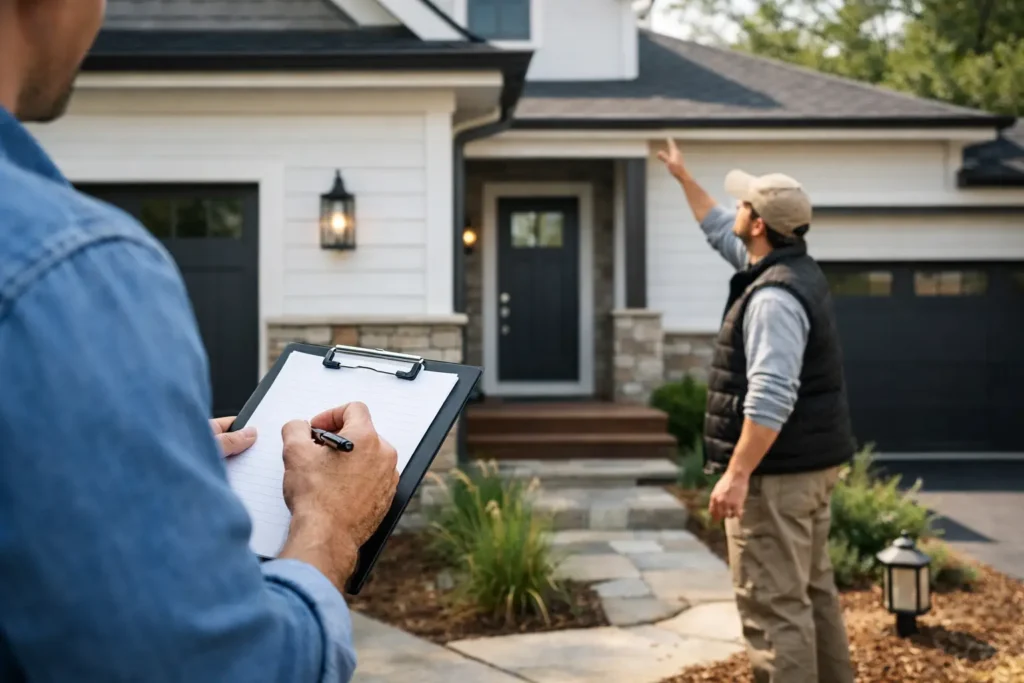
Photos from the ground only tell part of the story. A professional exterior inspection can identify what is truly failing, what still has life left, and what should be grouped into one project for better value. That is especially helpful when storm wear, hidden moisture, or ventilation issues are involved.
For many homeowners, the biggest benefit is clarity. Instead of guessing whether the roof should come before the siding, or whether the gutters are causing the fascia damage, you get a plan based on how the house actually performs. That is the kind of approach we believe in at HighLow Roofing & Exteriors – honest guidance, practical solutions, and work that protects your home for the long haul.
A strong exterior is not built by chasing the most visible problem first. It comes from making smart decisions in the right order, so every upgrade adds value instead of covering up the next repair waiting underneath.