
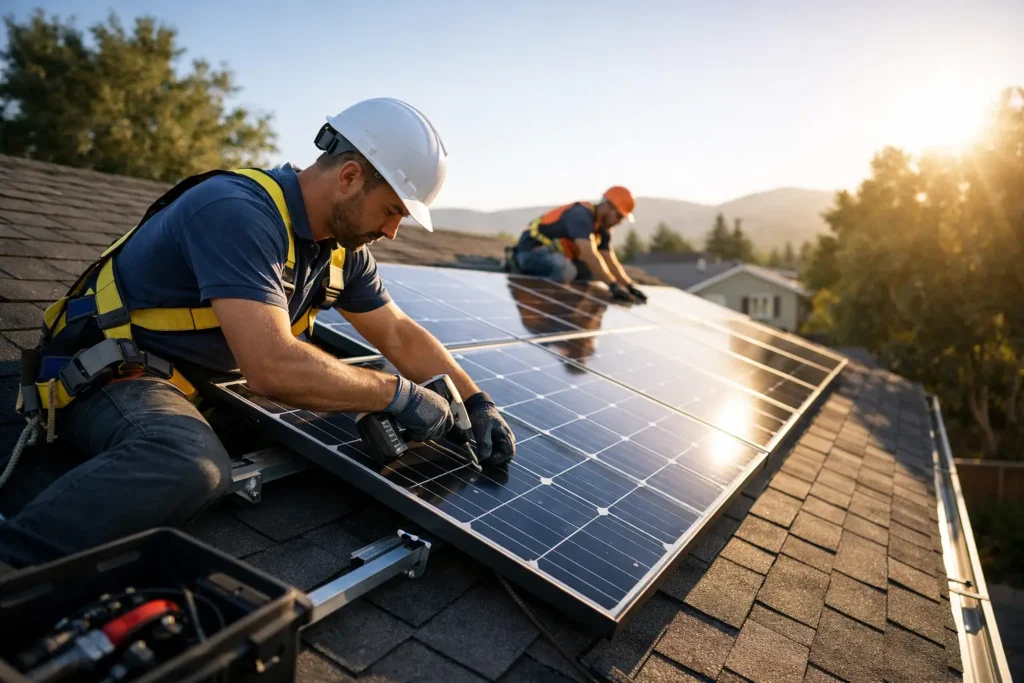
A lot of solar problems do not start with the panels. They start with the roof underneath them. If your roof is aging, poorly ventilated, or already showing signs of wear, a solar panel roof installation can turn a small roofing issue into a much bigger and more expensive one later.
That is why homeowners need to think about solar and roofing as one system, not two separate projects. Panels may help lower energy costs, but the roof still has the same job it always did – protect your home from wind, water, snow, and year-round weather exposure. In a place like Southern Alberta, where weather can shift fast and hit hard, that matters.
Why solar panel roof installation starts with the roof
Solar gets a lot of attention for energy savings, but the roof is what makes the whole setup practical in the long run. Panels are mounted to the roofing system, and that means the condition, age, and material of the roof matter from day one.
If a roof only has a few years of life left, installing solar on top of it usually does not make financial sense. Removing panels later so the roof can be replaced adds labor, coordination, and cost. In many cases, it is smarter to address roofing needs first and then move forward with solar on a solid foundation.
This is also where homeowners benefit from working with a contractor who understands exterior systems as a whole. Roofing details like decking condition, flashing, underlayment, drainage, and ventilation all affect how well the roof will perform after solar is added. A panel layout may look good on paper, but if the roof structure and weatherproofing are not ready for it, problems can show up sooner than expected.
The roof conditions that matter most
Not every home needs the same approach. Some roofs are good candidates for solar right away, while others need repairs or a full replacement before anything is mounted.
Age is one of the first things to consider. Asphalt shingles near the end of their service life should not be treated as a long-term base for new solar equipment. If your roof is already curling, losing granules, or showing signs of leaks, those issues should be addressed first.
Roof design matters too. Simple roof lines are usually easier and more cost-effective to work with than steep, cut-up sections with multiple valleys, dormers, or shaded areas. Orientation and sun exposure affect energy performance, but so do practical details like access, snow shedding, and how mounting points interact with the roofing material.
Material also plays a role. Asphalt and metal roofs can both work well, but they require different planning and attachment methods. What matters most is making sure the system respects the roof assembly instead of compromising it.
What homeowners should expect during planning
A good solar panel roof installation process begins with evaluation, not sales pressure. That means looking at the roof condition, expected lifespan, structural readiness, and any exterior details that could affect the project.
For homeowners, this stage is where honest guidance matters most. Sometimes the right answer is to move forward now. Sometimes it is to repair a section first. Sometimes it is to replace the roof so you are not paying to undo and redo work a few years down the road.
Planning should also account for how the roof handles water. Flashing details, penetrations, and drainage paths need careful attention. A roof can look fine from the ground and still have weak points that become more noticeable once new equipment is added.
Ventilation is another factor that gets overlooked. A hot attic affects roof lifespan, and it can also influence overall home performance. If the roof system is being updated as part of a solar-related project, it is worth reviewing whether intake and exhaust ventilation are doing their job.
Roof replacement and solar often make sense together
Many homeowners ask whether they should wait on solar until the next roof replacement. The answer depends on timing, but if your current roof is already nearing the end of its life, combining decisions can save money and frustration.
Replacing a roof before solar is installed gives you a cleaner starting point. It reduces the chance of future tear-off work around mounted equipment, and it gives you confidence that the materials under the panels are ready for the long haul. It also creates an opportunity to choose roofing materials that better match your goals for durability, maintenance, and appearance.
This is especially relevant in areas where roofs deal with high winds, hail risk, snow load, and freeze-thaw cycles. Homeowners are not just choosing between shingles and panels. They are deciding how their entire exterior system will perform over time.
How weather affects solar panel roof installation
Southern Alberta homeowners know that weather is not a small detail. It shapes how roofs age and how installations should be planned.
Snow, wind, temperature swings, and intense sun exposure all put stress on roofing materials. Any roof that supports solar needs to be prepared for those conditions without sacrificing water protection. Mounting points, seals, and surrounding roof details need to be handled with care because weak workmanship tends to show itself quickly when weather turns.
Snow management is one of those it-depends issues. Panels can affect how snow slides or accumulates, and that can change what happens at eaves, valleys, and walkways. There is no one-size-fits-all answer. The right approach depends on roof pitch, layout, and the broader exterior setup, including gutters and drainage.
That is why practical planning matters more than sales claims. The best result is not just a roof with panels on it. It is a system that keeps protecting the home season after season.
Cost, value, and the long view
Most homeowners are not asking only what solar costs. They are asking whether it is worth it. That is a fair question, and the answer depends on more than panel pricing.
A solar project has better long-term value when the roof underneath it is in strong condition. If a homeowner installs panels on an aging roof to save money upfront, they may end up paying more later through removal, reinstallation, and roofing work that could have been done first.
There is also the value of peace of mind. A well-planned project helps protect curb appeal, reduces the chance of water issues, and supports the home as a long-term investment. When roofing and solar decisions are made together, homeowners can usually avoid a lot of avoidable rework.
Financing can also affect timing. Some homeowners prefer to bundle improvements into one larger project rather than patching together separate upgrades over several years. That is not right for everyone, but it can make sense when the goal is to improve both protection and efficiency in one step.
Questions to ask before moving forward
Before committing to a solar panel roof installation, homeowners should ask a few direct questions. How old is the current roof? Are there any signs of damage or weak areas? What is the expected lifespan of the roofing material under the future panel layout? How will penetrations and flashing be handled? If repairs are needed later, how complicated will access become?
These are not minor details. They are the difference between a project that looks good at install and one that continues to perform years later.
It also helps to think about the rest of the exterior. Gutters, fascia, soffit, and ventilation all play a role in protecting the home. If those systems are already due for attention, it may be more efficient to plan improvements together instead of treating each one as a separate problem.
A smarter way to think about solar roofing
The best solar decisions usually come from homeowners who take a practical view. They are not just chasing a trend or a sales pitch. They are asking whether their roof is ready, whether the timing makes sense, and whether the project supports the home’s long-term value.
That mindset leads to better outcomes. It keeps the focus where it belongs – on protecting the house first, then improving efficiency in a way that lasts. For homeowners in Lethbridge and across Southern Alberta, that kind of planning matters. Weather is tough, replacement costs are real, and shortcuts tend to show up later.
At HighLow Roofing & Exteriors, that is the kind of thinking we believe in. A roof should be prepared to do its job well before anything gets added to it, and homeowners deserve clear guidance that respects both their budget and their home.
If you are considering solar, start by looking up – not just at the panels, but at the roof that has to carry them for years to come.