
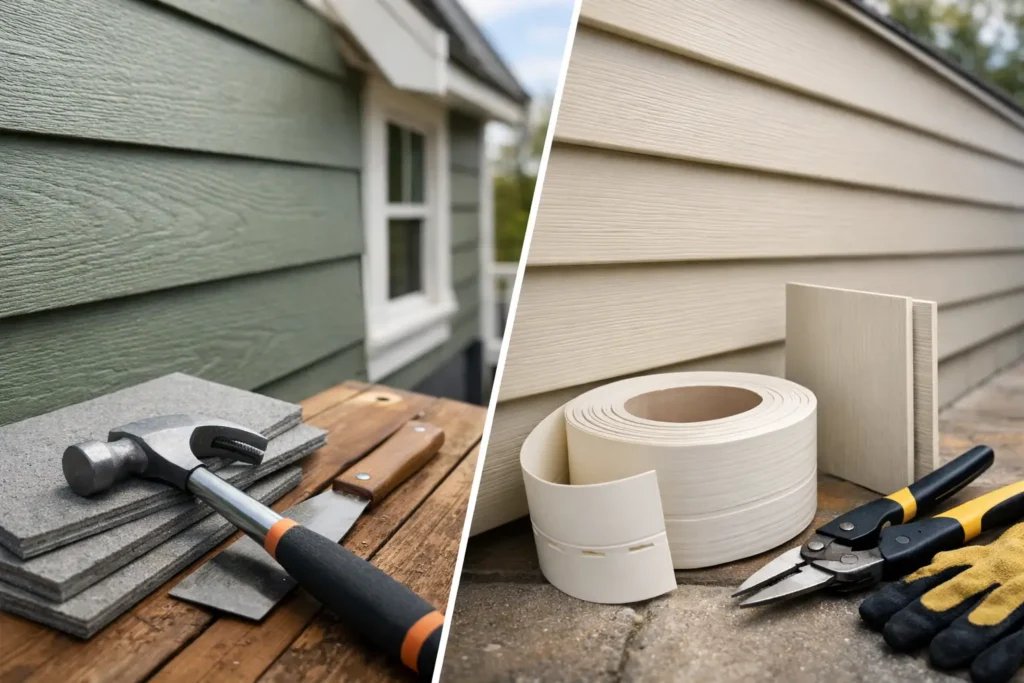
If your siding is faded, cracked, storm-worn, or simply showing its age, the choice between hardie board vs vinyl siding gets real fast. Homeowners are usually not looking for a product brochure – they want to know what will hold up, what will look good in five or ten years, and what makes sense for their budget.
Both materials are popular for a reason. Vinyl siding is affordable, low maintenance, and widely available. Hardie board, often used as shorthand for fiber cement siding, is known for durability, a more solid feel, and stronger resistance to harsh weather. The better option depends on what you value most: lower upfront cost, long-term toughness, appearance, or a balance of all three.
Hardie board vs vinyl siding: the biggest difference
The biggest difference comes down to material and performance. Vinyl siding is made from PVC plastic. It is lightweight, easier to install, and generally less expensive. Hardie board is a fiber cement product made from cement, sand, and cellulose fibers. It is heavier, more rigid, and built to stand up to tougher conditions.
That difference affects almost everything else. Vinyl tends to flex with temperature changes and can crack under impact in colder weather. Hardie board is more stable and more resistant to hail, wind, moisture, and fire. On the other hand, fiber cement usually costs more to buy and install, and it requires painting over time.
For many homeowners, this is not just a siding question. It is a home protection question. Your siding has to work with your trim, soffit, fascia, gutters, and roofing system to keep water moving where it should and prevent avoidable damage.
Cost: where vinyl usually wins
If price is your main concern, vinyl siding usually comes out ahead. Material costs are lower, and labor tends to be lower too because vinyl is lighter and faster to install. For homeowners trying to refresh curb appeal without stretching the budget too far, vinyl can be a practical choice.
Hardie board is a bigger investment upfront. The material itself costs more, and installation is more specialized. It needs proper cutting, fastening, flashing, and gap management. That added labor matters, especially on larger homes or projects with a lot of detail work around windows, corners, and trim.
That said, upfront cost is only part of the picture. A lower initial price does not always mean lower lifetime value. If you plan to stay in your home for many years, the longer-term durability of fiber cement may justify the extra expense.
Durability in tough weather
This is where the hardie board vs vinyl siding decision often becomes clearer.
Vinyl performs well in many environments, but it has limits. Strong wind can loosen panels if they were not installed correctly. Hail can crack it. Extreme heat can warp it, and freezing temperatures can make it more brittle. Good-quality vinyl and quality installation improve performance, but the material still has natural vulnerabilities.
Hardie board is built for tougher conditions. It handles wind, moisture, and temperature swings better than standard vinyl in most cases. It is not indestructible, but it is far less likely to crack from impact or shift from weather extremes. For homes exposed to demanding seasonal changes, that added stability is a real advantage.
This matters in places where weather is not gentle on exterior materials. A siding product might look fine on paper, but local climate tells the real story. Homes that face repeated wind, storms, and wide temperature swings need materials chosen with long-term performance in mind, not just appearance on day one.
Maintenance and upkeep
Vinyl siding is popular partly because it asks very little from homeowners. It does not need painting, and routine cleaning is usually enough to keep it looking decent. If low maintenance is your top priority, vinyl has strong appeal.
Hardie board also holds up well, but it is not maintenance-free. Factory-finished products can keep their color for many years, yet they will eventually need repainting or touch-ups. The payoff is that many homeowners prefer the look of painted fiber cement because it has a more substantial, finished appearance.
There is a trade-off here. Vinyl gives you easier ownership. Hardie board gives you a more durable, premium-looking surface, but with more upkeep over time. Neither choice is wrong. It depends on whether you want the simplest maintenance routine or a material that can offer a higher-end finish and stronger weather performance.
Appearance and curb appeal
For some homeowners, siding is mainly about protection. For others, appearance carries just as much weight. That is reasonable. Siding makes up a huge part of what people see from the street.
Vinyl siding has improved a lot over the years. It comes in many colors and profiles, and better products look cleaner and more refined than older versions. Still, vinyl often has a lighter, less substantial appearance up close. The panels can show seams more clearly, and in some lighting the finish can look less natural.
Hardie board tends to win on appearance for homeowners who want a more custom, upscale look. It better mimics the texture of painted wood and generally has crisper lines. It also pairs well with trim details that help a home look more finished and intentional.
If resale value and curb appeal are high on your list, fiber cement often has the edge. Buyers tend to notice when an exterior feels solid, well-built, and thoughtfully updated.
Energy efficiency and insulation
Siding by itself is not the main driver of home energy performance. Insulation, house wrap, air sealing, attic ventilation, and roof condition usually matter more. That said, siding still plays a role as part of the whole exterior system.
Standard vinyl and hardie board do not create major insulation on their own. Some insulated vinyl products can help improve thermal performance, but results vary. Fiber cement is not an insulation product, though it does provide a durable protective shell.
The better question is whether your siding replacement is being approached as part of a complete exterior upgrade. If moisture control, flashing details, trim work, and ventilation are handled properly, your home will perform better regardless of which siding material you choose.
Installation matters more than many homeowners realize
A good material installed poorly will still cause problems. This is especially true with siding.
Vinyl must be installed with room for expansion and contraction. If it is nailed too tightly or flashed incorrectly, it can buckle, trap water, or come loose in wind. Hardie board requires careful handling and precise installation details to avoid moisture issues, edge damage, or premature wear.
This is why choosing a contractor matters almost as much as choosing the siding itself. Proper installation protects the wall system underneath and helps the siding perform the way it was designed to. It also affects warranty protection, appearance, and lifespan.
A reliable exterior contractor will not only discuss color and style. They will look at trim, flashing, soffit, fascia, gutter lines, and other areas where water management can make or break the finished result.
Which siding is right for your home?
If you want the lowest upfront cost, minimal maintenance, and a solid improvement over aging siding, vinyl may be the right fit. It is a sensible option for many homeowners, rental properties, and budget-conscious replacement projects.
If you want stronger weather resistance, a more premium appearance, and better long-term durability, hardie board is often worth the extra investment. It tends to make the most sense for homeowners planning to stay put, improve resale appeal, or build a tougher exterior against demanding conditions.
There are also cases where the answer is not simple. A homeowner might prefer hardie board on the front elevation for curb appeal but need to stay within a strict overall budget. Another may choose vinyl because it fits the financial plan today, while still offering a clean, attractive finish when installed well. Good decisions are not always about picking the most expensive product. They are about matching the product to the home, the climate, and the homeowner’s priorities.
For families in places like Lethbridge and across Southern Alberta, weather exposure is not a small detail. It should be part of the decision from the start. HighLow Roofing & Exteriors works with homeowners who need more than a quick cosmetic update. They want an exterior that protects their investment, holds up over time, and looks right on the home.
If you are weighing hardie board vs vinyl siding, the best next step is not guessing from a photo or choosing based on price alone. It is getting a clear look at your home’s condition, your budget, and how each option will perform where you live. The right siding should do more than change the look of your house – it should give you confidence every time the weather turns.