
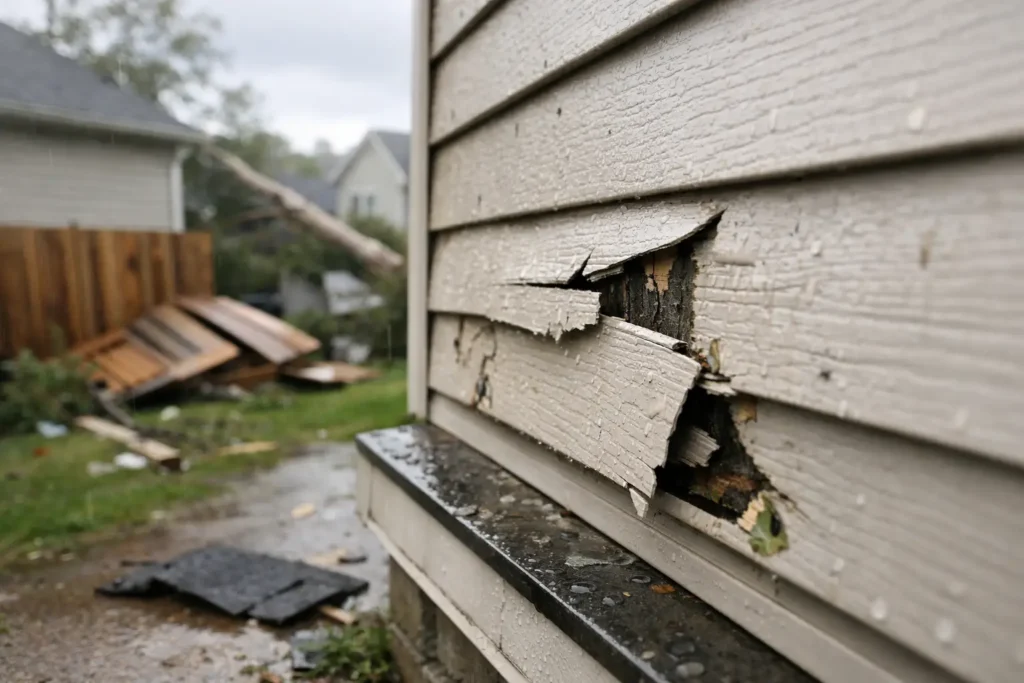
After a windstorm or hail event, siding damage is easy to miss from the driveway. Some of the most common signs of storm damage on siding show up as small cracks, loose panels, or moisture issues that seem minor at first but can lead to bigger repairs if they are ignored.
In Southern Alberta, storms do not always leave obvious destruction behind. A few dents, a lifted edge, or a small gap along a wall can be enough to let water in. That is why homeowners should know what to look for before cosmetic damage turns into rot, mold, or insulation problems.
Why siding damage matters more than it looks
Siding does two jobs at once. It gives your home a finished appearance, and it acts as a protective layer against rain, wind, temperature swings, and debris. When a storm compromises that outer shell, the real issue is not just how the house looks. The real issue is what can happen underneath.
Wind can loosen panels without tearing them off completely. Hail can bruise or crack materials in ways that are only visible up close. Water can then work behind the siding and affect sheathing, framing, and insulation. What starts as a small exterior problem can become a larger repair if it is left unaddressed through another season of bad weather.
Common signs of storm damage on siding
Storm damage does not always appear the same from one house to the next. The type of siding, the direction of the storm, the age of the material, and how the home was installed all play a role. Still, there are a few consistent warning signs worth checking after severe weather.
Cracks, chips, and holes
Hail and flying debris often leave behind small fractures that are easy to overlook. Vinyl siding may crack at the edges or split through the face of a panel. Fiber cement can chip or show impact marks. Even a small puncture matters because it creates an opening for moisture.
Fresh storm-related damage often looks sharper and cleaner than older wear. If you notice new breaks that were not there before a storm, that is a strong sign the siding took a hit.
Loose or rattling panels
Strong winds can pull siding away from the home without fully detaching it. You may notice a section that looks uneven, panels that vibrate in the breeze, or pieces that no longer sit flat against the wall. Sometimes the damage is at the fastening points, and sometimes the panel itself has warped or lifted.
This kind of damage matters because once one section loosens, the next storm can peel back more of the wall. What looks like a minor alignment issue can quickly turn into exposed underlayment and water intrusion.
Dents and impact marks
Not every hail strike causes a crack. Some materials show dents, bruising, or pockmarks instead. Aluminum siding is especially likely to dent, but other materials can show softer impact damage too. These marks may seem cosmetic, but they can still affect performance if they weaken the protective surface or expose vulnerable areas around seams.
If dents are concentrated on one side of the house, especially the side that faced the storm, that pattern often points to weather damage rather than normal aging.
Warping or buckling
Buckled siding can happen for more than one reason. Heat exposure, poor installation, and trapped moisture can all play a part. But after a storm, warping may signal that water got behind the panels or that wind pressure stressed the material enough to distort it.
It depends on the siding type. In some cases, a warped section can be repaired. In others, especially if moisture is involved, replacement is the better long-term solution.
Gaps at seams, corners, and trim
Storm movement often shows up where siding meets trim, soffit, fascia, or window and door casings. If corners look separated, joints have widened, or trim pieces have shifted, there may be hidden damage nearby. These gaps are important because they create direct entry points for wind-driven rain.
Pay close attention to areas around windows, garage doors, and rooflines. These transition points tend to take the most stress during severe weather.
Moisture stains or swelling inside the home
Sometimes the clearest signs of storm damage on siding are not outside at all. If you notice peeling paint, damp drywall, musty smells, or discoloration on interior walls after a storm, siding damage may be part of the problem. Water does not always enter through the roof alone. Compromised siding can let moisture into wall assemblies, especially during heavy wind-driven rain.
By the time interior symptoms appear, the issue may have been developing for a while. That makes a prompt exterior inspection even more important.
Mold, mildew, or algae in unusual spots
A little exterior discoloration is not always storm-related. Shaded sides of a house can naturally collect mildew over time. But if you suddenly see streaking, green growth, or dark patches where water should not be collecting, storm damage may have altered the way moisture moves across the wall.
This is especially true if the staining appears below a loose panel or near a recently opened seam. Persistent moisture is a sign that the siding system may no longer be shedding water properly.
Debris damage near one wall
After a storm, look at the areas where tree branches, gravel, patio furniture, or other debris may have struck the house. Damage from debris is often localized, which makes it easy to dismiss. But one hard impact can crack a panel, break trim, or loosen the siding attachment enough to create future problems.
Even if the damaged area is small, it is worth having it checked before repeated moisture exposure makes the repair more extensive.
What to inspect after a storm
A careful visual check from the ground can tell you a lot. Walk around the home in daylight and look at each elevation from more than one angle. Uneven lines, shadows, and reflective changes often reveal damage that is easy to miss head-on.
Look closely at the side of the house that took the strongest wind or hail. Check beneath windows, around corners, near downspouts, and along the lower courses where splashback and debris impact are more common. If you find siding damage, it also makes sense to have the related exterior systems checked. Gutters, soffit, fascia, and roofing often take damage in the same storm.
Take photos as you go. That helps with insurance documentation and gives you a clear record if the condition worsens over time.
When small damage is not really small
One of the biggest mistakes homeowners make is waiting because the siding still looks mostly intact. A cracked panel does not need to be large to cause trouble. A loose edge does not need to flap dramatically to let water in. Exterior systems fail gradually before they fail visibly.
There is also a matching issue to consider. If your siding is older or faded, replacing one damaged section later may be harder than addressing the issue sooner, when repair options are more straightforward. In some cases, a targeted repair is all that is needed. In others, widespread storm impact or brittle aging materials can make partial replacement less practical.
That is why a professional assessment matters. A contractor can tell the difference between surface wear, installation issues, and true storm damage, and recommend the most cost-effective path forward.
Should you repair or replace storm-damaged siding?
The answer depends on the extent of the damage, the age of the siding, and whether water has already gotten behind the wall. If the damage is isolated and the surrounding material is still in good shape, a repair may be the right move. If multiple elevations are affected, panels are brittle, or moisture intrusion is suspected, replacement may offer better long-term value.
Homeowners also need to think beyond the immediate patch. A proper solution should restore protection, maintain curb appeal, and hold up through the next round of harsh weather. That is especially important in places like Lethbridge, where wind, hail, and temperature swings can test every part of the exterior.
If you suspect storm damage, it is smart to schedule an inspection while the evidence is still fresh. A trusted exterior contractor like HighLevel Roofing & Exteriors can help you understand what happened, what needs attention now, and what will best protect your home going forward.
A storm may pass in an hour, but the damage it leaves behind can keep working on your home long after the sky clears. Catching the early signs gives you the best chance to protect both your siding and the structure behind it.