
Table of Contents
- Signs You Need New Siding: When to Act
- Signs of Siding Damage: Deterioration and Rot
- Wood Rot in Siding: A Critical Warning Sign
- Rising Energy Bills and Efficiency Loss
- Siding Repair or Replacement: How to Decide
- Siding Lifespan and Material Considerations
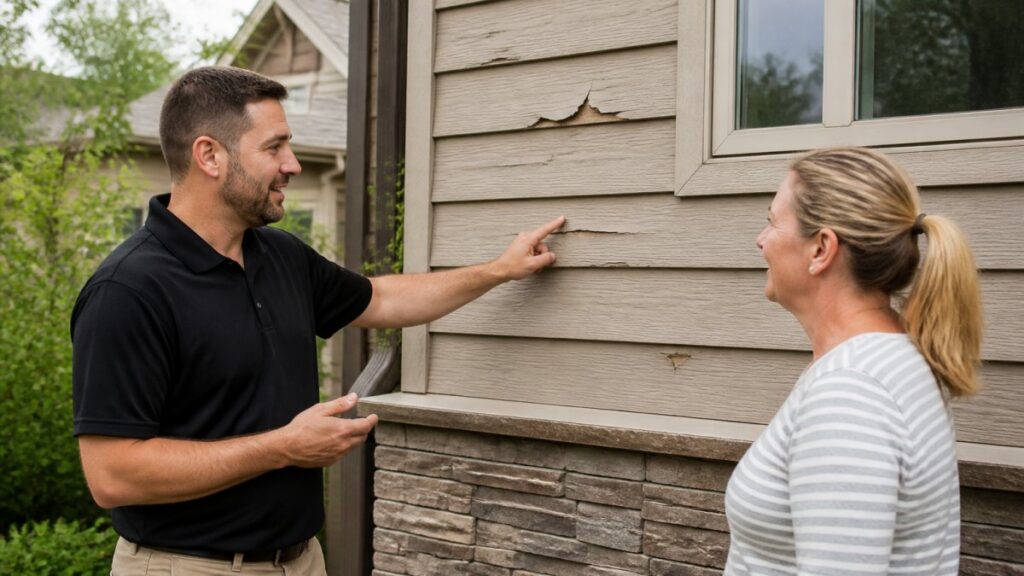
- What You Can Safely Inspect Yourself
- Frequently Asked Questions
Last Updated: October 12, 2026
Signs You Need New Siding: When to Act
Your home’s siding is its first line of defense against weather, moisture, and temperature swings. When it fails, everything behind it is at risk.
Signs you need new siding often appear gradually, so many homeowners miss them until damage spreads. Catching deterioration early lets you decide whether targeted repairs will hold or replacement will save money long term.
Visible Cracks, Holes, and Gaps
Cracks are the most visible warning sign, but not all demand immediate action. Small surface cracks in paint or finish may only need touch-up work.
Holes and gaps are more serious, caused by impact damage, fastener failure, or shifted panels. Even small holes let in moisture and pests. If a fingernail fits into the gap, water and air are getting through.
Warped, Buckling, or Loose Panels
Siding should sit flat and flush. When panels bow, cup, or turn wavy, the material is reacting to moisture, temperature swings, or structural movement underneath.
These issues rarely stay isolated, once one section warps, adjacent panels follow. Fixing one warped panel might buy a year or two, but if the root cause persists, you’ll replace panels repeatedly.
Paint Peeling, Fading, or Bubbling
Paint failure is an early warning system. Peeling means the coating has lost adhesion, usually from moisture working into or behind the material.
Needing a new coat every few years instead of every 7-10 years is a red flag: the underlying siding is likely failing and paint is just masking the problem.
Signs of Siding Damage: Deterioration and Rot
Soft Spots and Material Breakdown
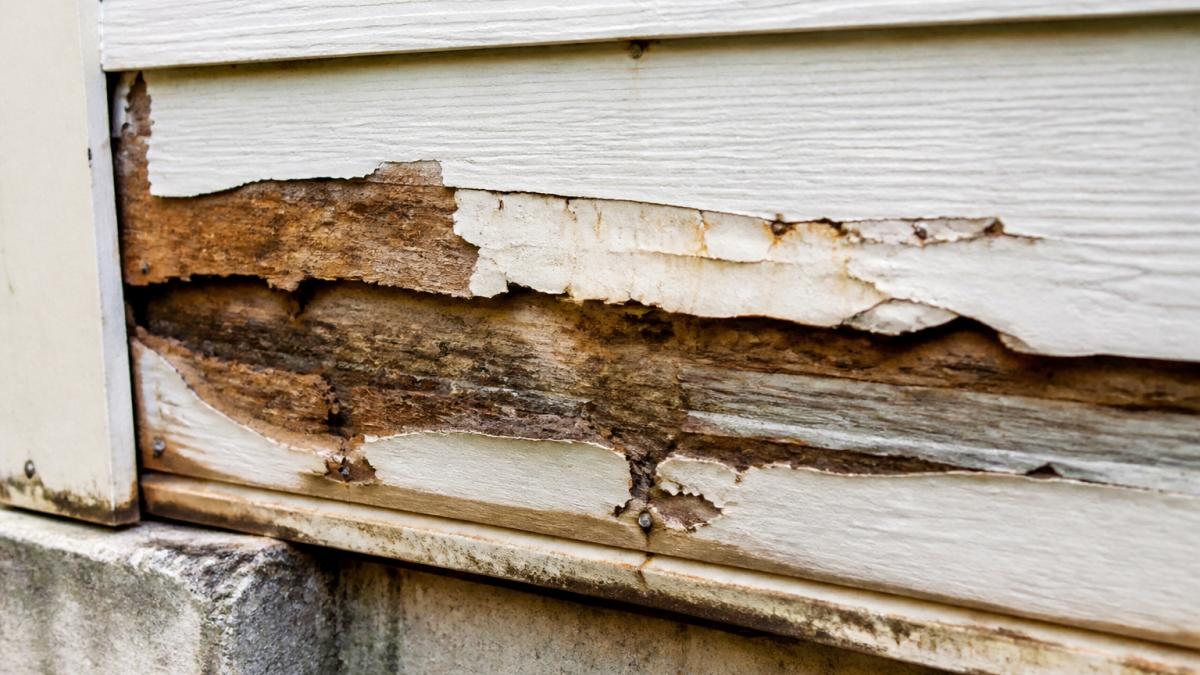
Press firmly against your siding, it should feel solid and rigid. Soft spots mean the material is breaking down: wood rotting, vinyl turning brittle, or the substrate failing. Wood splinters or turns spongy; vinyl becomes chalky or loses shape; composites delaminate or erode. Check around any soft spot carefully, the moisture that created it usually affects neighboring sections too.
Moisture Intrusion and Water Damage
Water damage behind siding is the most expensive problem to fix, because by the time you see it, it has spread into wall cavities, insulation, and framing. Watch for:
- Discoloration or staining on the siding surface (dark streaks, green or black mold growth)
- Water stains or damage on interior walls near the siding line
- Soft or spongy wall sheathing visible through gaps or holes
Moisture damage also shows as peeling paint, bubbling, or efflorescence (white mineral deposits). Any of these means water has breached the outer layer and is working into your structure.
Wood Rot in Siding: A Critical Warning Sign
Wood rot demands immediate attention. It means wood siding (or the wood substrate under other siding types) has been exposed to sustained moisture long enough for fungal growth to destroy its structural integrity.
Probe suspected areas with a screwdriver or awl. Rotted wood is soft and crumbly and the tool penetrates easily; sound wood resists.
If rot is confined to a small area and the rest of your siding is sound, targeted repair may work.
Rising Energy Bills and Efficiency Loss
Your siding plays a critical role in thermal performance. Gaps, cracks, warping, and deterioration let conditioned air escape and outside air infiltrate, forcing heating and cooling systems to work harder. Watch for sudden bill increases when usage hasn’t changed, and drafts near exterior walls even with the heat running.
Replacing decades-old, deteriorating siding with modern, well-insulated material can noticeably reduce energy costs.
Siding Repair or Replacement: How to Decide
The hardest question is whether this is a repair job or a replacement project. The answer depends less on how bad any single spot looks and more on how widespread the damage is, how old the siding is, and whether the moisture source has been corrected.
Start With a Damage Map, Not a Single Spot
Walk the exterior one side at a time, top to bottom, and mark every problem on a sketch or with photos. The pattern matters more than the worst individual defect:
- Isolated damage, one or two affected areas, with sound siding between them. This is the classic repair scenario.
- Clustered damage, several problems within one wall section or around one window, door, or penetration. Often a localized water or flashing issue that can be corrected.
- Scattered damage, problems on multiple sides of the home with no single obvious source. This usually points to material-wide aging.
- Progressive damage, you repaired an area last year and are finding new soft spots nearby this year. Recurring damage is one of the strongest signals that repair is no longer keeping up.
A useful rule of thumb: if damage is confined to roughly one wall section and the surrounding material is sound, repair is worth pricing. Once damage appears on multiple elevations or keeps returning, replacement usually wins on durability and long-term cost.
The Questions That Actually Drive the Decision
Work through these in order. A “no” early on pushes you toward replacement:
- Is the underlying structure sound? Soft sheathing, rot in framing, or moisture staining behind the panels means you’re doing moisture remediation plus siding, not a simple repair.
- Has the moisture source been corrected? Failed flashing, clogged eavestrough, a leaking window surround, or grading that sends water toward the foundation. If the source is still active, any repair will fail again.
- How much of the siding is affected? If repairs would touch a large share of the wall, the savings of patching shrink and you’re left with a patchwork appearance.
- How old is the siding relative to its service life? Siding in the last quarter of its lifespan rarely justifies significant repair spending.
- Can you still match the material? Faded or discontinued siding means repairs may be visible even when sound.
- What is your time horizon? Staying for years? Durability and energy performance matter more than the lowest upfront number. Selling soon? A documented repair may be more sensible.
When Repairs Make Sense
Targeted repair is usually right when damage is confined to one or two small areas with sound material around them, the wall structure and sheathing are dry and solid, the root cause is identified and corrected, the siding is well within its expected lifespan, and matching material is still available.
Typical repairs include replacing a few damaged panels, resealing joints and penetrations, re-securing fasteners, correcting flashing, and repainting a limited area.
When Full Replacement Is the Better Investment
Replacement is the smarter choice when damage is scattered across multiple elevations, new problems keep appearing despite previous repairs, the siding is near or past its service life, rot or significant moisture damage has reached the sheathing or framing, the material can no longer be matched, repairs would address only a small fraction of the wall, or you want consistent appearance, modern weather detailing, and better thermal performance in one project.
If you can point to one damaged area and everything around it is solid, get a repair quote. If you are pointing at problems on three sides of the house, or you have already repaired the same area twice, get a replacement quote. Comparing both, side by side, is the only way to see the real trade-off.
Get a Professional Assessment Before You Commit
Ground-level inspection has limits. A qualified contractor can probe suspect areas, check sheathing and insulation behind the siding, verify flashing and drainage, and confirm whether moisture has traveled beyond what you can see, turning a guess into a decision before you spend on repairs or replacement.
Siding Lifespan and Material Considerations
Siding doesn’t fail the same way in every material or on the same schedule in every climate. Knowing what you have, and how it handles freeze-thaw cycles, intense UV, and wind-driven rain, tells you which warning signs matter most.
Expected Service Life by Material
Typical ranges under normal maintenance; harsh exposure and skipped maintenance push you toward the low end:
| Material | Typical service life | What drives early failure |
|---|---|---|
| Vinyl | 20-40 years | Brittleness in extreme cold, warping from improper expansion gaps, UV fading, impact cracking |
| Wood | 20-40 years with regular maintenance | Rot, insect damage, paint failure, moisture at end grain and joints |
| Fiber cement | 25-40+ years | Impact cracking, substrate movement, poorly sealed joints and penetrations |
| Composite / engineered wood | 20-30 years | Delamination, surface erosion, moisture intrusion at cut edges and seams |
Treat these as planning guides, not guarantees. A well-detailed installation with correct flashing and drainage routinely outlasts a poorly installed system of the same material.
How Each Material Fails, and What to Watch For
Vinyl becomes brittle in cold, so winter brings cracks and impact damage.
Wood fails from the outside in and the inside out.
Fiber cement resists rot and insects well but is rigid and can crack on impact or where the substrate shifts.
Composite and engineered wood can delaminate when moisture reaches cut edges, seams, or poorly flashed areas.
Why Climate Accelerates the Timeline
Repeated freeze-thaw cycles are hard on siding. Water seeping into a joint, crack, or unsealed penetration expands when it freezes, widening the opening and letting in more water next time, over several winters, a hairline gap becomes a real entry point.
Siding that might reach 30 years in a mild climate can show serious wear well before that.
Maintenance That Extends Service Life
A simple annual routine buys years:
- Walk the exterior each spring and fall and note new cracks, gaps, or discoloration
- Re-caulk joints and penetrations before winter, not after water enters
- Keep eavestrough clear so water is directed away from walls
- Maintain paint or finish on wood and paintable surfaces
Photograph your siding each year from the same angles. Comparing photos over time reveals gradual fading, spreading stains, or new cracking that is easy to miss when you see the house every day.
If you’re unsure what material you have or how much life is left, a professional assessment can identify the product, evaluate its condition, and give you a realistic timeline.
What You Can Safely Inspect Yourself
You don’t need an inspector to spot obvious siding problems. A careful walk around your home will reveal most issues:
- Look for visible cracks, holes, gaps, or separated panels
- Press gently on siding to feel for soft spots or movement
- Check for peeling paint, bubbles, or discoloration
- Inspect where siding meets trim, windows, and doors for gaps or water staining
Photograph any damage you find, it helps when getting quotes and deciding whether to repair or replace. Avoid ladders and your roof for upper sections, that’s where a professional assessment adds real value.
Recognizing when your siding needs replacement protects your home from costly water damage and preserves the exterior protection your property depends on.
Frequently Asked Questions
How do I know if my siding needs to be replaced?
Look for multiple warning signs together: visible cracks, holes, or gaps; warped or buckling panels; peeling or bubbling paint; soft spots when pressed; and water stains on interior walls. If your siding is aging and shows several of these issues, replacement is likely needed. A professional inspection can confirm whether isolated repairs or full replacement makes sense for your home.
Can damaged siding be repaired, or does it need to be replaced?
Minor damage like small cracks or isolated holes can often be repaired, especially if the rest of your siding is in good condition. However, if damage is widespread, involves wood rot, or affects more than 30% of your siding, full replacement is usually more cost-effective and protective. A contractor can assess your specific situation and recommend the best approach for your property.
What is the typical siding lifespan, and how does material affect it?
Vinyl siding typically lasts 20-40 years, while fiber cement (like Hardie Board) can last 25-50 years or longer with proper maintenance. Wood siding requires more frequent upkeep and may need replacement every 15-30 years. Climate, installation quality, and maintenance all influence lifespan. Regular inspections help you catch problems early and extend the life of your exterior.
Can water damage behind siding be fixed, or is replacement required?
Water damage behind siding often requires removal and replacement of affected panels and wall sheathing. If moisture has caused wood rot or structural damage, repairs become more extensive. Early detection through professional inspection can prevent costly damage. If you notice interior wall damage, peeling paint, or mold, have a contractor assess the extent of moisture intrusion immediately.