
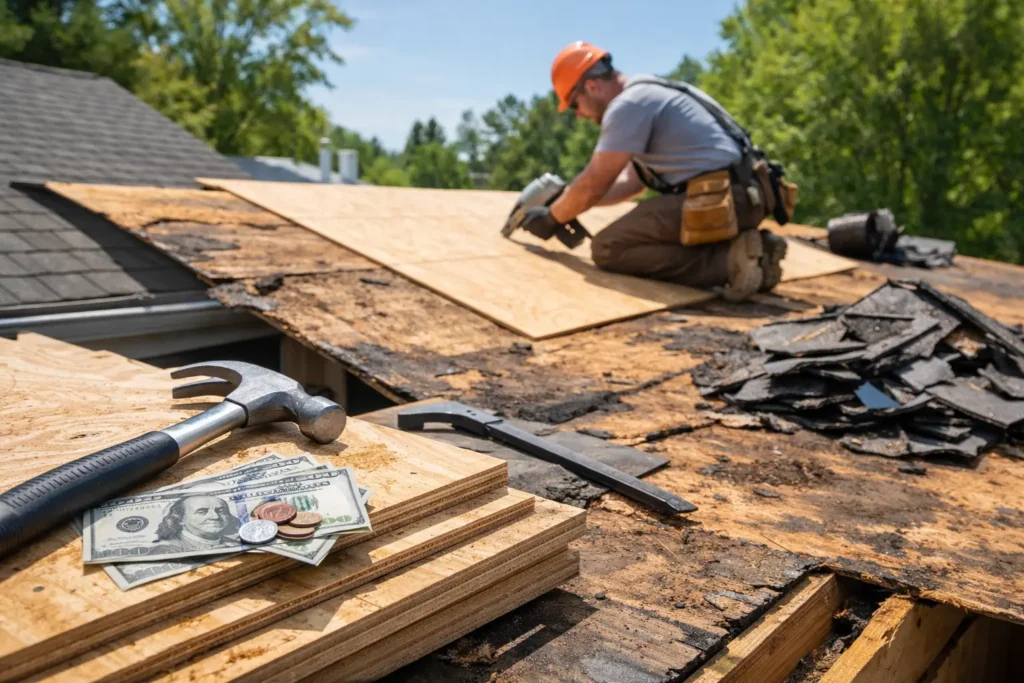
A roof replacement quote can feel straightforward until the decking underneath tells a different story. That is where roof sheathing replacement costs enter the conversation, and for many homeowners, it is the part of the job they were not expecting. If your shingles are coming off and the wood below shows rot, sagging, staining, or soft spots, replacing the surface roofing alone is not enough. The roof system needs a solid base.
Sheathing, sometimes called roof decking, is the layer of wood panels attached to the roof framing. It gives shingles or metal roofing a stable surface to fasten to, and it helps the whole roof perform the way it should in wind, snow, and moisture. When that layer is compromised, the roof above it cannot do its job for long.
What affects roof sheathing replacement costs?
The biggest reason roof sheathing replacement costs vary so much is that the problem is often hidden until the old roof is removed. From the ground, a roof might look tired but manageable. Once the shingles and underlayment come off, a contractor may find isolated damaged panels or larger areas weakened by long-term leaks, poor attic ventilation, or ice damming.
The amount of damaged wood is the first major cost factor. Replacing a few sheets around a chimney or valley is very different from replacing large sections across multiple slopes. Most sheathing is installed in 4-by-8-foot panels, so pricing often follows the number of panels that need to be removed and reinstalled.
Material choice matters too. Plywood and OSB are the most common options, but thickness, grade, and local code requirements can change the final price. In areas where snow loads and weather exposure are serious concerns, the right material is not just about keeping costs down. It is about making sure the roof is built to last.
Labor is another big piece of the total. Removing damaged decking takes time, especially if the wood is swollen, brittle, or fastened under older roofing layers. Then the new panels need to be cut, fitted, and secured properly before the underlayment and finished roofing can go on. Steeper roofs, complex rooflines, and multi-story homes usually raise labor costs because the work takes longer and requires more safety setup.
Disposal, permit requirements, and related repairs can also affect the number on your estimate. If moisture has reached fascia, soffit edges, insulation, or interior areas, the scope may grow beyond the sheathing alone.
Typical price ranges homeowners can expect
In most cases, roof sheathing replacement costs are added to the base cost of a roof replacement rather than quoted as a stand-alone project. Homeowners may see pricing charged per sheet, per square foot, or as part of a repair allowance built into the proposal.
For limited damage, replacing a handful of panels may add a modest amount to the job. If widespread rot or delamination is uncovered, the added cost can move up quickly because both materials and labor increase together. A small repair could mean replacing only a few panels. A more serious issue could mean partial redecking across one side of the home or, in older homes, a much larger structural refresh.
That is why estimates can differ so much from one house to another. Two roofs with the same square footage can have very different sheathing conditions underneath. Age, ventilation history, previous leak repairs, and how long the roof has been left exposed to moisture all matter.
A trustworthy contractor should explain whether the estimate includes a set allowance for decking replacement or whether damaged sheathing is billed only after tear-off reveals the actual condition. Clear communication here helps prevent surprises.
Why sheathing goes bad in the first place
Most damaged sheathing does not fail overnight. It usually deteriorates over time. A slow roof leak around flashing, valleys, pipe penetrations, or old shingle damage can soak the wood gradually. Even if the leak never shows up dramatically on your ceiling, it may still be softening the decking underneath.
Poor attic ventilation is another common cause. When warm, moist air gets trapped in the attic, condensation can collect beneath the roof deck. Over time, that repeated moisture exposure weakens the panels and shortens the life of the roofing system above them.
In colder climates, snow and freeze-thaw cycles can be especially hard on a roof system. Ice dams, backed-up water, and long stretches of wet weather can create the kind of hidden damage that only becomes obvious once the roof is opened up. Homes in wind-prone or storm-prone regions may also see sheathing issues after water intrusion from lifted shingles or flashing failures.
Signs you may need replacement, not just repair
Some sheathing problems can be addressed in small sections. Others point to a broader issue that calls for replacement. If your roof feels spongy underfoot during inspection, shows visible sagging, or has recurring leaks despite past repairs, the decking may be compromised. Inside the home, water stains, peeling paint near the ceiling line, moldy attic smells, or damp insulation can all point to trouble above.
From the exterior, curling shingles, uneven roof planes, or areas that seem to dip may be signs that the surface below is no longer sound. Not every uneven roof means bad sheathing, but it is worth having inspected by someone who can tell the difference between cosmetic wear and structural concern.
The key point is simple: new shingles over bad decking are not a real fix. If the base layer is weak, the new roof will not perform the way it should.
How contractors usually handle decking damage
During an estimate, a contractor may suspect sheathing damage based on visible sagging, leak history, attic conditions, or soft spots. But no one can confirm the full extent until the roofing materials are removed. That is why many roofing contracts include language about possible decking replacement as needed.
A good contractor will document what is found, explain why replacement is necessary, and show you how the damaged areas affect the integrity of the system. This matters because homeowners should never feel like surprise charges are being added without proof.
At HighLow Roofing & Exteriors, that kind of straightforward communication matters. Homeowners want to know what is required, why it matters, and how it protects the life of the roof they are investing in.
Is it worth replacing the sheathing now?
If damaged decking is uncovered during a roof replacement, the answer is usually yes. This is the most cost-effective time to address it because the old roof is already off. Waiting usually means paying again for labor, materials, and disruption later, often after leaks or interior damage get worse.
There is a practical trade-off, of course. Replacing more decking raises the immediate project cost. But skipping needed replacement can shorten the life of the new roof, create fastening issues, and increase the chance of future moisture problems. For most homeowners, fixing the structure underneath is the better long-term value.
If the damage is extensive, it is also worth asking why it happened. Correcting the sheathing without addressing the moisture source, ventilation issue, or flashing failure can leave you with the same problem again.
How to budget for roof sheathing replacement costs
The best approach is to treat sheathing as a possible variable anytime you are planning a full roof replacement, especially on an older home. Even if no major problems are visible from the outside, it is wise to leave room in your budget for at least some unforeseen deck repair.
Ask whether your estimate includes unit pricing for replacement panels and how changes will be approved if hidden damage is found. That gives you a clearer picture of the possible range before work begins. Financing can also help homeowners move forward with a complete repair instead of cutting corners on critical parts of the roof system.
It also helps to think beyond the sheathing itself. A roof is not just shingles. It is an integrated system that includes ventilation, underlayment, flashing, drainage, and edge protection. If one part has failed because of moisture, there may be nearby components that deserve attention too.
When a contractor takes the time to evaluate the whole exterior envelope, that usually leads to better long-term results. It is not about upselling. It is about protecting the home properly.
Roof sheathing problems are never the news a homeowner wants, but they are also not something to ignore or cover up. A solid roof starts with a solid deck, and investing in that foundation gives every other part of the system a better chance to do its job for years to come.