
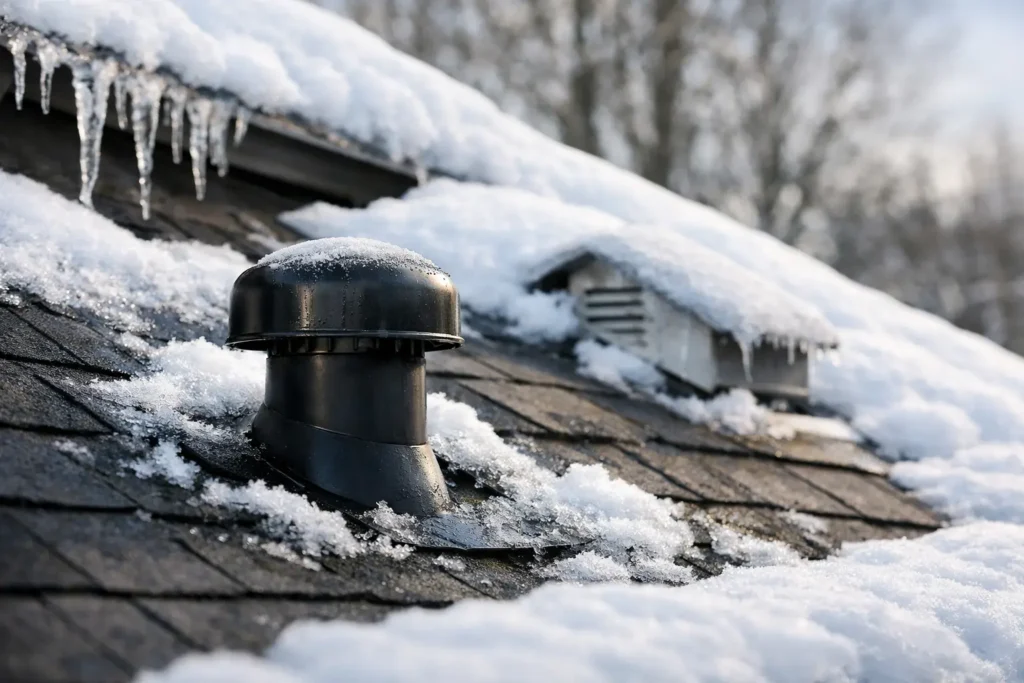
A roof can look perfectly fine from the street and still be struggling all winter long. That is often the case with roof ventilation problems in winter. Homeowners usually notice the symptoms first – frost in the attic, uneven snow melt, musty odors, higher heating bills, or ice building up along the eaves – but the real issue starts with how air moves through the roof system.
In Southern Alberta, winter does not give your home much room for error. Cold snaps, wind, snow load, and freeze-thaw cycles can expose small ventilation issues fast. When the attic holds too much warm, moist air, that trapped heat meets a cold roof deck and turns into condensation, frost, and eventually water damage. Good ventilation is not about making your attic cold for the sake of it. It is about keeping the roof system balanced so moisture has a path out and temperature stays more consistent.
Why roof ventilation problems in winter get expensive
Winter ventilation issues rarely stay limited to the attic. Once moisture starts collecting, it can affect insulation, roof decking, rafters, soffit, fascia, and even interior ceilings. Wet insulation loses performance, which means your furnace has to work harder. That extra heat rises, warms the roof unevenly, and can start the cycle that leads to ice dams.
Ice dams are one of the most common signs that something is off. Snow melts on the warmer upper sections of the roof, runs downward, and refreezes near the colder edge. As ice builds, water can back up under shingles and into the roof assembly. At that point, what looked like a winter nuisance can turn into a roof repair, drywall repair, insulation replacement, and mold cleanup.
The hard part is that ventilation is only one piece of the puzzle. Insulation levels, air leaks from the house into the attic, roof design, and even blocked soffit vents all play a role. That is why quick assumptions can lead to the wrong fix.
What causes roof ventilation problems in winter?
Most winter ventilation problems come from imbalance, not just a total lack of vents. A roof needs intake and exhaust working together. Intake vents, usually at the soffits, allow fresh outside air to enter. Exhaust vents, often near the ridge or high on the roof, let warmer, moisture-laden air escape. If one side of that system is weak, airflow slows down.
A common issue is blocked soffit vents. Insulation can be packed too tightly at the attic edge, cutting off the intake air the roof needs. Homeowners sometimes add more insulation to improve efficiency, which is smart in principle, but if baffles are missing or installed poorly, the insulation can choke the ventilation path.
Another cause is too much warm air escaping from the living space below. Recessed lights, attic hatches, plumbing penetrations, and bathroom fan leaks can all send humid indoor air into the attic. Even a well-vented attic can struggle if it is constantly being fed moisture from inside the house.
Older homes can also have mixed or outdated venting setups. You may see gable vents, box vents, turbine vents, or partial ridge vent systems that do not work well together. More vents do not always mean better ventilation. In some cases, the wrong combination disrupts airflow instead of improving it.
Signs your attic ventilation may be failing
Some warning signs show up outside, while others are easier to spot indoors. If snow melts in patches across the roof while neighboring homes stay evenly covered, that can point to heat escaping through the attic. Icicles along the gutters may look harmless, but heavy ice buildup often signals uneven roof temperatures.
Inside the attic, frost on the underside of the roof deck is a major red flag. On a very cold day, it may sit there quietly. When temperatures rise, that frost melts and can drip onto insulation, framing, and ceiling surfaces. Homeowners sometimes mistake that moisture for an active roof leak.
You might also notice a stale or musty smell, damp insulation, dark staining on wood, or nail tips covered in frost. In the living space below, peeling paint, ceiling spots, or persistent humidity can all be connected to attic conditions.
The hidden damage behind winter ventilation issues
The biggest risk is usually not immediate roof failure. It is slow deterioration. Moisture that lingers in an attic can encourage mold growth, rot roof decking, and weaken structural wood over time. Shingles can also age faster when the roof surface experiences repeated temperature swings caused by trapped heat.
There is also the energy cost. When insulation becomes damp, it does not perform the way it should. That means more heat loss, less comfort, and a heating system that runs longer than necessary. For many homeowners, the first concern is an ice dam or ceiling stain, but the long-term cost often comes from the damage that builds quietly over several winters.
Roof ventilation problems in winter are not always solved with more vents
This is where experience matters. It is tempting to assume the answer is simply adding more roof vents. Sometimes that helps, but sometimes it creates short-circuiting, where air enters and exits from points that are too close together and leaves parts of the attic poorly ventilated.
A good solution starts with the full system. The roof needs proper intake at the soffits, effective exhaust near the peak, clear airflow channels, and enough insulation to limit heat loss from the house. It also needs attic air sealing so warm indoor air is not constantly escaping upward.
That is why one home may need improved soffit intake, while another may need bathroom fan duct corrections, better insulation detailing, or replacement of an ineffective vent layout. The right fix depends on how the whole roof assembly is performing, not just what is easiest to add.
What homeowners can do before damage gets worse
If you suspect a ventilation issue, start with observation instead of guesswork. Look for patterns after snowfall. Check whether ice forms consistently at the eaves. Pay attention to new water stains, attic frost, or unusual indoor humidity in winter.
If it is safe to access the attic, a visual check can reveal a lot. You may be able to spot blocked soffits, compressed insulation at the edges, disconnected vent ducts, or visible moisture. Still, many ventilation problems are tied to details that are easy to miss without roofing and attic experience.
It also helps to address indoor moisture sources. Make sure bathroom fans vent properly outdoors, not into the attic. Use kitchen and bath exhaust fans regularly. If your home has high winter humidity, reducing it can ease some attic moisture pressure, though it will not correct a flawed venting system on its own.
When it is time to call a roofing professional
If you have recurring ice dams, visible attic frost, unexplained leaks in winter, or signs of wood staining and damp insulation, it is time for a professional assessment. These are not issues to leave until spring and hope for the best. Winter moisture has a way of turning minor weaknesses into more expensive repairs.
A qualified roofing contractor should look at ventilation, insulation interaction, intake and exhaust balance, and the overall condition of the roof system. That kind of inspection is especially valuable before a roof replacement, because ventilation mistakes built into a new roof can shorten its life from the start.
For homeowners in Lethbridge and across Southern Alberta, weather exposure makes proper installation details even more important. Wind, drifting snow, and long cold periods can magnify weaknesses that might stay hidden in milder climates. A local contractor who understands those conditions can help you sort out whether the issue is ventilation alone or part of a larger roof-performance problem.
A healthy roof system does not just keep water out. It manages heat, moisture, airflow, and durability together. If your home is showing signs of roof ventilation problems in winter, the best next step is not a quick patch. It is finding the real cause and fixing it in a way that protects your home for the long run.