
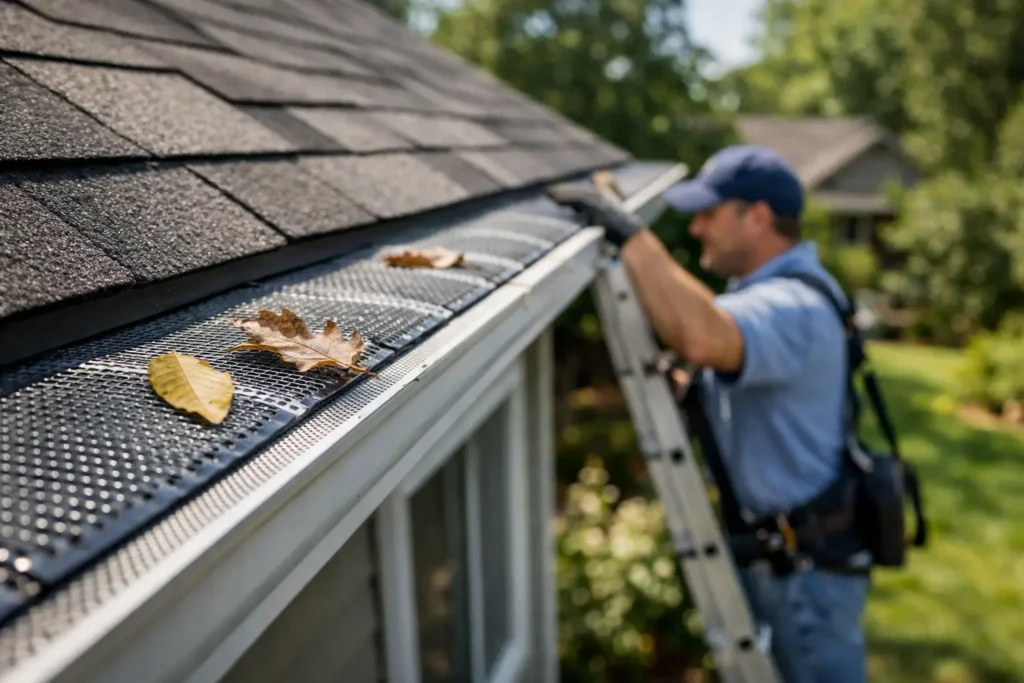
When you are up on a ladder pulling out wet leaves, roof grit, and a handful of mystery sludge, it is fair to ask: are gutter guards worth it? For many homeowners, the honest answer is yes – but not always, and not in the way some sales pitches make it sound.
Gutter guards can reduce cleaning, help water move more consistently, and protect your fascia, soffit, siding, and foundation from overflow. But they are not a cure-all. They still need some maintenance, they do not solve poor gutter pitch or undersized downspouts, and the wrong product can create new problems in a climate that sees wind, snow, ice, and heavy seasonal debris.
Are gutter guards worth it in Southern Alberta?
In Southern Alberta, the question matters more than it does in milder places. Homes here deal with strong winds, sudden downpours, snow loads, freeze-thaw cycles, and debris that does not always come neatly from one big tree in the yard. Even if you do not have a lot of leaves, you can still get shingle granules, seeds, twigs, dust, and windblown buildup collecting in your troughs.
That means gutter guards can be worth it if they are chosen for the right reason. If your main goal is to never think about your gutters again, you will probably be disappointed. If your goal is to reduce clogging, improve drainage, and cut down on risky ladder work, they often make good sense.
The biggest value comes when guards are part of a complete water-management system. Gutters need to be properly sized, securely fastened, correctly sloped, and connected to downspouts that actually move water away from the home. If those basics are off, guards will not fix the root issue.
What gutter guards do well
A good gutter guard keeps larger debris out while letting water in. That sounds simple, but it can make a meaningful difference in how your gutter system performs through the year.
First, guards reduce the frequency of cleanings. Instead of packed troughs full of leaves and sludge, you are more likely to deal with lighter surface debris and occasional maintenance. For homeowners who are tired of climbing ladders every spring and fall, that alone can justify the investment.
Second, they help protect exterior components that are easy to overlook until damage shows up. Overflowing gutters can stain siding, rot fascia, soak soffit, and dump water too close to the foundation. Over time, poor drainage can lead to more expensive repairs than the gutter guard itself.
Third, guards can help gutters last longer. Wet debris sitting in a gutter for months adds weight, traps moisture, and speeds up wear. Metal systems hold up better when they are draining instead of acting like a compost bin attached to the roofline.
Where homeowners get disappointed
This is where the sales pitch and reality often part ways. Gutter guards do not make gutters maintenance-free. Smaller particles can still build up on top of some guard styles or work their way inside over time. Downspouts can still clog. Ice can still be an issue in winter.
Another common frustration is buying a guard that does not match the home. Some products work reasonably well under certain tree conditions but struggle with pine needles, seed pods, fine debris, or heavy runoff. Others can cause water to overshoot in a hard rain if installation or design is poor.
Price is also part of the equation. If your gutters are already loose, leaking, or pitched incorrectly, adding guards without fixing those issues is money spent in the wrong place. In that case, repair or replacement should come first.
The main types and how they compare
Not all gutter guards perform the same. The right choice depends on your roofline, nearby trees, rainfall patterns, and how much maintenance you want to avoid.
Screen-style guards are common because they are straightforward and usually less expensive. They block larger debris well, but smaller material can collect on top or get through the openings depending on the design.
Micro-mesh systems do a better job with fine debris and tend to appeal to homeowners who want stronger filtration. They can perform very well when installed properly, but quality matters. Lower-end versions may clog on the surface or struggle if they are not matched to the roof and gutter setup.
Reverse-curve or surface-tension systems are designed to guide water into the gutter while shedding debris. In some situations they work well, but they can be more visible from the ground, and performance can vary in heavy rain or with certain roof runoff patterns.
Foam inserts and brush-style products are typically the quickest and cheapest options. They may help in the short term, but they often wear out faster and can trap debris inside the gutter. For homeowners looking for long-term value, these are usually not the first option we would recommend.
When gutter guards are worth it
Gutter guards make the most sense when your home has recurring debris problems, hard-to-reach rooflines, or drainage concerns tied to overflow. They are also a smart upgrade for homeowners who want safer, lower-maintenance exterior care over the long run.
They are especially worthwhile if you have mature trees near the house, second-story sections that are difficult to access, or a history of clogged downspouts and water spilling over near entryways, patios, or the foundation. In those cases, guards can reduce both routine hassle and the risk of moisture-related damage.
They also make sense when installed during a broader gutter replacement or exterior upgrade. If crews are already addressing gutters, fascia, soffit, or roofing details, that is often the most cost-effective time to improve the whole system rather than piecing it together later.
When gutter guards may not be worth it
If your home has very little debris exposure and your gutters are easy to clean, the return may be smaller. Some homeowners only need a basic annual cleaning and do not gain enough benefit to justify the added cost.
They may also be a poor investment if existing gutters are failing. Guards placed over sagging sections, leaking seams, or undersized troughs can hide issues instead of solving them. The same goes for homes where ice damming or roof drainage problems need to be addressed at the source.
And if you are expecting zero maintenance forever, it is better to reset that expectation before buying. The best gutter guard systems reduce work. They do not eliminate it.
How to judge the value before you buy
Start with the real problem you are trying to solve. If you are cleaning clogged gutters three or four times a year, paying for seasonal service, or seeing overflow damage, gutter guards are easier to justify. If your system works fine and only needs occasional attention, the value is more limited.
Then look at the condition of the full system. Are the gutters securely attached? Is the slope correct? Are the downspouts carrying water far enough away from the home? A quality contractor should inspect these basics before recommending any guard product.
Material and installation quality matter just as much as the guard style itself. A poorly installed premium product can underperform, while a well-matched mid-range solution can do the job reliably for years. This is where working with a contractor who understands the local climate makes a real difference.
For homeowners in Lethbridge and across Southern Alberta, that climate piece matters. Wind-driven debris, sudden storms, and winter conditions put more demand on exterior systems than many product brochures admit. At HighLow Roofing & Exteriors, we always encourage homeowners to look at the whole drainage picture, not just the accessory being sold.
The bottom line on whether gutter guards are worth it
So, are gutter guards worth it? If your home deals with repeated clogs, difficult access, or water-management issues, the answer is often yes. They can protect key parts of your exterior, reduce maintenance, and support better long-term performance from your gutter system.
But they are only worth it when the product fits the home, the installation is done correctly, and the rest of the gutter system is in good shape. That is the difference between a smart upgrade and an expensive shortcut.
If you are considering gutter guards, think less about promises of maintenance-free living and more about durable, practical protection. The right system should make your home easier to care for and better prepared for the weather it actually faces.