
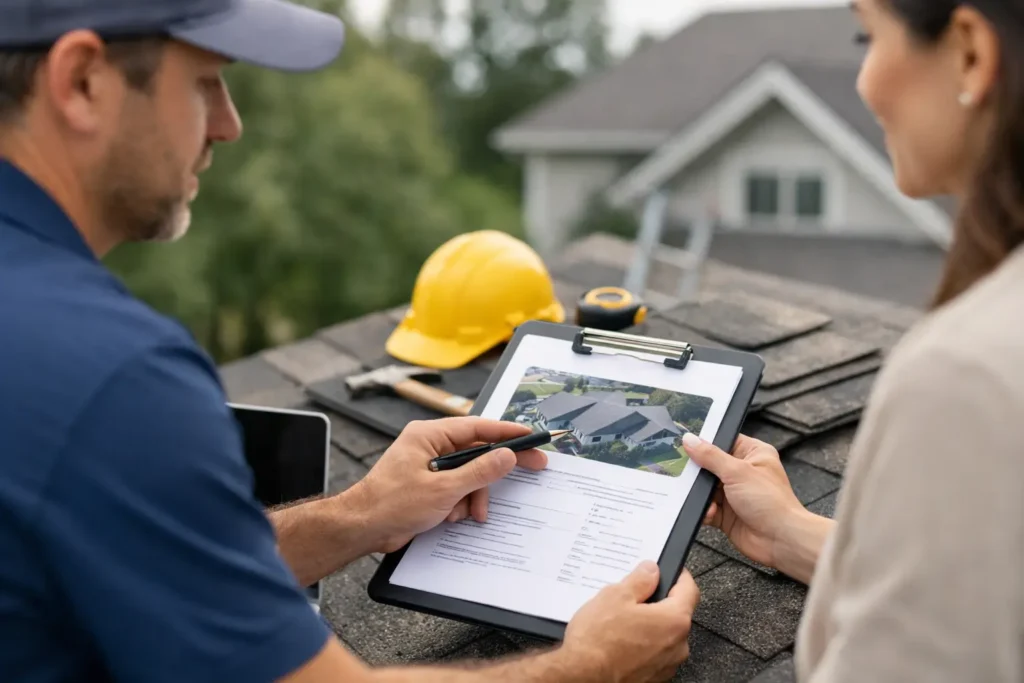
Storm season has a way of making roof problems impossible to ignore. A few missing shingles, a water stain on the ceiling, or gutters pulling away from the house can quickly turn into a much bigger repair. That is why a free roofing estimate matters. It gives you a clear starting point, helps you understand the condition of your roof, and lets you make a smart decision before small issues become expensive ones.
For homeowners in Southern Alberta, an estimate is more than a price on paper. It should reflect real local conditions – wind, hail, snow load, freeze-thaw cycles, and the wear that comes with long winters and sudden temperature swings. A good estimate respects your budget, but it also respects the fact that your roof is your home’s first line of defense.
Why a free roofing estimate matters
Many homeowners wait to call until they are certain the roof needs work. That hesitation is understandable. Nobody wants to invite a sales pitch, and nobody wants to hear bad news. But an estimate is not just about selling a replacement. It is a chance to get professional eyes on the full exterior system and learn whether you need a repair, partial work, or a full replacement.
That distinction matters. Some roofs still have useful life left and only need targeted repairs around flashing, vents, valleys, or damaged shingles. Others may look fine from the ground but have widespread deterioration that keeps causing leaks and heat loss. Without a careful estimate, it is easy to spend money on temporary fixes that do not last.
A free roofing estimate also helps with planning. If your roof is aging but not failing, you may have time to budget for the project, explore financing, or coordinate the work with gutters, soffit, fascia, or siding updates. That bigger picture can save both time and money.
What should be included in a free roofing estimate
Not all estimates are equally useful. Some are little more than a rough number written on a business card. Others are detailed enough to help you compare contractors fairly and understand exactly what you are paying for.
A solid free roofing estimate should start with the scope of work. That means whether the job is a repair, replacement, or new installation, along with the specific areas being addressed. If the contractor says they are replacing the roof, the estimate should make clear whether that includes tear-off, underlayment, flashing, vents, and cleanup.
Materials should be identified clearly. Homeowners deserve to know what type of shingles or metal roofing is being proposed, what underlayment will be used, and whether components such as drip edge, ice and water protection, or ventilation upgrades are part of the job. Material quality affects lifespan, appearance, and weather performance, so this is not a small detail.
Labor and disposal should also be accounted for. Roof work creates debris, and proper cleanup is part of a professional job. A thorough estimate should explain whether old materials are being removed and hauled away, and whether site protection is included to help protect landscaping, siding, and other exterior surfaces.
Timing matters too. An estimate should give you a realistic sense of scheduling, project length, and any factors that could affect the timeline. Roofing always depends somewhat on weather, especially in places with unpredictable conditions, but that should be explained honestly rather than glossed over.
Free roofing estimate vs. low-ball quote
The cheapest number is not always the best value. In roofing, a low quote can sometimes mean key parts of the project have been left out or vague on purpose. That is one reason homeowners should look beyond the total and pay attention to what is actually included.
For example, one contractor may quote only shingle replacement while another includes upgraded underlayment, flashing replacement, ventilation improvements, and full cleanup. At first glance, one looks cheaper. In practice, the second estimate may offer far better protection and fewer future repairs.
This is where trust and communication matter. A reliable contractor will explain the reasoning behind the recommendation, point out problem areas, and answer questions without pressure. If something depends on what is found once old materials are removed, that should be stated up front. Roofing can involve hidden issues, especially on older homes, so honesty about uncertainty is a good sign, not a bad one.
Questions to ask during a free roofing estimate
A homeowner does not need to know every roofing term to ask smart questions. What matters is understanding the condition of the roof, the proposed solution, and how the work will protect the home over time.
Ask what problem the contractor is solving. Is the issue isolated damage, aging materials, poor ventilation, or a combination of factors? Ask how long the proposed repair or replacement is expected to last. Ask what materials are recommended for your home and why they are a good fit for local weather.
It is also worth asking whether nearby exterior systems should be addressed at the same time. Gutters, soffit, fascia, and siding all play a role in managing water and protecting the home envelope. If one part is failing, another may already be under stress. Coordinating those upgrades can be more efficient than tackling them one at a time.
Finally, ask what is not included. That question alone can reveal a lot. If the estimate leaves out flashing, decking repairs, permit needs, or cleanup, you want to know before work begins.
How contractors assess your roof
A professional estimate should be based on inspection, not guesswork. That means looking at the roof itself, but also paying attention to the surrounding systems and signs of deeper issues.
The contractor may evaluate shingle condition, granule loss, exposed nails, flashing wear, soft spots, sagging areas, drainage patterns, and signs of hail or wind damage. They may also look at attic ventilation, moisture concerns, and insulation performance if those factors are affecting roof lifespan.
The age of the roof matters, but age alone does not tell the whole story. A well-installed roof with good ventilation may perform better than a newer roof installed with shortcuts. Likewise, two homes on the same block can have very different roof conditions depending on sun exposure, tree coverage, previous repairs, and storm history.
That is why a free roofing estimate should feel specific to your home. Cookie-cutter answers are rarely accurate in this industry.
When to schedule a free roofing estimate
You do not need to wait for an active leak. In fact, it is better if you do not. The best time to schedule an estimate is when you first notice warning signs or when your roof is reaching the later years of its expected life.
Common reasons to call include shingles curling or blowing off, dark streaks, repeated minor leaks, rising energy bills, visible storm damage, or gutters filling with granules. You may also want an estimate before listing your home, after buying an older property, or when planning broader exterior improvements.
Some homeowners schedule an estimate simply for peace of mind after a major storm. That is a practical move. Hail and wind damage are not always obvious from the ground, and catching problems early can help you avoid interior water damage and structural repairs.
What a trustworthy estimate feels like
A good estimate should leave you more informed, not more confused. You should understand the condition of your roof, the options available, and the likely cost of doing the job properly. You should not feel rushed into a decision, and you should not be left guessing about materials, workmanship, or next steps.
At HighLow Roofing & Exteriors, that local, straightforward approach is what homeowners tend to value most. People want clear answers, solid craftsmanship, and work that stands up to real weather. A roof is not just another project. It protects the people and belongings underneath it every day.
If you are considering roof work, treat the estimate as the beginning of a conversation, not just a price check. The right contractor will help you understand what your home needs now, what can wait, and what will give you the best long-term value. That kind of clarity is worth more than a quick number, especially when the next storm is never that far away.