
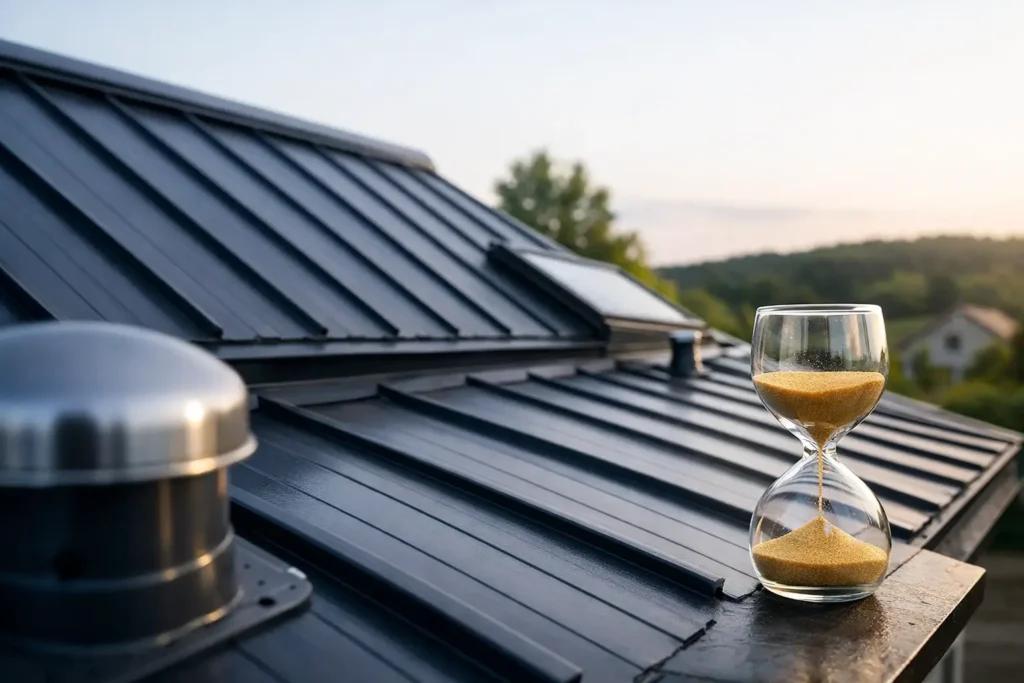
A metal roof can look almost the same at year 5 as it does at year 25, which is exactly why homeowners ask a fair question: how long does a metal roof last? The short answer is that a properly installed metal roof often lasts 40 to 70 years. The more honest answer is that lifespan depends on the type of metal, the quality of the installation, the local climate, and how well the roof is maintained over time.
In Southern Alberta, that last part matters. Strong wind, snow load, hail, freeze-thaw cycles, and fast weather swings can test any roofing system. Metal holds up very well in those conditions, but no roof is immune to shortcuts during installation or years of neglected upkeep.
How long does a metal roof last in real-world conditions?
Most homeowners will see a metal roof outlast traditional asphalt shingles by a wide margin. While asphalt may need replacement in 15 to 25 years depending on weather exposure and product quality, metal often remains serviceable for decades longer. That long service life is one of the biggest reasons people choose it.
That said, not every metal roof performs the same way. Exposed fastener systems generally have a shorter lifespan than standing seam systems because the screws and washers are more exposed to weather and can loosen or wear over time. Standing seam roofs usually last longer because the fasteners are concealed, the panels can move more naturally with temperature changes, and there are fewer vulnerable points where water can work its way in.
Material also makes a difference. Steel is common for residential roofing because it offers a good balance of strength, cost, and durability. Aluminum resists corrosion very well, which can be helpful in certain environments. Premium metals like copper can last even longer, but they come at a much higher price point and are not the most practical fit for every home.
What affects the lifespan of a metal roof?
Installation quality is the first big factor. Even a premium panel system can fail early if it is installed over poor decking, flashed incorrectly around penetrations, or fastened without proper spacing and alignment. Roofing is not just about the panel on top. Underlayment, ventilation, flashing details, trim work, and drainage all work together.
That is why homeowners should be careful about comparing roofs by material alone. Two homes can both have metal roofing, but if one was installed with climate-appropriate methods and the other was rushed, their long-term performance may look very different.
Weather exposure is the second factor. In areas with heavy snowfall, ice, hail, and high winds, the roof system needs to handle both impact and movement. Metal is well suited for shedding snow and resisting fire, and it does not absorb moisture the way some materials can. Still, repeated hail strikes can dent certain profiles, and wind can exploit weak trim details or poorly secured panels.
Maintenance is the third factor. Metal roofs are often described as low maintenance, which is true. It does not mean no maintenance. Sealants can age, fasteners can back out on some systems, debris can collect in valleys, and flashing around chimneys or vents can wear before the roof panels themselves do.
Finally, the protective finish matters. Most residential metal roofing is coated to resist rust, fading, and UV damage. Over time, the coating can wear down, especially on slopes that receive intense sun or where water sits too long. When the finish holds up well, the roof usually does too.
Signs your metal roof is aging faster than it should
A metal roof does not usually fail all at once. More often, it gives warning signs. You might notice loose fasteners, lifted panels, rust spots, worn sealant at roof penetrations, or leaks around flashing rather than in the middle of the field panels.
Cosmetic wear and functional wear are not always the same thing. A faded finish or a few minor surface scratches may not mean the roof is near the end of its life. On the other hand, recurring leaks, widespread corrosion, or repeated movement around seams can point to a bigger system issue.
Inside the home, water stains on ceilings, damp insulation in the attic, or unexplained drafts can all be clues that the roof deserves a closer inspection. Homeowners sometimes assume a metal roof should not need attention because it is newer than the last asphalt roof. In reality, any roof can develop trouble spots if flashing, ventilation, or drainage are compromised.
How to make a metal roof last longer
The best way to extend the life of a metal roof is to stay ahead of small issues. Periodic inspections, especially after major wind or hail events, can catch minor damage before it turns into interior water damage or deck rot.
Keeping gutters clear helps more than many people realize. When water backs up, it can affect fascia, soffit, trim edges, and the lower portions of the roofing system. Good drainage supports the whole exterior, not just the roof.
It also helps to keep overhanging branches trimmed back. Branches can scratch finishes, drop debris into valleys and gutters, and create more opportunities for moisture to sit on the roof surface. If homeowners need other exterior upgrades like soffit, fascia, or gutter work, handling those pieces together often protects the roof investment better than treating each issue separately.
Professional repairs matter too. Metal roofing has its own details, and quick patch jobs with the wrong sealant or mismatched materials can create more problems later. A proper repair should address the actual source of the issue, not just cover the symptom.
Is a metal roof worth the higher upfront cost?
For many homeowners, yes. Metal roofing usually costs more upfront than asphalt, but the value conversation is bigger than the initial estimate. A longer lifespan, lower maintenance needs, better durability in harsh weather, and strong curb appeal can make the investment worthwhile.
It is also worth thinking about replacement cycles. If you plan to stay in your home long term, a metal roof may save money over time because you are less likely to face another full replacement as soon. If you are preparing to sell, a well-installed metal roof can still add appeal because buyers recognize durability and lower future maintenance.
That said, metal is not automatically the right answer for every home. Budget matters. Roof design matters. Some homeowners prefer the lower initial cost of asphalt, especially if they are making several exterior improvements at once. The right choice is the one that fits the home, the climate, and the homeowner’s long-term plans.
Metal roof lifespan versus replacement timing
A roof can still have years of life left even if it needs repair today. That is an important distinction. If the panels are in good shape and the problem is isolated to flashing, fasteners, or a specific section, a targeted repair may be the most practical option.
Replacement becomes more likely when issues are widespread or recurring. If multiple leaks keep showing up, corrosion is spreading, the fastener system is failing across large areas, or the original installation has major flaws, investing in repairs over and over may not make sense.
Age should be part of the conversation, but not the only factor. A 20-year-old metal roof that was installed correctly and maintained well may still have plenty of dependable life left. A poorly installed roof can run into trouble much sooner.
Why local experience matters
Roofing performance is never just about the product brochure. It is about how that product handles the actual conditions on your home. In Lethbridge and across Southern Alberta, roofing systems need to stand up to wind, cold snaps, heavy snow, and sudden storms. Those demands shape how a metal roof should be selected, installed, and serviced.
That is why working with a contractor who understands local weather patterns, attic ventilation, drainage, and exterior system details matters. HighLow Roofing & Exteriors approaches metal roofing the way homeowners need it approached – as part of the whole protection system around the home, not just as a set of panels.
If you are wondering whether your current roof has decades left or whether it is starting to show its age, the best next step is not guesswork. It is a clear inspection, honest feedback, and a plan that fits the condition of your home. A good metal roof can last a very long time, but it lasts longest when it is built right and cared for with the same level of attention.