
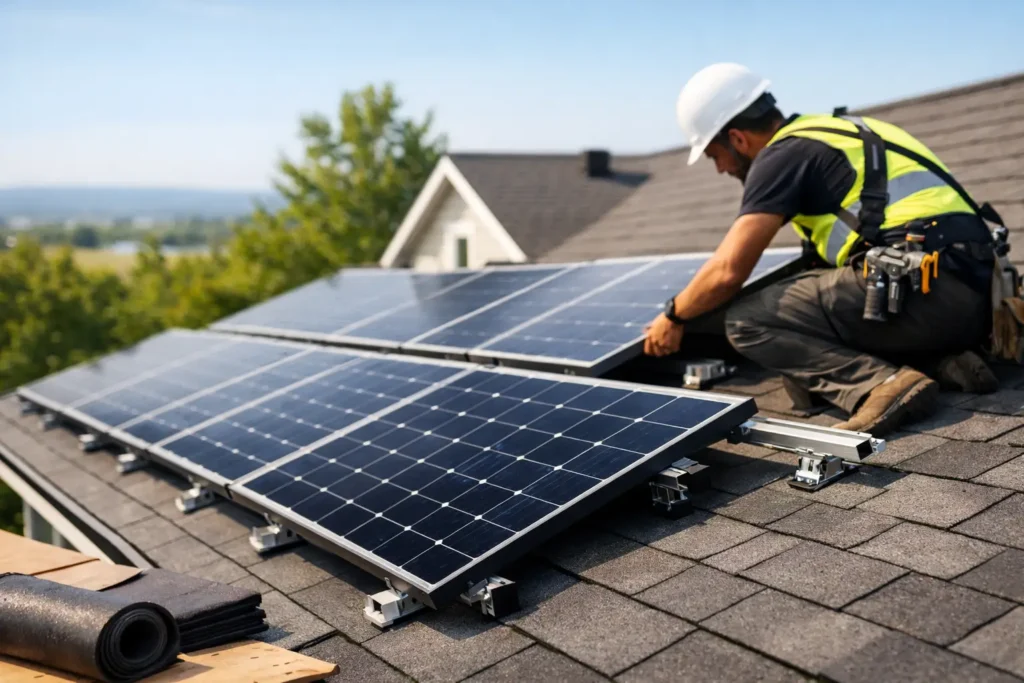
A roof replacement is expensive enough without paying twice for work that could have been planned once. That is why more homeowners are asking about solar ready roofing systems before the shingles go on, not after. If solar is on your radar now or even a few years down the road, building that possibility into the roof design can save money, reduce disruption, and help protect the home for the long haul.
What solar ready roofing systems actually mean
A solar ready roof is not just a roof with enough sunlight. It is a roofing system planned and installed so the home is in a better position to support solar later without avoidable tear-off, patchwork, or guesswork. That planning starts with the roof itself – its age, condition, layout, material, ventilation, flashing details, and expected service life.
For most homeowners, the biggest advantage is timing. If you install solar on a roof that is already halfway through its lifespan, you may face a costly problem later when the roof needs replacement and the panels have to come off and go back on. A solar ready approach helps line up the roof investment with future energy plans so one upgrade does not work against the other.
This matters even more in places with strong wind, snow loads, hail risk, and sharp seasonal swings. In Southern Alberta, roofing decisions need to hold up under real weather, not just look good on paper. A roof that is prepared for future solar still has to do its main job first – protect the home, manage water properly, and stand up to the climate year after year.
Why homeowners ask for solar ready roofing systems
Some homeowners know they want solar soon. Others are not ready to commit but do not want to close the door on it. Both situations can justify solar-ready planning.
The practical benefit is that future work becomes simpler. If the roof is newer, structurally sound, and laid out with solar in mind, the solar design process tends to be more straightforward. Penetrations can be better planned, obstructions can be considered early, and the roof surface may offer a cleaner layout for panels. That can reduce future labor complications and help avoid the frustration of changing a roof that was never designed with solar in mind.
There is also a resale angle. Buyers increasingly pay attention to energy costs and upgrade potential. Even if a home does not have panels yet, a roof that is new, durable, and suitable for future solar can be a meaningful selling point.
Still, solar ready does not mean every house is an ideal solar candidate. Shade, roof orientation, roof shape, and local utility economics all matter. A good contractor will not pretend every home should do the same thing. Sometimes the smartest move is simply installing a long-lasting roof that keeps the option open.
The roofing choices that matter most
When people hear “solar ready,” they often think first about panel brackets and wiring paths. Those details matter, but the foundation is the roofing system itself.
Roof age is a major factor. If a roof is near the end of its life, adding solar later can become inefficient because the roof may need replacement before the panels do. Starting with a new roof gives the system a better chance of aging on a similar timeline.
Material choice matters too. Asphalt shingles remain a common residential option because they are cost-effective, attractive, and familiar to many homeowners. Metal roofing can also make sense for future solar, especially when homeowners want long service life and strong weather performance. The right choice depends on budget, home style, expected ownership timeline, and local climate exposure.
Roof layout is another piece homeowners often overlook. A simple roof plane is generally easier to work with than a roof crowded by hips, valleys, dormers, vents, and other interruptions. That does not mean complex roofs cannot be solar ready. It means planning matters more, and expectations need to stay realistic.
Solar ready roofing systems and structural planning
A roof can look fine from the ground and still need closer evaluation before future solar is considered. Panels add weight, and snow can add more. That is why structural readiness matters.
For many homes, this does not mean major framing changes. It may simply mean making sure the roof deck, underlayment, fastening methods, and framing condition are in good shape during replacement. If any weak points exist, addressing them during roofing work is far easier than reopening the project later.
This is one of those areas where honest guidance matters. Not every home needs extra structural work, and not every homeowner needs to pay for upgrades just because solar may happen someday. But when reinforcement or repair is warranted, it is better to know early than after the roof is finished.
Waterproofing still comes first
The excitement around energy savings can distract from the basic truth that a roof is a water-management system. Before it is ever a platform for future solar, it must keep moisture out and move water where it belongs.
That means flashing details, ice and water protection, ventilation, drainage, and installation quality all remain front and center. If a roof is labeled solar ready but the shingle installation is rushed or the flashing work is weak, the term does not mean much.
This is where craftsmanship has real value. Future solar planning should strengthen the roofing decision, not complicate it. Homeowners should expect a roof that is built for local weather, installed with care, and designed to last. The solar-ready part is an added layer of foresight, not a replacement for solid roofing fundamentals.
When a solar ready roof is worth it and when it may not be
For some households, solar-ready planning is an easy yes. If the roof is being replaced now, the home gets strong sun exposure, and solar is likely within the next few years, preparing the roof makes practical sense. It can help avoid duplicate labor and preserve a cleaner, more durable finished system.
For others, the answer is less clear. If the home has heavy shade, an awkward roof design, or uncertain long-term ownership plans, it may not be worth spending extra for changes that offer little real return. In that case, the better investment may be a dependable, long-lasting roof with no unnecessary add-ons.
This is where one-size-fits-all advice falls short. The best decision depends on your home, your budget, and how you plan to use the property over time. A trustworthy contractor should be comfortable talking through those trade-offs instead of pushing a trendy label.
Questions to ask before you replace your roof
If solar is even a future possibility, bring it up during the estimate stage. That single conversation can shape better decisions on material, layout, roof lifespan, and installation details.
Ask whether the proposed roof material and system make sense for future solar. Ask how the roof’s age and expected service life line up with your long-term plans. Ask whether the roof structure, ventilation, and waterproofing details are being handled with future panel installation in mind. And ask what choices today could help you avoid unnecessary cost later.
These are practical questions, not sales questions. A good estimate should help you understand what is worth doing now, what can wait, and what may not be necessary at all.
A smarter way to think about the investment
The real value of solar ready roofing systems is not the phrase itself. It is the planning behind it. Homeowners get the most benefit when the roof is treated as part of a larger home protection strategy – one that considers durability, energy goals, maintenance, appearance, and long-term cost together.
That is especially true when one contractor can help you think through the whole exterior picture, from roofing and drainage to the details that affect performance over time. HighLow Roofing & Exteriors approaches roofing that way because homeowners deserve solutions that hold up in the real world, not just options that sound good in a brochure.
If you are replacing your roof now, this is the right time to think a few steps ahead. A well-built roof should protect your home today and leave you better prepared for tomorrow. Even if solar stays a future option instead of an immediate project, smart planning now can spare you a lot of hassle later.