
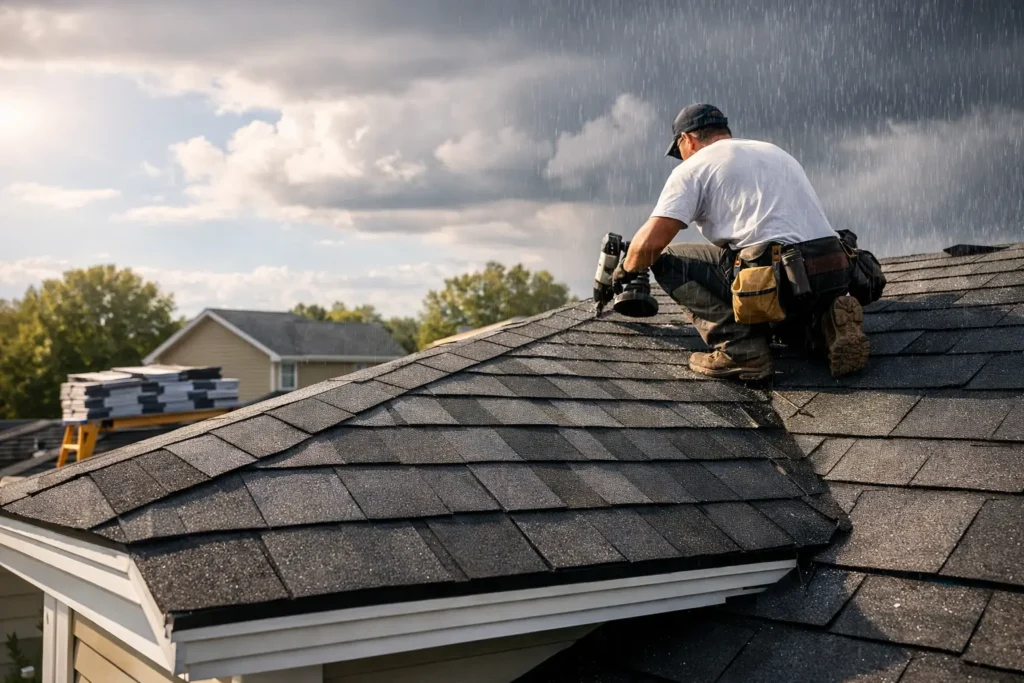
A roof usually gets your attention only when something goes wrong – a stain on the ceiling, shingles in the yard, or a draft that should not be there. But residential roofing is one of the biggest factors in how well your home stands up to weather, how much maintenance you deal with, and how confident you feel every time the wind picks up.
In Southern Alberta, that matters more than most homeowners would like. Strong winds, hail, snow, freeze-thaw cycles, and fast temperature swings can test every part of a roof system. A good-looking roof is nice to have. A roof built and installed for local conditions is what protects your investment.
What residential roofing really includes
When homeowners think about roofing, they often picture shingles and not much else. In reality, residential roofing is a full system. The visible material on top matters, but so do the underlayment, flashing, ventilation, decking, valleys, drip edge, soffit, fascia, and gutters working alongside it.
That is why roofing decisions should never be made on material alone. Two homes can have the same shingle brand and end up with very different results depending on installation quality, attic ventilation, water management, and how the roof ties into the rest of the exterior. If one part is weak, the whole system feels it.
For homeowners, the practical takeaway is simple. The best roof is not just the one with the best product brochure. It is the one installed with care, matched to the home, and built to handle the climate year after year.
Choosing the right residential roofing material
There is no single best roofing material for every home. The right fit depends on your budget, your long-term plans, the slope and design of your roof, and how much maintenance you are willing to take on.
Asphalt roofing
Asphalt shingles remain a popular residential roofing choice because they balance cost, appearance, and dependable protection. They work well on many home styles, come in a wide range of colors, and can be a practical option for homeowners who want solid performance without stretching the budget too far.
That said, not all asphalt roofs perform the same way. Product quality matters, but installation matters just as much. In high-wind areas, proper fastening, sealing, and flashing details make a real difference. A lower upfront price can be attractive, but if workmanship is rushed, those savings can disappear fast.
Metal roofing
Metal roofing appeals to homeowners who are thinking long term. It offers excellent durability, strong resistance to many weather conditions, and a clean, updated appearance. For some homes, it can also reduce maintenance concerns over time.
The trade-off is usually cost. Metal roofing often requires a higher initial investment, and not every home needs that level of upgrade. Still, for homeowners planning to stay put and wanting a roof built for longevity, it can be a smart choice when installed properly.
Repair or replacement? That depends
One of the most common questions in residential roofing is whether a roof needs a repair or a full replacement. The honest answer is that it depends on the age of the roof, the extent of damage, and whether the problem is isolated or widespread.
A repair often makes sense when damage is limited to a specific section, such as missing shingles after a wind event, flashing issues around a vent, or a small leak caught early. In those cases, a targeted fix can restore protection and extend the life of the roof without unnecessary cost.
Replacement becomes the better option when problems keep returning, when shingles are aging across large areas, or when underlying issues are affecting performance. If a roof is near the end of its expected lifespan, repeated repairs can become a short-term patch on a long-term problem. Spending less today is not always the better value if the roof will still need replacement soon.
That is where a clear inspection matters. Homeowners deserve straightforward guidance, not pressure. A trustworthy contractor should explain what is failing, what can wait, and what will cost more if ignored.
Signs your roof is asking for attention
Some roofing problems are obvious. Others show up quietly and get worse before they are noticed. If you are trying to stay ahead of major damage, there are a few signs worth taking seriously.
Curling, cracked, or missing shingles are a clear warning. Granules collecting in gutters can point to aging asphalt shingles. Water stains on ceilings or walls may suggest a leak, but the source is not always directly above the stain. Sagging sections, damaged flashing, or recurring ice buildup can also signal deeper issues.
Sometimes the first clue is outside the roof itself. Soffit and fascia damage, overflowing gutters, or poor attic ventilation can all affect how well a roofing system performs. That is one reason many homeowners prefer working with an exterior contractor who understands how these parts connect instead of treating each issue in isolation.
Why installation quality matters as much as the material
A durable product can still fail early if it is installed poorly. That is one of the hardest truths in residential roofing, because homeowners often do not see the mistakes until damage appears. By then, the problem is more expensive and more disruptive.
Good installation starts with preparation. The deck needs to be sound. Flashing details need to be precise. Ventilation has to support the roof’s long-term performance, not just meet the bare minimum. Water needs a clear path off the roof and away from the home.
This is also where local experience matters. Roofing methods that work in a mild climate may not hold up the same way in Southern Alberta. Wind exposure, snow load, hail risk, and freeze-thaw stress should shape how a roof is installed. A contractor who understands local conditions is better equipped to make choices that protect your home for the long haul.
Residential roofing and curb appeal
Protection comes first, but appearance still matters. A roof can take up a large portion of your home’s exterior, which means it has a major effect on curb appeal and resale value. An aging, streaked, or visibly damaged roof can make the whole property feel tired even if the rest of the home is well kept.
A new roof can sharpen the look of the home right away, especially when the material and color are selected with the siding, trim, and gutters in mind. That does not mean chasing trends. It means choosing something that fits the home and will still look right years from now.
For many homeowners, the best results come from thinking beyond the roof alone. When roofing work is coordinated with gutters, soffit, fascia, or siding improvements, the home performs better and looks more finished. That approach also helps avoid mismatched updates and repeated disruptions.
Planning for long-term value
A roof is a major home expense, so it is reasonable to think carefully before moving forward. The lowest quote is not always the best deal, and the most expensive option is not automatically the right one either. Value comes from a combination of material quality, installation standards, warranty support, and honest recommendations.
It also comes from timing. Replacing a roof before severe failure can prevent interior damage, insulation issues, mold concerns, and emergency repair costs. Waiting until a leak becomes obvious can turn a manageable project into a larger restoration.
For homeowners balancing budget and timing, financing can make the decision easier to manage without putting off needed work. What matters most is having clear information so you can choose based on the condition of your home, not just the stress of the moment.
What to expect from a good roofing contractor
Residential roofing should not feel confusing. A good contractor makes the process clearer, not more complicated. That starts with a thorough assessment, plain-language recommendations, and realistic expectations about scope, cost, and timeline.
You should also expect accountability. That means showing up when promised, protecting the property during the job, communicating clearly if conditions change, and standing behind the work. Homeowners are not just buying materials. They are trusting someone to protect one of their biggest investments.
At HighLow Roofing & Exteriors, that standard matters because roofing is not just about getting the top layer done. It is about making sure the home is protected as a whole, from roofline details to water management and exterior performance.
The right roof does more than keep rain out. It gives your home a better chance against the next storm, the next winter, and the next decade of wear. If your roof is showing its age or you are weighing your options, the best next step is not guessing – it is getting clear advice from a contractor who treats your home like it matters.