
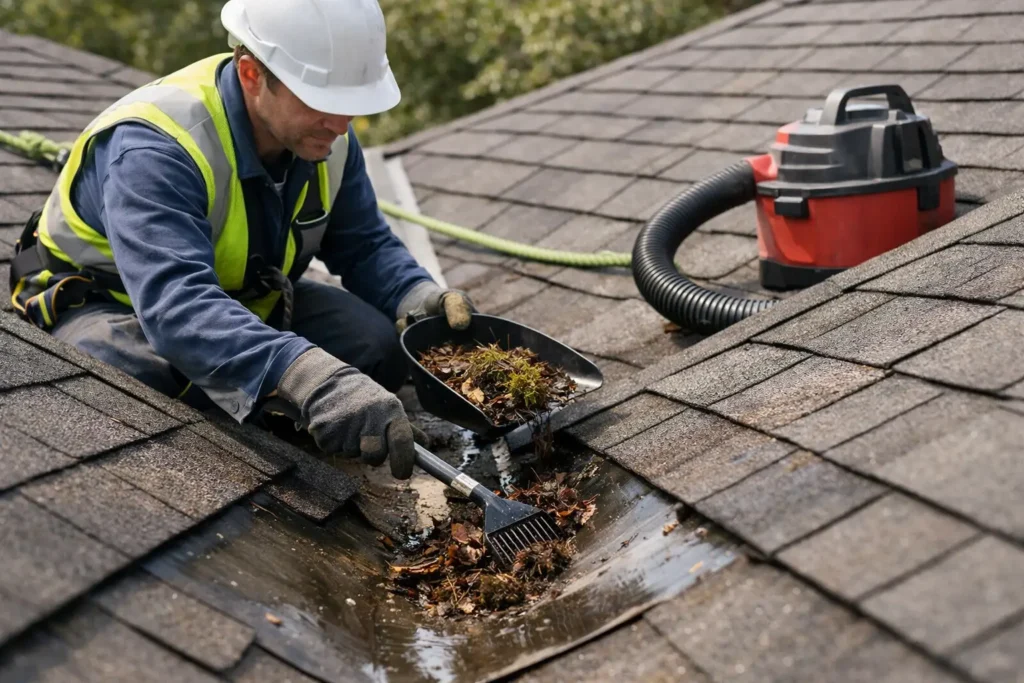
A roof valley is where two roof slopes meet, and it carries more water than almost any other area of your roof. When leaves, needles, twigs, or granules collect there, that water can back up beneath shingles and find its way into the roof deck. Knowing how to clean roof valleys safely can prevent a small maintenance issue from becoming a leak, stained ceiling, or premature roof repair.
For many homeowners, the most important part is recognizing when to stop. A low-slope, single-story roof with light debris may be manageable from a ladder using the right tools. A steep roof, slick surface, high elevation, damaged shingles, or heavy buildup calls for a professional. No handful of leaves is worth a fall or damage to a roof system that is doing its job.
Why roof valleys need regular attention
Valleys act like channels. During a hard rain, snowmelt, or spring thaw, water from both roof planes runs through the same narrow area before entering the gutters. Southern Alberta’s wind, snow, freeze-thaw cycles, and seasonal debris can make that work even harder on a roof.
When debris slows the flow, water sits where it should be moving. It can soak into organic material, encourage moss or algae growth, and hold moisture against shingles. In colder weather, trapped water may freeze and expand, contributing to ice buildup and stressing vulnerable areas around the valley.
A clean valley also makes inspections easier. You can see missing granules, lifted shingles, exposed fasteners, cracked valley metal, or deteriorating sealant before the next major storm tests the roof.
How to clean roof valleys safely
Start by checking conditions from the ground. Do not work on a wet, frosty, snowy, windy, or unusually hot roof. Shingles can be slippery in moisture and softer in high heat. If you can see a large pile of debris, sagging material, loose shingles, or an area where water has clearly been pooling, schedule a professional assessment rather than stepping onto the roof.
If the roof is safe to access and you are comfortable working at height, use a properly placed extension ladder on firm, level ground. Keep the ladder clear of power lines, have another adult nearby, and use appropriate fall protection. Never lean a ladder directly against a gutter unless it is protected by a stabilizer.
A careful cleaning process looks like this:
- Remove loose debris by hand or with a soft tool. Wear gloves and gently lift leaves, needles, and small twigs from the valley. A soft-bristle brush or plastic scoop can help. Work from the upper part of the valley downward so debris moves toward the gutter rather than farther under the shingles.
- Avoid pulling material uphill. Dragging debris upward can catch the exposed edges of shingles, loosen them, or disturb sealant. Use light motions and let gravity do most of the work.
- Clear the gutter and downspout below. A valley cannot drain properly into a clogged gutter. Remove buildup from the gutter outlet and make sure the downspout carries water away from the foundation.
- Rinse lightly only when needed. A gentle flow from a garden hose can reveal whether water is moving freely. Spray downward, in the direction water naturally travels. Do not force water sideways or upward beneath shingles.
- Inspect the valley after it is clear. Look for cracked, bent, or corroded metal; worn shingle edges; missing granules; exposed nail heads; or debris that repeatedly gathers in the same location.
Never use a pressure washer on a shingle roof. High-pressure water can strip protective granules, lift shingle edges, force water under roofing materials, and shorten the life of the roof. Metal rakes, sharp scrapers, and aggressive brushing can cause similar damage, especially in a valley where materials overlap.
Cleaning from the ground when possible
There are situations where you may be able to address light debris without climbing onto the roof. A leaf blower used from a stable ladder position can sometimes move dry leaves from a low, accessible valley. This approach only works when you can maintain three points of contact and direct airflow downward without overreaching.
Use caution. A blower will not solve wet, packed debris, and it can scatter material into gutters, neighboring properties, or landscaping. It should never be used as a reason to stretch, stand on the top ladder rungs, or work near overhead wires.
What to look for while cleaning
Cleaning is also a chance to catch early warning signs. Small amounts of granules in gutters are normal as shingles age, but heavy accumulations or bare-looking shingle patches deserve attention. Granule loss reduces the shingle’s ability to handle sunlight and weather exposure.
Look closely at the valley itself. Open valleys use exposed metal to channel water, while closed-cut valleys are covered with shingles. On an open metal valley, watch for rust, holes, loose edges, or nails placed where they may allow water through. On a closed valley, check for cracked or curled shingles, uneven cuts, and signs that water has been running beneath the roofing material.
Also inspect the attic or upper ceilings after a heavy rain. A musty smell, water stains, peeling paint, or damp insulation can indicate a roof leak, although condensation and ventilation issues can create similar symptoms. The source of a leak is not always directly above the stain, so a professional inspection is the most reliable way to identify it.
How often should you clean roof valleys?
Most homes benefit from a visual roof check in spring and fall, plus another look after severe windstorms. Homes surrounded by mature trees may need valley cleaning more often, particularly after autumn leaf drop or periods of high wind.
Frequency depends on the roof design and nearby vegetation. A simple roof with few trees may stay clear for months. A roof with multiple valleys beneath pine, poplar, or leafy branches can collect debris quickly. If you find the same valley clogged several times a year, consider whether overhanging branches need professional trimming or whether the gutter system needs improvement.
Do not wait for a leak to create a maintenance routine. By the time water appears inside, moisture may have already affected underlayment, decking, insulation, or framing.
When to call a roofing professional
A professional roofer is the right choice when the roof is steep, two stories or higher, difficult to access, or showing visible damage. It is also wise to call for help if debris is packed tightly into the valley, moss has taken hold, water spills over the gutters, or you notice shingles lifting along the valley line.
A proper inspection goes beyond removing debris. A roofing professional can assess the condition of valley flashing, shingles, underlayment, ventilation, gutter connections, and nearby roof penetrations. That broader view matters because water problems often involve more than one exterior component.
At HighLow Roofing & Exteriors, we believe homeowners deserve straightforward advice about what their roof needs now and what can be monitored. Sometimes a careful cleaning and minor repair are enough. Other times, recurring valley trouble points to aging materials or a drainage issue that should be corrected before the next season.
A clear roof valley is a small detail with a major job. Keep it free of debris, inspect it after rough weather, and bring in experienced help whenever safety or roof condition is in question. That practical attention helps your home shed water the way it was designed to – reliably and season after season.