
Last Updated: October 25, 2026
Quick Summary
Signs of moisture under siding include dark stains and discoloration, warping or buckling panels, soft or spongy siding, visible cracks or separation, and musty odors near exterior walls. Water often enters through roof-to-wall transitions, failed window and door flashing, clogged gutters, or poor grading, then travels behind the siding where it causes mold, rot, and structural damage.
- Inspect your home’s exterior and interior twice yearly, in spring and fall, using a structured four-stage process to catch moisture problems early.
- Dark stains, warped panels, and soft wood indicate water has accumulated behind siding for weeks; trace the entry point upward and outward from the stain.
- Stop your own inspection and call a professional if you find soft wood, mold larger than a square meter, active water entry, or persistent dampness in wall cavities.
- Normal drainage moves water away within hours; water intrusion persists in cavities for days, causes musty odors, and indicates a failed drainage system or flashing.
- A professional assessment uses moisture meters, thermal imaging, and borescopes to distinguish surface dampness from deep structural damage and identify repair urgency.
Table of Contents
- Why Moisture Under Siding Matters
- How to Check for Moisture Behind Siding
- Signs of Water Damage Behind Walls
- Visible Symptoms of Moisture Problems
- Causes of Moisture Behind Siding
- Siding Inspection Checklist for Homeowners
- Distinguishing Normal Drainage from Water Intrusion
- Getting a Professional Moisture Assessment
- Frequently Asked Questions
Why Moisture Under Siding Matters
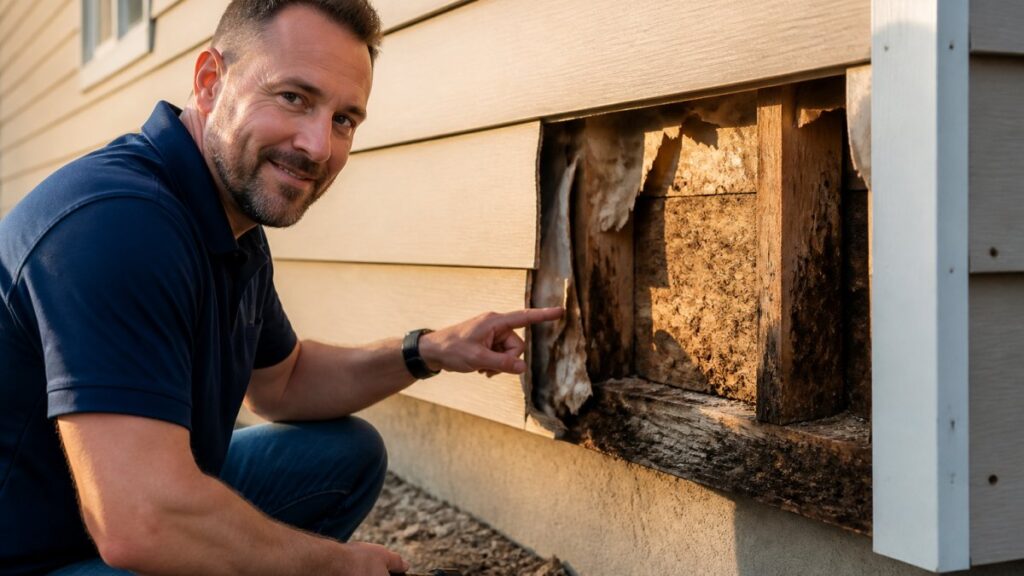
By the time you notice signs of moisture under siding, the problem has often spread deep into your home’s structure.
Trapped moisture feeds mold, rots framing, and weakens the building envelope, turning a small leak into structural damage that affects your property’s value and safety.
This guide covers the most common warning signs of moisture behind your siding, how to inspect for water intrusion yourself, and when to call a professional.
How to Check for Moisture Behind Siding
A visual walk-around catches obvious problems; a structured inspection catches the ones already damaging the wall cavity. Work through these four stages in order, and repeat them in spring and fall for a baseline.
Stage 1: Exterior walk-around (15-20 minutes)
Walk the full perimeter on a dry day, ideally two to three days after rain so you can see what stays wet. Bring a notepad, flashlight, and phone camera, and photograph anything suspicious with something for scale.
Check the siding itself:
- Gaps, cracks, or separation between panels and at seams
- Soft spots or panels that flex when you press them
- The bottom edge where siding meets the foundation
Check drainage and grading:
- Gutters that are clogged, sagging, or pulling away
- Downspouts that discharge within about 1.5 meters of the foundation
- Soil that slopes toward the house instead of away
Check flashing and sealant:
- Visible tears, holes, or missing sections of house wrap
- Flashing at windows, doors, and roof-to-wall transitions
- Caulking that is cracked, peeling, or missing
Stage 2: Interior and cavity check
Enter a basement or crawl space only if it is safe and dry, and never disturb materials that may contain asbestos or lead in an older home without professional advice (Asbestos and your health).
Examine the rim joist and band board:
- These run horizontally along the top of the foundation wall
- Look for dark stains, soft wood, or visible mold
- Press gently with a screwdriver, sound wood resists, rotted wood feels spongy
Check wall cavities where accessible:
- Dark staining on the back of siding or house wrap indicates water intrusion
- Mold appears as black, green, or white patches
- Damp insulation or drywall near exterior walls is a strong signal
Listen and feel:
- Tap on walls, a dull thud can suggest moisture, a crisp sound suggests dry wood
- Run the back of your hand along interior wall surfaces near exterior corners; cool, damp patches stand out
Stage 3: Tools that extend your senses
Visual checks only find moisture that has reached a surface. These tools find what is hidden:
- Pin-type moisture meters measure water content in wood and drywall at the point of contact, but only where the pins touch.
- Pinless moisture meters scan a wider area without leaving holes, useful for mapping a wall before an invasive check.
- Thermal cameras reveal temperature differences that often correspond to damp areas, but they are a screening tool, not proof, a cool spot can also be an air leak or missing insulation.
Take meter readings at the same spots each season and write them down. A single reading tells you little; a trend tells you whether a wall is drying out or getting wetter.
Stage 4: When to stop and call a professional
Stop your own inspection and bring in a qualified building-envelope professional if you find any of the following:
- Soft or crumbling wood anywhere in the structure
- Mold covering an area larger than roughly a square meter (Mould)
- Water actively entering during rain
A professional assessment typically includes a visual exam, moisture meter readings, thermal imaging, and identification of the water entry source, distinguishing surface dampness from deep structural moisture and telling you whether repair is urgent.
Signs of Water Damage Behind Walls
Water damage behind walls progresses in stages; early detection stops it from spreading.
Initial signs appear within weeks of water intrusion:
- Slight discoloration or water staining on drywall
- Musty odors near exterior walls
- Paint bubbling or peeling on interior walls
Mid-stage damage develops over months:
- Visible mold or mildew growth
- Soft or spongy drywall when pressed
- Wood framing showing dark stains or discoloration
Advanced damage requires urgent repair:
- Significant mold colonies
- Rotted wood that crumbles or breaks easily
- Structural compromise affecting wall stability
If you notice any of these signs, learn about moisture prevention strategies specific to your Alberta home.
Water damage progresses through distinct stages, and recognizing each one helps you act before structural damage occurs. Explore a related detection guide that covers the same moisture damage topic in depth.
| Stage | Timeline | Key Signs | Action |
|---|---|---|---|
| Initial | Within weeks | Water staining, musty odors, paint bubbling | Monitor closely |
| Mid-stage | Over months | Visible mold, soft drywall, dark wood stains | Call professional |
| Advanced | Ongoing | Mold colonies, rotted wood, wall instability | Urgent repair needed |
Visible Symptoms of Moisture Problems
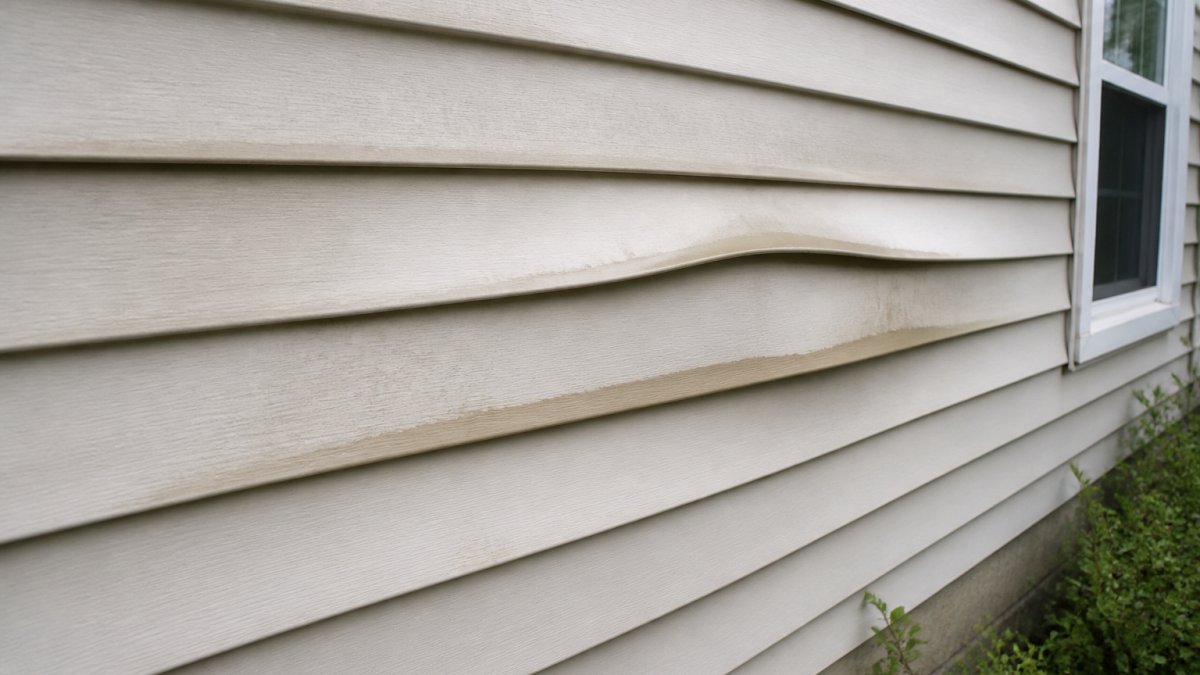
Warping, buckling, and wavy siding panels
Moisture causes siding to swell and distort: vinyl buckles when water is trapped behind it, and wood warps and cups as it absorbs moisture unevenly.
Look for these visible changes:
- Panels that bow outward or pull inward
- Wavy or undulating surface instead of flat panels
- Gaps appearing between panels that were previously tight
Warping usually means water has accumulated behind the siding for several weeks, and it worsens the longer moisture sits.
Dark stains and discoloration
Dark stains on siding indicate past or ongoing water intrusion.
Common stain patterns:
- Vertical streaks running down from a leak source
- Dark patches concentrated at the bottom edge of panels
- Brown or black discoloration that doesn’t wash away
Stains near the bottom of walls suggest drainage problems, stains around windows or corners point to flashing failures, and widespread staining indicates a systemic issue.
Loose, cracked, or damaged siding
Physical damage creates entry points for water, and cracks let rain penetrate directly behind the protective barrier.
Inspect for:
- Visible cracks running across panels
- Pieces of siding that have separated from the wall
- Holes or punctures in the material
Even small cracks allow water intrusion during heavy rain. Loose siding flexes in wind, pumping water behind the panels like a bellows.
Causes of Moisture Behind Siding
Siding is rarely the source of a moisture problem, it is usually where the problem becomes visible. Water almost always enters elsewhere, like a roof edge, window, penetration, or failed seal, and travels behind the siding. Replacing a stained panel without finding the entry point rarely solves anything.
Work from the top down
Water runs downhill and follows the path of least resistance. Start your diagnosis at the highest point above the wet area and work downward:
- Roof-to-wall transitions and step flashing, the most common hidden entry point on walls that meet a roof slope.
- Roof edges and drip edges, water that curls back under the edge can track behind siding.
- Windows and doors, check the head flashing, sill pan, and side jambs. Failed caulk at the head is a frequent culprit.
- Penetrations, vents, hose bibs, electrical boxes, and dryer or range hood terminations. Each one is a hole in the weather barrier.
- Gutters and downspouts, overflow at an inside corner sends water down the wall face and behind panels.
- Grading and foundation, water that pools at the base wicks upward into the wall assembly.
A useful rule: the wet spot is usually below and slightly to one side of the entry point, not directly under it. Trace upward and outward from the stain.
Material-specific behavior
Different materials fail in different ways, and the same symptom can mean different things:
- Vinyl expands and contracts with temperature. Panels installed too tight can buckle, and loose panels flex in wind, pumping water behind the wall like a bellows. Vinyl itself does not absorb water, so staining on vinyl usually points to what is behind it.
- Wood absorbs moisture and cups or warps as it dries unevenly. Soft spots and paint failure at the bottom edge of boards are early warnings. Wood siding also needs a drainage plane behind it; direct-to-sheathing installation traps water.
- Fiber cement is dimensionally stable but can crack at fasteners and absorb water at unsealed cut edges. Staining at butt joints and around penetrations is common.
In every case, the material is the messenger. The wall assembly behind it, house wrap, flashing, sheathing, framing, is where the damage happens.
Poor drainage and rain exposure
Water intrusion often starts with drainage that cannot keep up: clogged gutters, downspouts discharging too close to the foundation, grading that slopes toward the house, and inadequate roof overhangs.
Exposure matters too: windward siding faces more wind-driven rain, and north-facing walls stay wetter longer in shade. A wall that performs fine on one side can fail on another with the same materials.
Damaged house wrap and flashing
House wrap is the second line of defense. Flashing redirects water away from the most vulnerable areas. When either fails, water reaches the wall cavity with nothing to slow it down.
Common flashing failures:
- Flashing installed without the correct overlap sequence
- Caulking dried out, cracked, or missing
- Flashing rusted through or bent out of shape
Air infiltration and drafts
Air leaks let moisture-laden air into wall cavities. When warm, humid interior air reaches a cold exterior surface, it condenses into liquid water, a problem that appears in winter even with no rain.
Sources of air infiltration:
- Gaps around window and door frames
- Holes for electrical outlets and mechanical penetrations
- Cracks in the siding or house wrap
Before you repair anything, identify the entry point. A moisture problem that returns after a repair usually means the source was never found, only the symptom was covered.
Siding Inspection Checklist for Homeowners
Use this checklist twice per year, spring and fall, to catch problems early.
Exterior inspection:
- Walk the entire perimeter looking for visible cracks or separation
- Check all corners for gaps or loose siding
- Inspect the bottom edge where siding meets the foundation
Interior inspection (basement or crawl space):
- Look at the rim joist for dark stains or soft wood
- Inspect the back of exterior walls for moisture or mold
- Check for musty odors near exterior walls
After heavy rain:
- Walk the interior perimeter for new water stains
- Check basement walls for moisture or water entry
- Look for musty smells that indicate trapped moisture
Distinguishing Normal Drainage from Water Intrusion
Not all water around your home signals a problem. Understanding the difference prevents unnecessary alarm and helps you prioritize repairs.
Normal drainage occurs during and immediately after rain:
- Water flows down the exterior and away from the foundation
- Gutters and downspouts direct water away from the house
- Soil drains water within hours of rain stopping
Water intrusion indicates a problem:
- Water appears inside your home during or shortly after rain
- Moisture persists in wall cavities days after rain stops
- Gutters overflow or water bypasses them
The key difference: normal drainage moves water away from your home. Water intrusion allows moisture to enter cavities where it accumulates and causes damage.
If water persists after rain or interior moisture appears, the drainage system is failing, investigate the cause.
Getting a Professional Moisture Assessment
When you’ve identified potential moisture problems, a professional assessment provides clarity and prevents costly guessing.
What a professional inspection includes:
- Visual examination of exterior and interior
- Moisture meter readings to detect hidden moisture
- Identification of the water entry source
Professional tools detect moisture you cannot see:
- Moisture meters measure water content in materials
- Thermal imaging reveals cold spots where moisture accumulates
- Borescopes allow inspection inside wall cavities
A professional distinguishes surface moisture from deep structural problems, and identifies whether damage is recent or long-standing and whether repair is urgent.
Hire a contractor who can handle both roof and siding issues related to moisture to ensure all water entry points are addressed comprehensively.
Moisture problems worsen quickly once they begin. Early detection and professional repair prevent structural damage, mold growth, and expensive delays.
Frequently Asked Questions
What are the signs of moisture under siding?
Common signs include warped or buckled siding panels, dark stains or discoloration on exterior walls, visible mold growth, water emerging from the bottom edge of siding, and a musty odor inside the home. You may also notice loose or cracked siding panels, peeling paint, or soft spots when you press on the exterior wall. Interior signs include water staining on drywall, damp spots in the wall cavity, and deteriorating insulation behind the siding.
How can I check for moisture behind siding?
Start with a visual exterior inspection, looking for warping, stains, and damaged areas. Press gently on siding panels to check for soft spots indicating trapped moisture. From inside, inspect the wall cavity near windows, doors, and the foundation line. Use a moisture meter to measure moisture levels in the wall, levels above 20% indicate a problem. Check for mold, discolored insulation, or wood rot. If you suspect significant moisture, contact a professional for a thorough assessment.
What causes moisture to get behind siding?
Moisture enters through damaged house wrap, missing or failed flashing around windows and doors, poor drainage at the foundation, cracks in the siding, and air infiltration gaps. Heavy rain exposure combined with inadequate water drainage allows water to penetrate the building envelope. Clogged gutters and downspouts that direct water toward the foundation also contribute. Improper caulking at joints and the bottom edge of siding can allow water to travel behind panels into the wall cavity.
Should I be concerned about normal water drainage near my siding?
Normal drainage, water running down the siding during or after rain, is expected and not a sign of a problem. However, if water pools at the foundation, emerges from behind siding, or doesn’t drain away from the house, that indicates a moisture issue. Look for water staining, discoloration, or mold growth to distinguish damaging moisture from normal rain exposure. If water consistently appears in the same spot or creates visible damage over time, have it inspected by a professional.
Moisture behind siding is a serious threat that requires prompt attention. The signs are often visible if you know where to look, warping, stains, loose panels, and drainage failures all point to water intrusion. Early detection saves your home’s structure and your budget. Get a professional moisture assessment from HighLow Roofing & Exteriors and protect your exterior with expert repairs, quality materials, and proven installation methods designed to withstand Alberta’s weather.
