
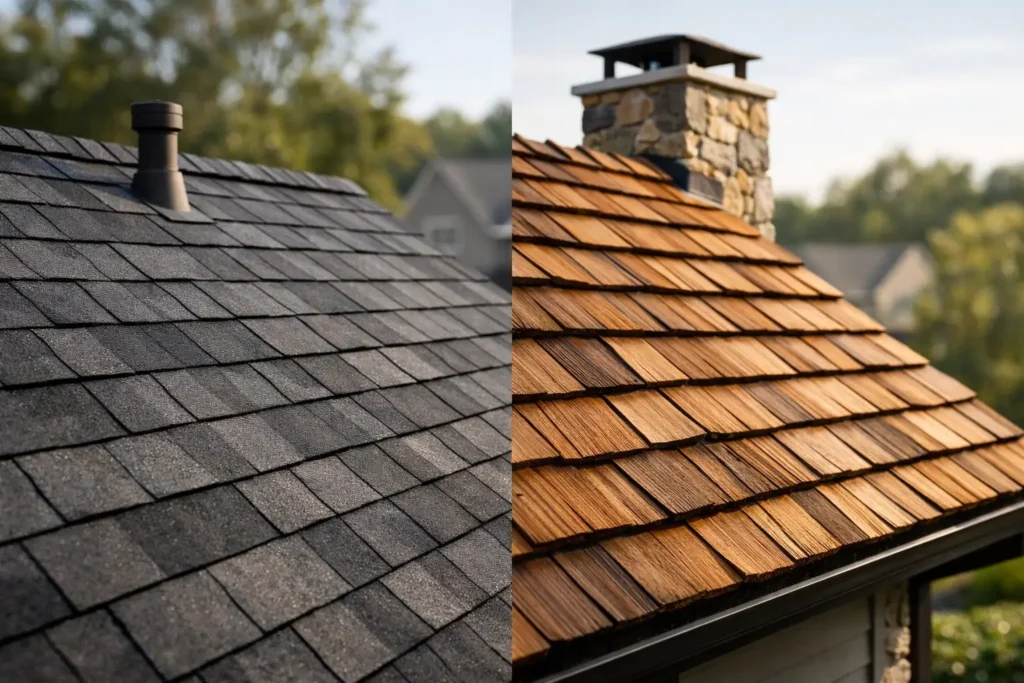
A roof can look great on installation day and still be the wrong choice for the years ahead. When homeowners weigh asphalt shingles versus cedar, the real question is not simply which material looks better. It is which roof fits your budget, maintenance expectations, neighborhood style, and the hard weather Southern Alberta can deliver.
Asphalt shingles are the familiar, practical choice for many homes. Cedar offers distinctive natural character and can make the right property stand out. Both can protect a home well when installed correctly, but they ask very different things of the homeowner over their lifespan.
Asphalt shingles versus cedar: the practical difference
Asphalt shingles are manufactured roofing materials made with a fiberglass mat, asphalt coating, and protective mineral granules. Architectural shingles, also called dimensional shingles, are a popular option because they add depth and can closely resemble more expensive roofing materials.
Cedar roofing is a natural wood product, generally installed as cedar shingles or thicker cedar shakes. Shingles have a more uniform, refined appearance, while shakes have a rougher, more textured look. Cedar’s grain, color variation, and texture create a warmth that manufactured products cannot fully duplicate.
That visual appeal is often the starting point, but it should not be the final deciding factor. Asphalt usually wins on upfront affordability and lower maintenance. Cedar can offer exceptional curb appeal and natural insulation value, but it requires more hands-on care to remain in good condition.
Cost: upfront price and long-term ownership
For most homeowners, asphalt shingles are the easier fit financially. Material availability, installation efficiency, and broad product selection keep the initial cost more manageable. There are also quality levels within asphalt roofing, so homeowners can choose a dependable architectural shingle without moving into the price range of premium roofing systems.
Cedar typically carries a higher initial investment. The material costs more, and installation requires careful workmanship to allow the roof to shed water properly and to support ventilation. Replacing damaged pieces later can also be more specialized than replacing standard asphalt shingles.
The lowest initial price is not always the lowest total cost. A well-installed architectural asphalt roof can provide strong value with routine inspections and minor repairs as needed. Cedar may last a long time under the right conditions, but periodic treatment, debris removal, and more frequent attention should be part of the ownership plan from day one.
If financing or project budget is a major concern, asphalt often allows homeowners to address a needed roof replacement while leaving room for related exterior work, such as gutters, soffit, fascia, or siding repairs. That can matter when an aging roof has allowed water-management issues to develop around the home.
Weather performance in Southern Alberta
Lethbridge and surrounding Southern Alberta communities see weather that puts every roofing material to work. Strong wind, hail, intense sun, temperature swings, snow load, and freeze-thaw cycles can all expose weak installation details or aging materials.
Modern asphalt shingles are available in wind-rated and impact-resistant options. For homeowners in exposed areas, these upgrades can be worth considering. The right underlayment, flashing, attic ventilation, and fastening pattern are just as important as the shingle itself. A premium shingle cannot perform as designed if water can work beneath it around valleys, vents, chimneys, or wall transitions.
Cedar handles changing temperatures well because wood naturally insulates, but moisture management is critical. Cedar needs proper airflow beneath and around the roofing system so it can dry after rain or snow. When debris collects, moss develops, or ventilation is inadequate, cedar can retain moisture and become more vulnerable to splitting, cupping, rot, or decay.
Neither material is maintenance-free in a windy, dry, and variable climate. Asphalt should be inspected after major storms for lifted tabs, missing shingles, exposed fasteners, and granule loss. Cedar should be checked for cracked or loose shakes, dark staining, moisture retention, and areas where branches or debris keep the roof from drying.
Appearance and curb appeal
Cedar has a clear advantage if your priority is a natural, high-end exterior appearance. It works especially well on rustic homes, heritage-inspired designs, mountain properties, and houses with stone, timber, or warm-toned siding. As cedar ages, it may weather from warm brown to a soft gray unless treated to preserve its original color.
Asphalt shingles have come a long way in appearance. Architectural styles offer layered profiles, shadow lines, and color blends that suit everything from traditional family homes to more contemporary exteriors. They are available in a wide range of colors, making it easier to coordinate a roof replacement with existing siding, trim, brick, and gutters.
For resale value, the best choice depends on the home and neighborhood. Cedar can create a memorable first impression when it suits the architecture and has been properly maintained. A clean, professionally installed asphalt roof can be equally reassuring to buyers who want a dependable, low-maintenance home.
Think about the whole exterior
A roof does not stand alone. Fascia condition, gutter layout, soffit ventilation, siding transitions, and flashing details all affect appearance and protection. If you choose cedar, surrounding exterior details should support its premium look. If you choose asphalt, a coordinated shingle color and properly finished roofline can give the home a sharp, polished appearance without overspending.
Maintenance: where the biggest trade-off lies
Asphalt shingles are usually the lower-maintenance option. Homeowners should still keep gutters clear, trim back overhanging branches, watch for storm damage, and schedule inspections when the roof is older or after severe weather. In most cases, there is no need for regular surface treatment.
Cedar requires a more active maintenance mindset. Leaves, needles, and branches should be removed so moisture does not stay trapped against the wood. Treatments may be recommended depending on the product, local conditions, and desired appearance. Cleaning must be done carefully, since aggressive pressure washing can damage wood fibers and shorten the roof’s service life.
Cedar also needs close attention to biological growth. Moss and algae are not just cosmetic concerns when they hold moisture against the roof surface. Homeowners who love the look of cedar should be prepared to protect that investment with scheduled care rather than waiting until visible damage appears.
Fire resistance and local requirements
Fire performance deserves a direct conversation before selecting cedar. Asphalt shingles are commonly available with high fire ratings, making them a straightforward option for many homes. Cedar roofing can be treated for fire resistance, but product ratings, installation methods, building codes, insurance requirements, and local regulations must all be reviewed before work begins.
Do not assume every cedar product is approved for every situation. A qualified roofing contractor can confirm the roof assembly requirements, including underlayment and ventilation, before materials are ordered. This is one area where choosing based on appearance alone can create an expensive surprise.
When asphalt is the better choice
Asphalt shingles are often the right answer for homeowners who want proven protection, broad color options, lower initial cost, and less ongoing maintenance. They are a particularly practical choice for busy households, rental properties, and homes where roof replacement needs to happen promptly after age or storm damage becomes a concern.
They also make sense when the roof design has numerous valleys, penetrations, or complex transitions. A skilled installer can build an asphalt system with reliable flashing and drainage details while keeping the project cost under control.
When cedar is worth considering
Cedar may be worth the added investment when architectural character is the priority and the homeowner is committed to maintenance. It can be a strong fit for a custom home, a property where natural materials are central to the design, or a neighborhood where cedar roofing supports the home’s value and visual appeal.
The key is to approach cedar as a long-term exterior system, not a decorative upgrade. Proper ventilation, thoughtful water management, quality materials, and regular inspections are necessary to protect both the appearance and the performance of the roof.
Get the recommendation that fits your home
The best material is the one that protects your home without creating costs or maintenance demands you did not expect. Before choosing, consider the roof’s slope and complexity, your exposure to wind and trees, the condition of your attic ventilation, your preferred exterior style, and how long you plan to own the home.
HighLow Roofing & Exteriors can assess those details during a free estimate and explain the trade-offs in plain language. A careful roof inspection often reveals whether the bigger need is material selection, improved ventilation, better drainage, or repair of related exterior components.
A good roofing decision should feel clear before the first shingle or cedar shake is installed. Choose the material that matches the way you want to care for your home, then make sure the installation is built to handle the weather outside your door.