
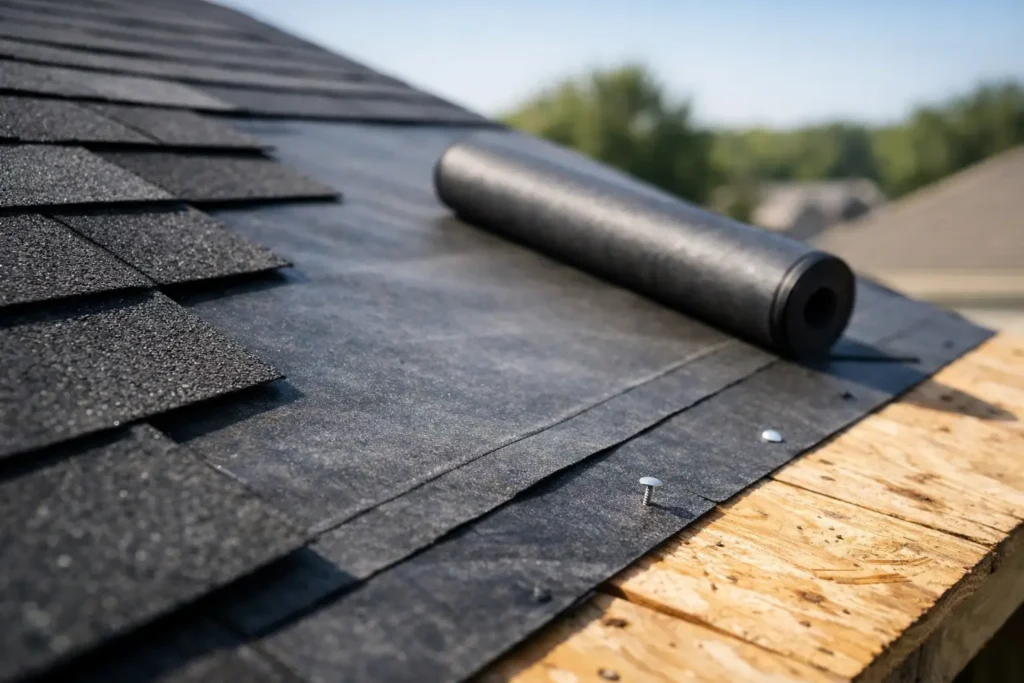
A roof can look perfectly sound from the street and still be vulnerable beneath the shingles. Roof underlayment is the critical layer installed between the roof deck and the finished roofing material. When wind-driven rain gets past a shingle edge, snow melts and refreezes, or condensation forms under the roof covering, this hidden material helps keep moisture away from the wood structure below.
For homeowners in Lethbridge and across Southern Alberta, that backup protection matters. Our weather can shift quickly, bringing strong winds, heavy snow, freeze-thaw cycles, and sudden rain. The right underlayment, installed correctly, gives your roofing system another line of defense when the elements put it to work.
What Roof Underlayment Does
Shingles, metal panels, and other roof coverings are the first barrier against weather. They shed most water, block much of the sun’s heat, and create the finished appearance of the roof. But no exterior roofing material is completely immune to wind, age, installation details, or severe weather.
Underlayment sits directly on the roof deck and creates a secondary water-shedding layer. Its job is not to replace the roofing material. Instead, it helps protect the deck if water finds a path beneath the exterior surface. It can also reduce exposure during installation, when the roof deck may be temporarily uncovered before shingles or panels are in place.
A quality underlayment contributes to a longer-lasting roofing system by helping protect against:
- Wind-driven rain that works beneath lifted or damaged shingles
- Snow and ice melt that backs up near roof edges and valleys
- Small amounts of moisture that enter around flashing, vents, or penetrations
- Wear on the roof deck that can lead to rot, staining, and costly repairs
The material itself is only one part of the equation. Proper fastening, overlap, sealing, and detailing around valleys, eaves, chimneys, skylights, plumbing vents, and wall transitions are what turn individual roofing components into a dependable system.
The Main Types of Roof Underlayment
There is no single underlayment that is best for every roof. The right choice depends on the roof slope, roofing material, exposure to weather, ventilation design, and the details of the home itself.
Asphalt-Saturated Felt
Often called felt paper, asphalt-saturated felt has been used under shingles for generations. It remains a familiar option and can perform well when installed properly. It is generally more affordable than synthetic products, which can make it a practical choice for certain projects.
Its trade-off is that felt is heavier, can wrinkle when exposed to moisture, and may tear more easily during installation. It also tends to be less forgiving if it is left exposed to weather for too long. For a straightforward roof replacement with appropriate installation timing, it can still be a viable material, but it is not always the strongest long-term choice for demanding conditions.
Synthetic Underlayment
Synthetic underlayment is widely used on modern roofing projects because it is lightweight, durable, and typically more resistant to tearing than traditional felt. It lays flatter, is easier for crews to handle, and can offer better resistance to moisture exposure during installation.
For many asphalt shingle roofs, a quality synthetic product provides a strong balance of performance and value. Not all synthetic underlayments are identical, though. Thickness, grip, fastening requirements, water resistance, and approved use beneath specific roofing products can vary. Choosing based on price alone can leave a homeowner with a product that does not match the demands of the roof.
Self-Adhered Ice and Water Protection
Self-adhered membrane is designed for high-risk areas where water is more likely to collect or back up. It adheres directly to the roof deck and seals around many fasteners, providing a higher level of protection than standard underlayment in vulnerable locations.
It is commonly used along eaves, in valleys, around skylights, at penetrations, and in other areas where roof geometry creates added risk. In a climate with snow and frequent freeze-thaw conditions, protecting these areas is especially important. Ice can form at roof edges, hold back melting snow, and force water beneath shingles if the system is not detailed correctly.
This membrane costs more than standard underlayment, so covering an entire roof with it is not always necessary or cost-effective. A professional assessment should identify where enhanced protection delivers real value and where a quality synthetic layer is the more sensible choice.
Why Installation Details Matter More Than Homeowners Expect
Underlayment performs only as well as the installation underneath and above it. The roof deck must be dry, sound, and properly prepared. If there is soft plywood, damaged sheathing, or moisture trapped below the new materials, adding a fresh layer of underlayment will not solve the underlying issue.
Overlaps must be placed in the correct direction so water sheds down the roof rather than toward an opening. Fasteners need to be appropriate for the material and installed without damaging it. At valleys and roof edges, sequencing is particularly important because these are areas where water volume and exposure are often greatest.
Flashing also works closely with underlayment. Metal flashing at walls, chimneys, vents, and other transitions directs water away from openings. Underlayment must integrate with those flashing details in the correct order. A roof can have premium shingles and still develop leaks if the layers are not properly tied together.
This is why a roofing estimate should address more than the visible shingle. Ask what type of underlayment will be used, whether ice and water protection is included, how valleys and penetrations will be handled, and whether the roof deck will be inspected once the old materials are removed. Clear answers usually reflect a contractor who is planning for the full system, not simply installing a surface.
Underlayment for Asphalt and Metal Roofs
Asphalt shingles are the most common residential roofing material, and their underlayment needs are usually straightforward: a dependable field underlayment combined with enhanced protection at eaves, valleys, and other vulnerable areas. The exact approach can change with roof pitch, local weather exposure, and the shingle manufacturer’s requirements.
Metal roofing has different considerations. Because metal panels can experience temperature changes and condensation conditions differently than shingles, the underlayment must be compatible with the panel system and the roof assembly. Some metal roofs may require specific high-temperature membranes or separation layers. Using an unsuitable material can affect performance over time, particularly where heat, movement, or moisture is involved.
The right material is never just about what is most expensive. It is about matching the underlayment to the roofing product, the roof design, and the conditions the home faces year after year.
Signs Your Existing Roof May Need Attention
You cannot usually inspect underlayment without removing roofing materials, but warning signs on the roof or inside the home can point to a problem. Water stains on ceilings, damp attic insulation, peeling paint near exterior walls, or a musty attic odor can all indicate unwanted moisture.
Outside, look for missing or curling shingles, exposed fasteners, cracked sealant around penetrations, damaged flashing, or granules collecting in gutters. These do not automatically mean the underlayment has failed. They do mean the roof should be evaluated before a small entry point becomes damaged decking, insulation, drywall, or framing.
A repair may be appropriate when the issue is isolated and the rest of the roof is in good condition. If shingles are aging across the roof, leaks are recurring, or the deck has been exposed to long-term moisture, replacement often provides better protection and value than repeated spot repairs.
A Better Question Than “What Does It Cost?”
Cost matters, especially on a major home project. But the more useful question is what level of protection your roof needs and what is included in the installation. A lower estimate may use basic materials, omit enhanced membranes in vulnerable areas, or leave important deck repairs as an afterthought.
At HighLow Roofing & Exteriors, a careful roof assessment considers the visible roofing material as well as the components that protect your home underneath it. Homeowners deserve straightforward recommendations, clear scope details, and materials suited to local conditions.
The best time to think about underlayment is before water finds its way inside. When you are planning a roof repair or replacement, ask to see how the complete roofing system will protect the deck, manage moisture, and stand up to the weather your home faces.