
A roof rarely fails on a convenient schedule. A small ceiling stain after a hard rain, shingles scattered across the yard after a windstorm, or granules collecting in the gutters can all signal that roof replacement is becoming a real conversation. For homeowners in Lethbridge and Southern Alberta, acting before a minor concern becomes water damage can protect far more than the roof itself.
A new roof is a significant investment, but it is also one of the most practical ways to protect your home, improve its appearance, and avoid the escalating cost of repeated repairs. The right decision depends on your roof’s age, condition, material, and how it has handled local weather.
When Roof Replacement Makes More Sense Than Repair
Not every roofing problem requires a full replacement. A few damaged shingles, a loose flashing detail, or a small leak around a vent may be repairable when the rest of the roof is in good condition. Repairs can be a smart, cost-effective choice when the problem is isolated and the roofing system still has useful life left.
Replacement becomes the better long-term option when issues are widespread or recurring. If leaks keep returning, shingles are curling or cracking across multiple roof slopes, or bald spots are exposing the underlying layers, a patch may only delay the inevitable. A roof that has reached the end of its expected service life can also become less reliable even if its damage is not immediately obvious from the ground.
Watch for signs such as missing shingles after wind, granule loss that leaves shingles looking worn, sagging roof areas, daylight visible in the attic, or water staining on ceilings and walls. These symptoms do not all mean the same thing, but they deserve a professional inspection. The goal is not to sell a replacement when a repair will do. It is to understand the condition of the whole system before moisture gets into the structure of the home.
Why Southern Alberta Weather Changes the Equation
Southern Alberta roofs handle more than regular rain and sunshine. Strong winds, hail, sudden temperature swings, snow loads, and ice buildup can all shorten the life of materials that were poorly installed or already nearing the end of their service life.
Wind is especially hard on shingles. It can lift edges, break the seal between courses, and create openings where water can travel beneath the roofing surface. Hail can bruise or crack shingles in ways that are easy to miss from the yard. Over time, freeze-thaw cycles can worsen small openings around flashing, vents, and roof penetrations.
That is why roof replacement should be planned around more than appearance. Material selection, ventilation, underlayment, flashing, and installation details all work together to manage weather exposure. A roof can look good on installation day and still underperform if these supporting components are overlooked.
What a Complete Roof Replacement Should Include
A roof is not simply a layer of shingles. It is a connected system designed to shed water, handle wind, and allow the attic to breathe properly. A thorough assessment should look beyond the visible surface.
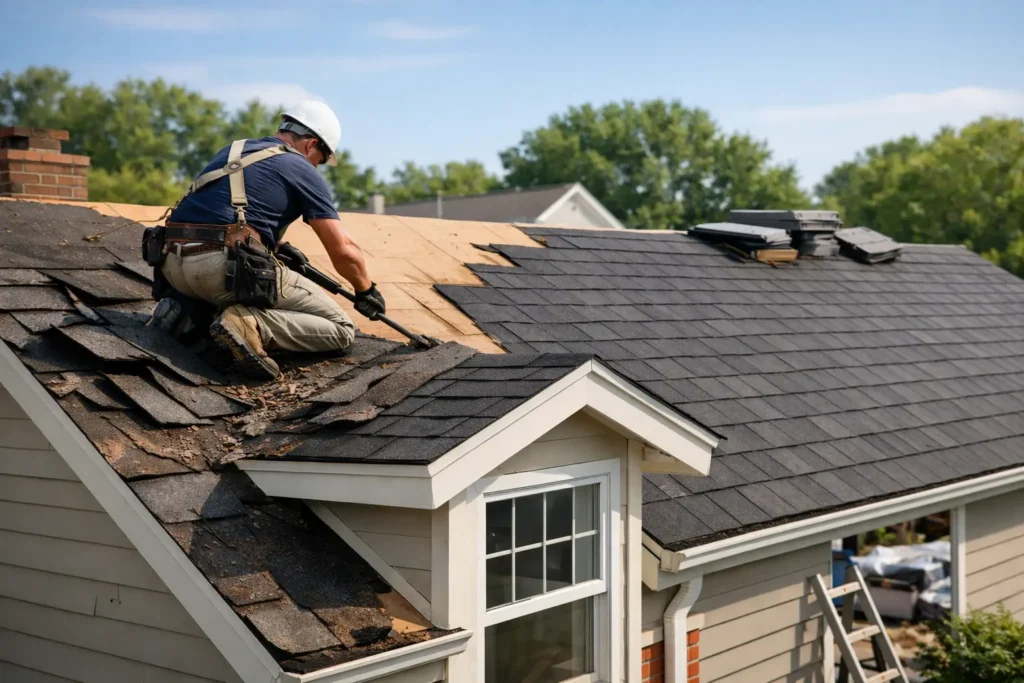
The existing roof covering is removed so the roof deck can be inspected for soft spots, rot, or other damage. Necessary deck repairs should be addressed before new materials are installed. From there, the roofing system may include ice and water protection in vulnerable areas, quality underlayment, properly installed flashing, ventilation components, and the selected roofing material.
Flashing deserves particular attention. Chimneys, valleys, skylights, vents, and wall intersections are common leak points because water naturally concentrates around them. Good workmanship in these areas can make a meaningful difference in how a roof performs during driving rain, snowmelt, and wind events.
Gutters, soffit, and fascia should also be considered during the planning stage. These exterior systems affect water management and roof-edge protection. If gutters are undersized, sagging, or draining too close to the foundation, replacing the roof without addressing those concerns can leave part of the problem unresolved.
Choosing the Right Material for Your Home
Asphalt shingles remain a popular choice for many homeowners because they offer dependable protection, a wide range of colors, and a practical balance of cost and performance. Quality architectural shingles can also add dimension and curb appeal while providing strong wind resistance when installed correctly.
Metal roofing is another option for homeowners looking for long-term durability and a distinct appearance. It can perform well in demanding weather and requires relatively little routine maintenance. However, the initial investment is often higher, and proper detailing is essential. The best material is not always the most expensive one. It is the one that fits your home’s design, budget, maintenance expectations, and exposure to weather.
Color selection matters, too. A roof makes up a large portion of what people see from the street. Consider your siding, brick, trim, and surrounding homes, but do not choose based on appearance alone. A dependable roofing system installed with quality materials will add more lasting value than a color choice that looks great but comes with compromised performance.
Planning the Budget Without Cutting Corners
The cost of a roof replacement can vary based on roof size, pitch, material, access, the number of valleys and penetrations, deck repairs, and the condition of existing components. A simple, low-slope roof generally requires less labor than a steep roof with multiple dormers, skylights, and complex transitions.
An estimate should explain what is included so there are fewer surprises once work begins. Ask about tear-off and disposal, underlayment, flashing, ventilation, deck repair allowances, cleanup, and warranty coverage. It is also reasonable to ask what could change the price after the old roof is removed. Hidden deck damage is not always visible until the existing materials come off, but a clear contractor will explain that possibility upfront.
The lowest bid is not automatically the lowest cost. A quote that leaves out critical protection, uses lower-grade materials, or does not account for proper flashing may create expenses later. Financing can help homeowners move forward with needed work while protecting cash flow, especially when weather damage or an aging roof makes delay risky.
How to Prepare for Roof Replacement Day
Roofing is active, noisy work, but a little preparation makes the process easier. Move vehicles out of the driveway so materials and crews have room to work. Secure patio furniture, grills, and fragile outdoor items, since debris may fall around the home during tear-off. Inside, remove delicate wall decorations if vibration could affect them.
Let neighbors know about the project, particularly if they share a driveway or have young children, pets, or daytime schedules that may be affected by noise. Keep pets indoors or arrange a quieter place for them during the busiest parts of the workday.
A professional crew should protect landscaping where practical, maintain an orderly work area, and perform a thorough cleanup. At HighLow Roofing & Exteriors, clear communication matters because homeowners deserve to know what is happening at their property, what the work involves, and what comes next.
Protect the Investment After Installation
A new roof does not require constant attention, but it should not be forgotten. Check the ground after major storms for unusual shingle debris. Keep gutters clear so water can move away from roof edges. Trim branches that rub against the roof or drop heavy debris into valleys, and arrange an inspection after severe hail or wind events.
Most importantly, address small concerns promptly. A loose piece of flashing or a blocked downspout is usually easier to correct than the damaged sheathing, insulation, and interior finishes that can follow months of unnoticed moisture. A well-built roof gives your home a strong first line of defense, and a little ongoing care helps it keep doing that job for years to come.