
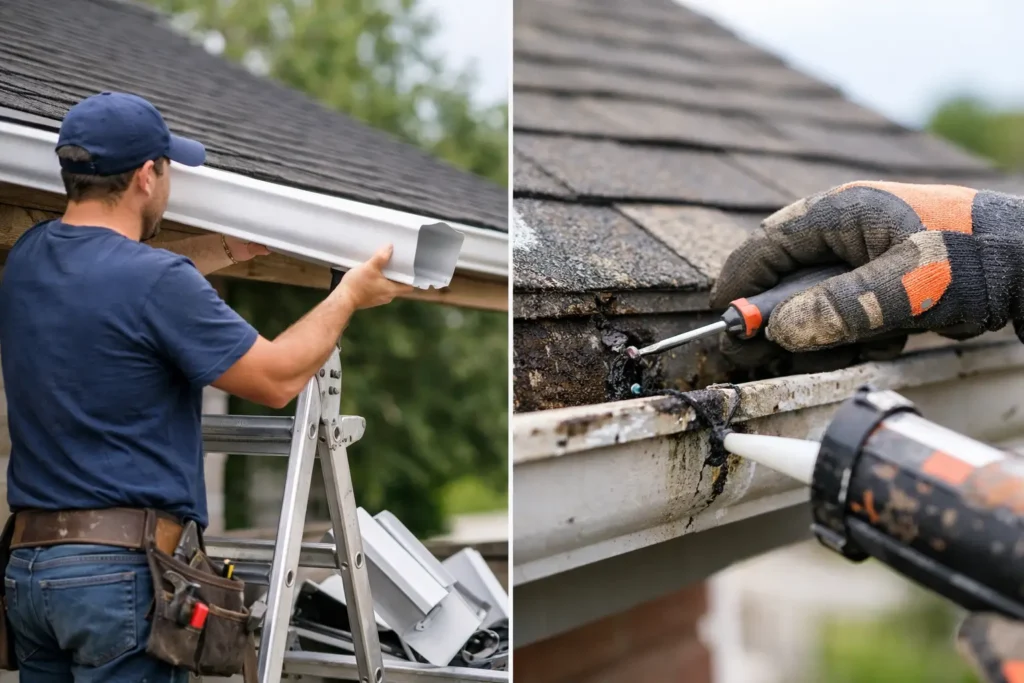
A gutter that pulls away from the fascia during a spring storm is more than a curb-appeal problem. Water can spill beside the foundation, soak siding, damage soffit, and work its way back toward the roof edge. When homeowners weigh gutter replacement versus repair, the right answer comes down to the condition of the whole system, not just the most visible problem.
For homes in Lethbridge and Southern Alberta, gutters need to handle wind, sudden downpours, freeze-thaw cycles, snow, and debris. A practical repair can extend the life of a sound system. But repeatedly fixing aging, poorly sloped, or damaged gutters can cost more than replacing them with a properly fitted system designed to move water away from the home.
When Gutter Repair Is the Smart Choice
Repair is often the best value when the issue is isolated and the rest of the gutter system remains in good condition. A single loose hanger, a separated joint, a minor leak, or one bent downspout does not automatically call for full replacement.
For example, gutters may start to sag because a few fasteners have loosened after years of wind and snow load. If the gutter channels are still straight, securely attached overall, and draining properly, replacing the affected hangers and restoring the correct slope may solve the problem. The same applies to a leaking seam in an otherwise solid sectional system. A professional can often reseal or refasten that connection before water reaches the fascia or exterior walls.
Small holes and punctures can sometimes be repaired as well, depending on their size and location. The key question is whether the metal around the damage is still strong. A patch on healthy material may last. A patch on thin, corroded metal is usually a short-term measure.
Repair also makes sense when a recent event caused localized damage. A fallen branch, ladder impact, or ice buildup may affect one section without compromising the entire gutter run. In those cases, replacing the damaged portion can restore reliable drainage without the expense of a complete system.
Signs Gutter Replacement Is the Better Investment
Gutter replacement becomes the more dependable choice when problems are widespread, recurring, or tied to the original installation. The goal is not simply to make the gutters look straight again. It is to manage water consistently enough to protect the roofline, siding, landscaping, and foundation.
Repeated leaks are a strong warning sign. If seams continue opening, sealant keeps failing, or water drips from multiple points, the system may be near the end of its useful life. Repairs can buy time, but they may not address worn connections, corrosion, or sections that have shifted out of alignment.
Frequent sagging is another concern. Gutters should maintain a subtle pitch toward the downspouts so water does not stand in the channel. When long sections sag, pool water, or overflow even after cleaning, the problem may involve inadequate support, stretched material, or an installation that was never properly sloped. Reattaching the same failing sections is rarely a lasting solution.
Replacement is also worth considering if gutters are pulling away from the fascia in several places. Water damage behind the gutter can weaken the wood where fasteners need to hold. Before new gutters are installed, the fascia and soffit should be inspected and repaired as needed. Installing a new system over damaged backing can create another round of problems down the road.
Rust, extensive corrosion, peeling finish, and cracks are further signs that repairs may be temporary. Aluminum gutters do not rust in the same way as steel, but they can still develop holes, dents, and failed seams over time. Older steel systems are especially vulnerable once protective coatings break down.
Water Damage Changes the Decision
The condition of the gutters matters, but the effects of poor drainage matter even more. Water stains beneath the eaves, rotted fascia, peeling paint, soft soil near the foundation, basement moisture, and ice buildup near walkways all deserve prompt attention.
If a gutter issue has already contributed to exterior damage, replacement may be part of a larger repair plan. The new system should be sized, sloped, and placed to direct water away effectively. Downspouts need to discharge where water will not return toward the home or create pooling beside the foundation.
Gutter Replacement Versus Repair: Questions to Ask
A contractor should assess more than the spot where water is leaking. Homeowners can make a clearer decision by considering the system as a whole.
Start with age. Gutters do not come with one exact expiration date, because material quality, maintenance, local weather, and installation all affect service life. Still, a system that is approaching the end of its expected lifespan and requires repeated work deserves a replacement estimate.
Next, consider how often repairs have been needed. One repair after a storm is normal. Paying for resealing, rehanging, patching, and reattaching year after year often signals that replacement will provide better long-term value.
Then look at performance during real weather. Do gutters overflow in moderate rain? Does water run behind the trough? Are there splash marks on siding or muddy trenches below the downspouts? These signs may point to undersized gutters, insufficient downspouts, poor slope, or blockages that cleaning alone will not fix.
Finally, think about your broader exterior plans. If you are replacing a roof, repairing fascia, updating siding, or addressing drainage around the home, it can be more efficient to coordinate the work. Gutters sit at the intersection of several exterior systems. Addressing them at the right time can reduce disruption and help create a finished, well-protected roofline.
What a Quality Replacement Should Include
Not all gutter replacements deliver the same result. The installation details determine whether the system moves water reliably through heavy rain and seasonal temperature changes.
A quality assessment starts with the roof area, pitch, valleys, and places where water concentrates. Larger roof sections and steep slopes can send a surprising volume of water into a small section of gutter. Proper sizing and enough downspouts help prevent overflow when the weather turns quickly.
The gutters should also be securely fastened, correctly sloped, and integrated with sound fascia. Seamless gutters can reduce the number of joints along long runs, which may reduce common leak points. Sectional systems can still perform well when they are properly installed and maintained, but every seam deserves careful attention.
Downspout placement matters just as much as gutter placement. A system can collect water perfectly but still create trouble if it empties too close to the foundation, driveway, or entryway. Extensions and thoughtful routing help keep water moving away from vulnerable areas.
Do Gutter Guards Eliminate Maintenance?
Gutter guards can reduce the amount of debris that enters the channel, particularly around trees. They are not a substitute for a well-sized, properly pitched gutter system, and they do not eliminate the need for periodic inspection. Fine debris, roof granules, and winter conditions can still affect drainage.
Whether guards make sense depends on the home, nearby vegetation, roof design, and maintenance preferences. A contractor should recommend them based on how your specific roofline handles water, not as an automatic add-on.
Protect the Roofline Before Damage Spreads
Ignoring a gutter problem is rarely the least expensive choice. What begins as a loose section or small drip can become fascia rot, siding damage, erosion, and moisture concerns around the foundation. At the same time, replacing gutters that only need a simple repair is not responsible advice either.
The most useful next step is a clear, honest inspection that identifies the cause of the problem, the condition of the existing materials, and the expected value of each option. HighLow Roofing & Exteriors helps homeowners make that decision with practical recommendations, quality workmanship, and a focus on protecting the entire exterior of the home.
Before the next heavy rain or snowmelt exposes a weak spot, have your gutters evaluated. A timely repair may preserve a good system, while a well-planned replacement can give your home the dependable water management it needs for years ahead.