
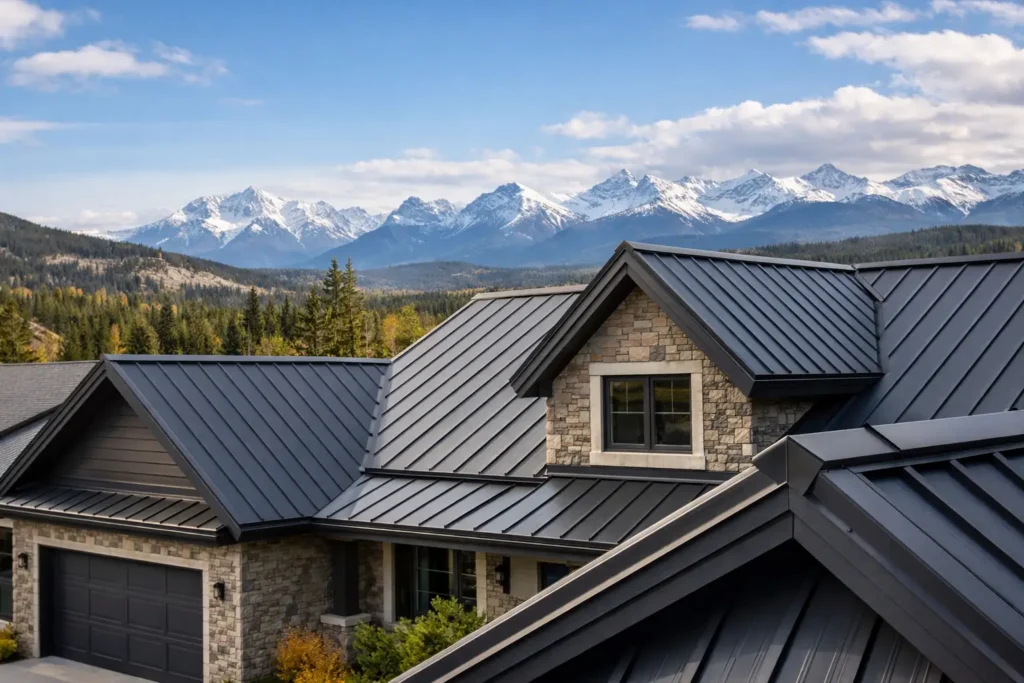
A roof in Southern Alberta has to handle more than an occasional rainstorm. High winds, hail, heavy snow, sharp temperature swings, and intense sun can all shorten the life of ordinary materials. Metal roofing gives homeowners a durable, low-maintenance option built for that kind of exposure – but it is still a major investment that deserves a clear-eyed look.
For many homes, metal delivers decades of dependable protection, strong curb appeal, and fewer concerns about frequent replacement. The right choice depends on your home’s design, budget, existing roof condition, and the quality of the installation.
Why metal roofing performs well in Southern Alberta
Metal is valued for its strength, but its performance comes from more than the panels themselves. A professionally installed metal roof is a complete system: properly prepared decking, underlayment, flashing, ventilation, fasteners, and carefully finished transitions around valleys, chimneys, skylights, and walls.
When those details are handled correctly, metal roofing sheds water efficiently and stands up well to wind. Its smooth surface can also help snow slide off rather than build up for long periods. That is useful during winter, although it may also mean snow guards are needed over entry doors, walkways, decks, or areas where falling snow could create a hazard.
Many metal products are also designed to resist impact from hail and wind-driven debris. No roof material is completely invulnerable in a severe storm, but a quality metal system can offer meaningful peace of mind in an area where weather can change quickly.
A long service life changes the value calculation
The upfront cost of metal is usually higher than a standard asphalt shingle roof. That difference is real, and homeowners should not expect metal to be the lowest-cost replacement option on day one.
The longer lifespan can shift the equation over time. While asphalt shingles may require replacement sooner depending on product quality, ventilation, installation, and weather exposure, a properly installed metal roof can last for decades. Homeowners planning to stay in their home long term often see value in making one durable upgrade rather than preparing for multiple roofing cycles.
A metal roof can also be a strong selling feature. Buyers often appreciate the prospect of lower maintenance, improved weather protection, and a roof that is not near the end of its service life. Resale value is never guaranteed, but a well-chosen roof supports the overall condition and appearance of the property.
Metal roofing styles are not all the same
“Metal roof” describes several different profiles, finishes, and installation systems. The best fit should complement the home while meeting practical needs for drainage, snow management, and budget.
Standing seam metal roofing is a popular choice for homeowners who prefer a clean, modern appearance. Its raised seams create strong visual lines, and concealed fasteners help reduce exposed points where water could potentially enter over time. It is often a premium option, especially on larger or more detailed rooflines.
Metal shingles, shakes, and tile-style panels can provide a more traditional look. These options work well for homeowners who want the durability of metal without changing the character of a classic home. The profile you choose matters because it affects appearance, price, installation requirements, and how the roof handles snow and water.
Color deserves just as much consideration as profile. A darker roof can create bold contrast and suit many exterior styles, while lighter colors may reflect more sunlight. The right selection should work with your siding, trim, gutters, masonry, and neighborhood character – not just the roofing sample viewed on its own.
Steel or aluminum?
Steel is widely used in residential metal roofing because it offers excellent strength and value. Protective coatings and quality paint finishes are essential, particularly where moisture can collect around flashings or roof edges.
Aluminum is naturally resistant to corrosion and can be a good option in certain environments. It is generally lighter and often more expensive than steel. For most Southern Alberta homes, the decision comes down to the selected product, roof design, budget, and the manufacturer’s specifications rather than a single material being right for everyone.
What affects the cost of a metal roof?
Square footage is only one part of a roofing estimate. Two homes with the same footprint can have very different project costs based on roof complexity.
A simple gable roof is generally more straightforward than a roof with multiple valleys, dormers, steep slopes, skylights, chimneys, and intersecting sections. Those features require additional labor and detailed flashing work. Removing old roofing, repairing damaged decking, improving ventilation, and installing snow retention can also affect the final scope.
Material selection has a major impact as well. Panel profile, gauge, coating, finish, trim pieces, and fastener system all influence price. A lower quote is not always a better value if it leaves out critical preparation or relies on products not suited to local weather conditions.
A thorough estimate should explain what is included and identify any potential concerns found during the roof assessment. Clear communication before work begins helps homeowners compare options fairly and avoid surprises later.
Installation quality matters as much as the material
Metal roofing has little room for shortcuts. Panels must be installed with correct spacing and fastening patterns to allow for natural expansion and contraction as temperatures change. Flashing must be shaped and sealed properly at every transition. Even a premium panel can underperform if the roof deck, underlayment, ventilation, or edge details are overlooked.
This is why roof replacement is often the right time to inspect the whole system. Soft or damaged decking should be addressed before new materials go on. Attic ventilation should be reviewed to help manage moisture and heat. Gutters, soffit, and fascia may also need attention, especially if water has previously overflowed or ice buildup has damaged roof edges.
Working with an experienced exterior contractor can make this process easier. Instead of treating the roof as an isolated surface, the project can be planned around how water moves off the home and how the exterior components work together.
Maintenance is low, not nonexistent
One of the strongest reasons homeowners choose metal is that it typically requires less routine attention than many other roofing materials. Still, every roof benefits from periodic checks, particularly after major wind or hail events.
Look for loose debris in valleys and gutters, damaged sealant around roof penetrations, bent flashing, or panels affected by impact. Keep gutters clear so water can drain away from the roof edge and foundation. If you notice interior stains, dripping, or unusual ice buildup, arrange an inspection promptly instead of assuming the problem will resolve itself.
Avoid walking on a metal roof unless it is necessary and done safely. Improper foot traffic can damage panels, scratch finishes, or create a safety risk. A professional inspection is the better approach when there is a concern.
Is metal roofing the right choice for your home?
Metal is especially appealing for homeowners who want a long-term roofing solution, value a distinctive exterior appearance, and prefer lower maintenance over the life of the roof. It can be an excellent fit for homes exposed to wind, hail, snow, and bright sun.
It may not be the best answer for every project. If the primary concern is the lowest initial cost, asphalt shingles may make more sense. If the home has structural issues, poor attic ventilation, or failing gutters, those items should be considered as part of the project rather than covered over with new roofing.
At HighLow Roofing & Exteriors, the goal is to help homeowners make practical choices based on their property, priorities, and budget. A careful inspection and honest estimate can show whether metal roofing is the right investment now or whether another solution will serve the home better. The best roof is one that is installed with care, built for local conditions, and ready to protect your family through the seasons ahead.