
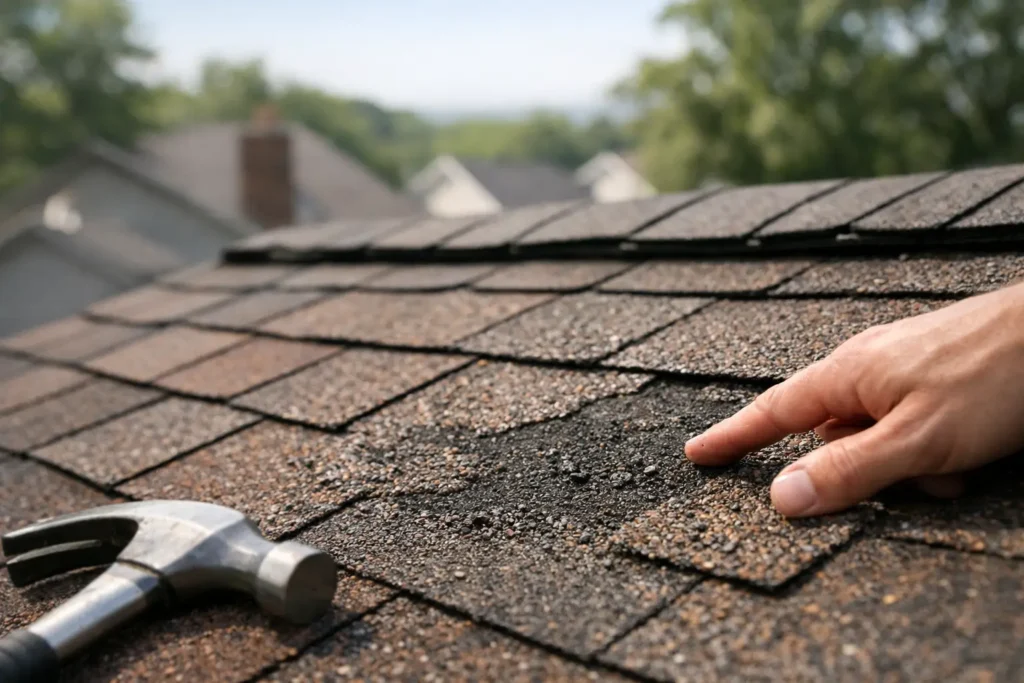
A handful of gritty particles in a gutter is easy to dismiss. But if you are asking, why are roof granules missing, it is worth looking closer. Those small mineral-coated pieces are a working layer of protection for asphalt shingles, not simply a cosmetic finish. When they begin washing away in large amounts or bare patches appear on the roof, your shingles may be losing their ability to stand up to sun, wind, rain, and hail.
For homeowners in Lethbridge and Southern Alberta, granule loss deserves particular attention. Strong winds, intense summer sun, sudden temperature swings, and hail can all shorten the life of a roof. The right response depends on why the granules are coming loose, how widespread the issue is, and whether the shingles themselves are still in sound condition.
What Roof Granules Actually Do
Most asphalt shingles are made with an asphalt layer over a fiberglass base. The colored granules pressed into the surface protect that asphalt from ultraviolet exposure, add fire resistance, and give the roof its finished color and texture. They also help the shingle shed water and tolerate everyday weathering.
As shingles age and lose granules, the darker asphalt underneath becomes exposed. That exposed asphalt absorbs more heat, becomes brittle faster, and is more vulnerable to cracking. Granule loss does not always mean a roof needs immediate replacement, but it can be an early warning that the roof is moving beyond routine maintenance.
A roof can also lose granules unevenly. One slope may face stronger sun or prevailing winds, while a valley may see heavier water flow. That is why a proper inspection looks at the full roofing system rather than judging the roof by one area alone.
Why Are Roof Granules Missing? Common Causes
Normal aging
Every asphalt roof sheds some granules over time. A small amount in gutters, especially after a heavy rain, is not automatically a problem. New shingles may also release a light amount of loose, excess granules shortly after installation.
The concern begins when granules accumulate regularly, resemble coarse black or colored sand in downspouts, or leave visible bald spots on shingles. Older roofs often lose granules because years of sunlight, moisture, and changing temperatures have weakened the bond between the granules and asphalt.
Hail and wind damage
Hail can knock granules away even when the roof does not appear severely damaged from the ground. A hail strike may leave a dark spot, a soft bruise, or a circular area where the granules have been displaced. These impacts can weaken the shingle beneath the surface and lead to faster deterioration later.
High wind creates a different problem. Wind can lift shingle edges, break the seal between shingles, or cause them to flap. That movement wears away granules and may expose the roof to wind-driven rain. Southern Alberta windstorms can be hard on aging shingles, particularly on exposed homes and roof slopes with little shelter.
Sun, heat, and temperature changes
Ultraviolet exposure slowly breaks down asphalt. Although Southern Alberta winters are cold, bright sunshine and rapid changes in temperature can still put significant stress on roofing materials. Shingles expand and contract as conditions change. Over many seasons, that movement can make the surface more brittle and more likely to shed granules.
This process is usually gradual. If a roof is nearing the later part of its expected service life, widespread fading and granular loss may be more about age than a single storm event.
Poor attic ventilation or moisture issues
A roof is only as healthy as the system beneath it. Inadequate attic ventilation can allow heat and moisture to build up under the roof deck. Excess heat accelerates shingle aging, while trapped moisture can contribute to deck movement, mold concerns, and premature material failure.
Ice dams can also create trouble in colder weather. When warm air from the home causes snow to melt and refreeze at the roof edge, water can back up beneath shingles. The resulting stress can loosen granules and damage the roof over time. Ventilation, insulation, and drainage should be evaluated together when a roof shows premature wear.
Foot traffic, debris, and improper cleaning
Walking on shingles can dislodge granules, especially in hot weather or on an older roof. Service visits may be necessary, but unnecessary foot traffic should be avoided. Tree limbs rubbing against the roof, accumulated debris in valleys, and aggressive pressure washing can also strip the shingle surface.
Asphalt shingles should never be pressure washed. It may make a roof look cleaner for a short time, but it can remove protective granules and shorten the roof’s usable life.
How to Tell Whether Granule Loss Is Serious
Start with a safe ground-level check. Look for bare, dark areas on the shingles, uneven color, curled edges, cracks, missing tabs, or visible damage around roof valleys and penetrations. Check gutters and downspout outlets for a heavy buildup of grit. If the gutter has recently been cleaned and fills quickly with granules again, that is more concerning than a one-time small deposit.
Do not climb onto the roof to investigate. Apart from the safety risk, walking on damaged or hot shingles can make the issue worse. A professional inspection can determine whether the loss is isolated, storm-related, caused by ventilation concerns, or part of normal end-of-life wear.
Granule loss deserves prompt attention when it appears in concentrated patches, follows a hail or wind event, or comes with leaks, stains on interior ceilings, lifted shingles, or damaged flashing. At that point, waiting can turn a repairable concern into water damage inside the home.
Repair or Replacement: What Makes Sense?
A localized issue may be repairable if the surrounding shingles are in good condition and a close material match is available. For example, a few wind-damaged shingles or a small area affected by a fallen branch may not require a full replacement.
Replacement becomes the more practical choice when granular loss is widespread, shingles are brittle or curling across multiple slopes, or the roof has reached the end of its service life. Replacing a roof before leaks develop can protect the roof deck, insulation, ceilings, and personal belongings from much more expensive damage.
There is also a value decision involved. Repeated patch repairs on an aging roof can add up, and new shingles may not blend perfectly with weathered ones. A full replacement provides a consistent finished appearance, renewed warranty coverage, and an opportunity to address ventilation, flashing, gutters, soffit, and fascia as part of one coordinated exterior plan.
What Homeowners Should Do Next
If you notice missing granules, document what you see from the ground. Take photos of affected roof areas when possible, note the condition of gutters, and record the date of any recent hail or windstorm. This information can be helpful when discussing the roof with a contractor or reviewing potential insurance coverage.
Then arrange a professional roof assessment. An experienced contractor should inspect the shingles, flashing, vents, valleys, roof deck condition, attic airflow, and drainage paths. The goal is not to push a replacement where a repair will do. It is to identify the source of the wear and give you a clear recommendation based on the roof’s actual condition.
Until the roof is assessed, keep gutters clear so water can drain properly, remove loose branches from the roof only if it can be done safely from the ground, and watch for new ceiling stains after rain. Avoid applying sealants, coatings, or quick fixes to damaged shingles without professional guidance. Those measures can hide symptoms without correcting the underlying problem.
HighLow Roofing & Exteriors helps homeowners make practical roofing decisions based on durable materials, careful workmanship, and the realities of local weather. A clear inspection and honest estimate can replace uncertainty with a plan that protects your home for the seasons ahead.
Missing granules are not always an emergency, but they are your roof’s way of asking for attention. Addressing the cause early gives you more options, more control over costs, and greater confidence when the next storm arrives.