
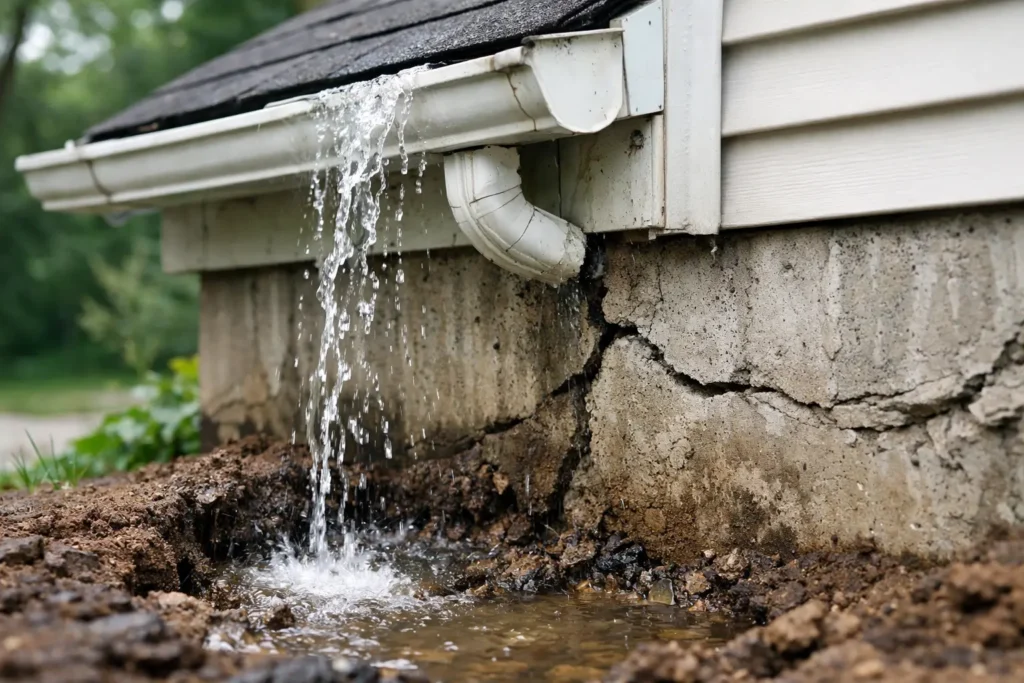
A wet strip of soil beside the house after every rainstorm may look harmless, but repeated runoff in the same place can become an expensive problem. Can gutters cause foundation problems? Yes – not because the gutters themselves damage concrete, but because a failing gutter system can send large amounts of water where it does not belong.
For homeowners in Lethbridge and Southern Alberta, water management deserves attention year-round. Heavy rain, spring snowmelt, freeze-thaw cycles, and strong winds can all expose weak spots in a gutter and downspout system. Taking care of drainage early is one of the most practical ways to protect your home, its exterior, and its long-term value.
How Gutters Cause Foundation Problems
Your roof collects far more water than most homeowners realize. A single rainstorm can move hundreds or even thousands of gallons of water off a roof. Gutters are designed to catch that runoff and direct it safely away through downspouts.
When gutters are clogged, sagging, leaking, undersized, or poorly pitched, runoff can spill over the edge or drain against the foundation. Soil around the home becomes saturated, and that water can work its way down along the foundation wall. Over time, changing moisture levels in the soil can create pressure against the foundation, increase the risk of leaks, and contribute to settlement or movement.
The risk is not identical for every property. Soil type, lot grading, roof size, foundation construction, and local weather all matter. Still, water repeatedly pooling beside a home is never something to ignore. A gutter issue that seems minor during a light shower can become much more serious during prolonged rain or rapid snowmelt.
What Water Does Around a Foundation
Water does not need to flood a basement to cause trouble. Persistent moisture can weaken the ground that supports the foundation and create conditions that lead to gradual damage.
Clay-heavy soil is especially sensitive to moisture changes. When it becomes wet, it can expand. When it dries, it can shrink. That repeated movement can place uneven pressure on foundation walls and footings. Homes built on other soil types can also be affected when water washes away fine material, settles near the house, or follows cracks and gaps below grade.
In colder climates, trapped water adds another concern. Water that enters small cracks or sits against exterior surfaces can freeze and expand. Repeated freeze-thaw activity can worsen cracks in concrete, damage masonry, and put added strain on drainage components. Gutters that overflow in the fall may contribute to ice buildup and water intrusion when temperatures change.
A gutter system cannot solve every foundation drainage issue by itself. Poor grading, damaged weeping tile, plumbing leaks, or a high water table may also play a role. But properly functioning gutters are a first line of defense because they control roof runoff before it reaches the ground beside your home.
Warning Signs Your Gutters Are Sending Water the Wrong Way
The most obvious sign is water pouring over the front or back edge of a gutter during rain. This often points to a clog, but it can also mean the gutter is too small for the roof area, installed with the wrong slope, or blocked at the downspout outlet.
Look for eroded soil, mulch pushed aside, or a trench-like path beneath a gutter. These signs show that runoff has been striking the same spot repeatedly. You may also notice standing water near the foundation, peeling paint on siding, staining below the gutter line, or mildew growth around lower exterior walls.
Inside the home, musty odors, damp basement walls, white mineral deposits on concrete, and new cracks deserve attention. These issues do not automatically mean the gutters are the cause, but they should prompt a closer look at your entire drainage system.
Pay attention after a storm rather than relying only on a dry-weather inspection. A gutter can appear fine from the ground on a sunny day while leaking at a seam, backing up at a downspout, or overflowing in one hard rain.
The Downspout Detail That Makes a Major Difference
Even clean gutters cannot protect the foundation if the downspouts release water too close to the house. A downspout that ends directly beside the foundation concentrates roof runoff in the area you are trying to keep dry.
As a general rule, downspout extensions should carry water several feet away from the foundation and release it where the ground continues to slope away from the home. The exact distance depends on your lot, drainage pattern, and local conditions. The goal is simple: water should not be able to flow back toward the house after it leaves the downspout.
Extensions need to stay connected and properly positioned. They can become loose during lawn care, get buried under landscaping material, or shift after wind and snow. Flexible extensions are convenient, but they must be checked regularly for crushing, cracks, and poor drainage. Underground drain lines can create a cleaner appearance, although they require correct installation and occasional maintenance to prevent blockages.
Gutter Problems That Need Professional Attention
Homeowners can often clear visible leaves and check whether downspouts are flowing. However, some issues are better addressed by an experienced exterior contractor, particularly when working near a roof edge or when water damage may already be developing.
Professional service is worthwhile when gutters are pulling away from the fascia, holding standing water, leaking through multiple seams, or overflowing despite being clean. These symptoms can indicate improper pitch, inadequate hanger spacing, damaged sections, or a system that was not sized for the roof.
It is also wise to have the roofline, soffit, fascia, and gutter system assessed together. Water that escapes behind a gutter can rot fascia boards and damage soffit areas before a homeowner sees obvious exterior signs. Replacing gutters without correcting damaged wood or improper roof-edge drainage can leave the underlying problem unresolved.
At HighLow Roofing & Exteriors, gutter work is approached as part of the home’s complete exterior protection system. A clear assessment can help determine whether a targeted repair, improved downspout routing, or a full gutter replacement is the right investment for the property.
Practical Steps to Protect Your Foundation
Regular maintenance is less costly than repairing water damage below grade. Clean gutters at least twice a year, and more often if your property has mature trees or frequent windblown debris. Check them again after major storms, especially when leaves, shingle granules, or ice may have collected near downspout openings.
Keep the ground around the house graded so it slopes away from the foundation. Avoid piling soil, mulch, or landscaping material high against siding, as this can hold moisture close to the structure and hide drainage problems. If you use decorative rock or garden beds near the home, confirm that they are not trapping water around the foundation.
Watch where snow accumulates in winter. Large piles placed beside the house can create concentrated runoff during a thaw. Directing meltwater away from the foundation is just as valuable as controlling rainwater.
If you are considering gutter guards, think of them as a maintenance aid rather than a guarantee. Quality guards can reduce leaf buildup, but small debris, roof granules, and ice can still affect performance. The best choice depends on the surrounding trees, roof design, and the type of debris common on your property.
When to Act Quickly
Do not wait for a basement leak before addressing overflowing gutters or pooling water. Prompt action is especially worthwhile if you see active erosion, water entering the basement, a downspout discharging against the house, or gutters separating from the roofline.
Foundation repairs can be disruptive and costly, while gutter repairs and drainage improvements are often straightforward when handled early. A well-installed system protects more than the roof edge – it helps preserve the ground and structure that support the entire home.
The next time it rains, take a few minutes to walk around your property and follow the water. Where it lands, where it pools, and where it travels will tell you a great deal about how well your home is being protected.