
A lot of roof leaks do not start in the middle of the shingles. They start where the roof changes direction, where something sticks through it, or where two materials meet. If you have ever asked, what does roof flashing do, the short answer is this: it protects the most vulnerable parts of your roof from water intrusion.
Flashing is one of those parts homeowners rarely think about until there is a stain on the ceiling or water running down a wall. Yet it does some of the hardest work on the entire roofing system. In Southern Alberta, where wind, snow, freeze-thaw cycles, and driving rain can all test a home in the same season, properly installed flashing is not a detail. It is a key line of defense.
What does roof flashing do, exactly?
Roof flashing is a thin material, usually metal, installed around roof features and transition points to direct water away from seams and openings. Shingles are excellent at shedding water on open roof slopes, but they are not designed to seal every corner, edge, or penetration on their own. Flashing fills that gap.
Think about the areas around a chimney, skylight, plumbing vent, dormer, wall intersection, or roof valley. These spots interrupt the clean flow of water down the roof. Without flashing, water can work under roofing materials, soak the roof deck, and eventually reach insulation, drywall, and framing.
So what does roof flashing do in practical terms? It creates a watertight path that tells water where to go. Instead of allowing moisture to sit or seep into a joint, flashing helps move it back onto the roofing surface and off the home.
Where flashing matters most
The average homeowner can look at a roof and see shingles, but roofers see transition points. That is where flashing matters most because those areas are naturally more exposed to movement, runoff, and buildup.
Around chimneys and masonry
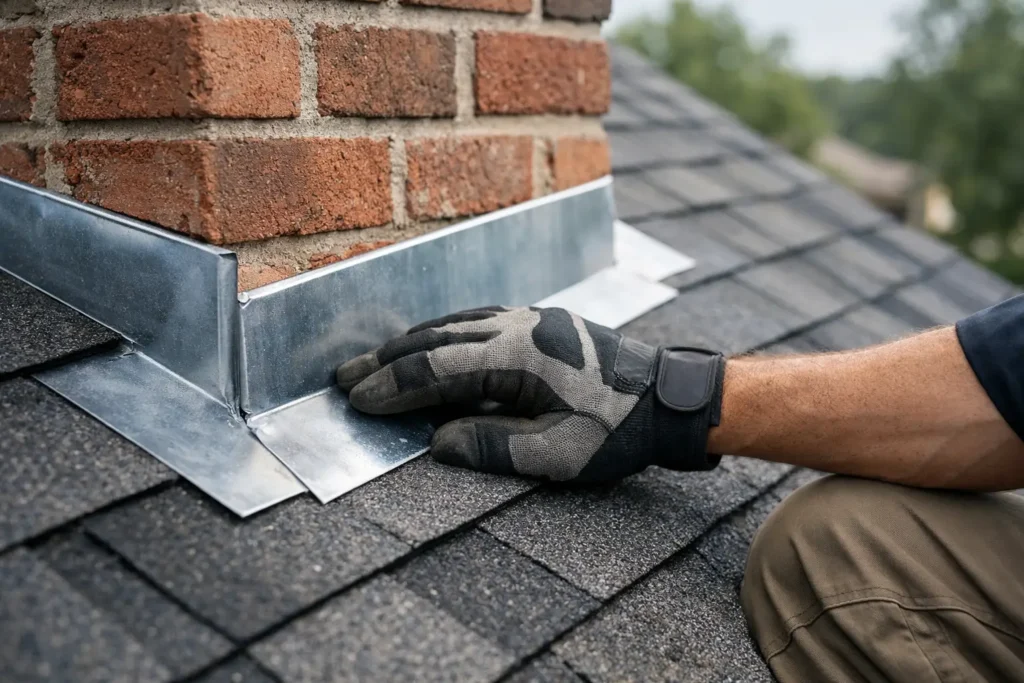
Chimneys are one of the most common leak locations because they interrupt the roof plane and create multiple edges where water can sneak in. Chimney flashing usually includes step flashing along the sides and counter flashing embedded into the masonry. When this is done correctly, water is directed away before it can work behind the materials.
When it is done poorly, the signs can be subtle at first. You might see staining near the fireplace wall, peeling paint, or moisture in the attic. By then, the leak may have been active for a while.
Around vents and pipe penetrations
Plumbing stacks, furnace vents, and other roof penetrations need flashing boots or collars to seal the opening where the pipe passes through the roof. These components are exposed to sun, cold, and expansion over time, so they can crack or pull away as they age.
A small failure here can lead to a surprisingly persistent leak. Because the opening is concentrated in one spot, even a minor gap can let a lot of water in during a storm.
In roof valleys
Valleys handle a high volume of water because they collect runoff from two roof slopes. Flashing in a valley adds extra protection in an area where water moves fast and debris can gather. In snowy climates, valleys also deal with ice and slow drainage, which increases the need for durable, properly placed materials.
Where the roof meets a wall
Sidewalls and headwalls are another common weak point. Whenever roofing connects to siding, brick, or another vertical surface, flashing is needed to keep water from entering behind the wall or under the roof covering. This is especially important when wind pushes rain sideways instead of letting it fall straight down.
Why flashing failures cause major problems
Flashing is a relatively small part of the roof, but when it fails, the damage can spread far beyond that location. Water rarely stays where it enters. It can travel along decking, rafters, insulation, and wall cavities before it shows up inside the house.
That is why a flashing issue may first appear as a ceiling stain in a room that is not directly below the leak source. Homeowners sometimes assume they need a full roof replacement when the actual issue is isolated flashing damage. Other times, they patch a visible leak without addressing deteriorated flashing, and the problem comes right back.
There is an important trade-off here. If the shingles are still in good shape and the flashing is the only failed component, a targeted repair may be the right move. But if the flashing is failing because the surrounding roof system is worn out, patching one area may only buy a little time. The right answer depends on the roof’s age, the extent of moisture intrusion, and whether the original installation was done correctly.
Common types of roof flashing
Most homeowners do not need to memorize flashing terminology, but it helps to know that flashing is not one universal piece. Different roof areas need different solutions.
Step flashing is used where a sloped roof meets a wall. It is installed in pieces between shingle courses so water moves down and out.
Counter flashing covers and protects the top edge of base flashing, often around chimneys or masonry walls.
Valley flashing lines roof valleys to handle concentrated water flow.
Drip edge flashing is installed at roof edges to help direct water into the gutters and protect the roof deck.
Vent pipe flashing seals around round penetrations like plumbing stacks.
The type of material matters too. Aluminum, galvanized steel, and other metals are common choices. The best option depends on the roof system, surrounding materials, local weather, and expected lifespan. In a climate with strong seasonal swings, durability and correct installation matter just as much as the material itself.
Signs your roof flashing may be failing
You do not have to climb on your roof to notice that something may be wrong. In many cases, your home gives you warning signs.
Water stains on ceilings or upper walls are a common clue. So is damp insulation in the attic, musty odors, or bubbling paint near roof intersections. Outside, you may notice loose metal, visible rust, cracked sealant, or shingles that seem to lift around chimneys and vents.
One caution here: sealant alone is not a long-term flashing strategy. Roofing cement or caulk can help in the right repair, but if flashing was never installed properly or has corroded, simply smearing sealant over the area is usually temporary. It might slow the leak for a season, but it does not solve the underlying problem.
Installation quality matters as much as the material
A good flashing system depends on overlap, placement, fastening, and integration with the rest of the roof. That is why even quality metal can fail if it is installed out of sequence or forced to do a job it was not designed for.
For example, step flashing should work with each course of shingles, not sit as one long exposed strip where water can slip behind it. Chimney flashing should account for both the roof surface and the masonry. Drip edge should direct runoff properly at the eaves and rakes. These are workmanship issues, and they have a direct impact on whether the roof stays dry.
This is also why reroofing projects should never treat flashing as an afterthought. In some cases, existing flashing can be reused if it is in excellent condition and compatible with the new system. In many cases, replacement is the safer choice, especially around penetrations and high-risk leak areas. Saving a little money upfront by reusing questionable flashing can lead to a much more expensive repair later.
What does roof flashing do for long-term home value?
When homeowners think about roof value, they often focus on shingle color, material upgrades, or replacement timing. Flashing deserves a place in that conversation because it protects the parts of the home that are expensive to repair once water gets in.
Good flashing helps preserve roof decking, attic insulation, interior finishes, trim, and even structural framing. It also supports the overall lifespan of the roofing system by reducing hidden moisture damage that can weaken materials over time.
For homeowners who plan to stay in their home, that means fewer surprise repairs and better long-term protection. For those thinking about resale, it means fewer red flags during inspections and better confidence that the roof was installed with care, not shortcuts.
In a region where weather can turn fast, homes need roofing details that are built for real conditions, not best-case scenarios. At HighLow Roofing & Exteriors, that practical mindset guides every part of exterior protection, from major replacements down to the details that keep water moving in the right direction.
If you are seeing signs of a leak, aging metal around roof features, or wear near valleys, vents, or chimneys, flashing is one of the first places worth checking. Sometimes the smallest parts of a roof are the ones doing the biggest job.