
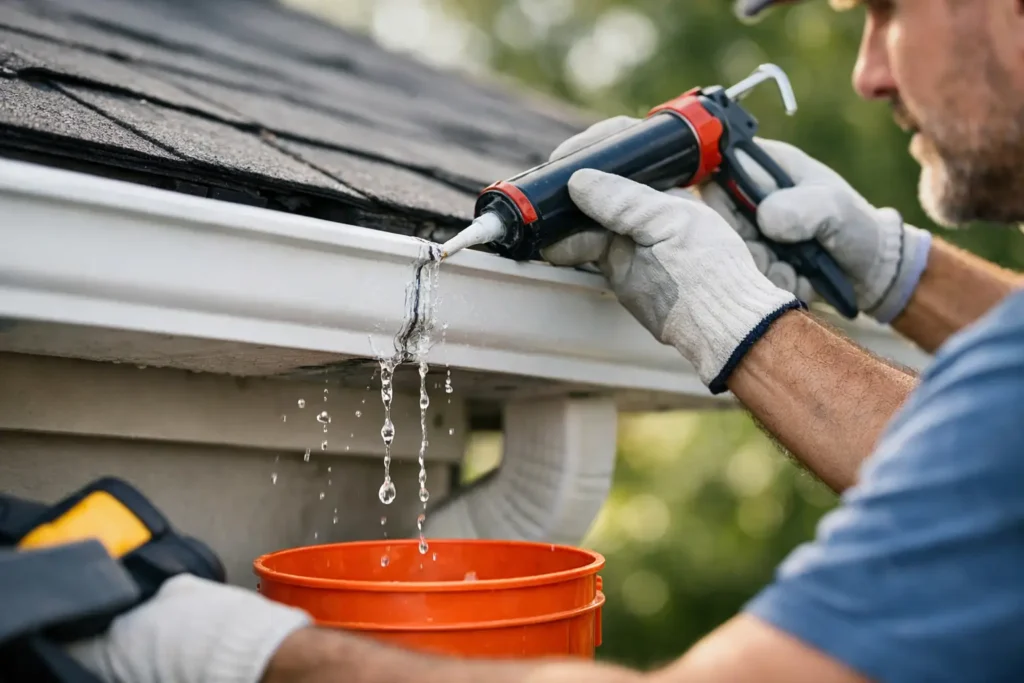
A gutter that drips long after the rain stops is not just annoying. It is often the first sign that water is not moving away from your home the way it should. If you are wondering how to fix dripping gutters, the right answer depends on where the water is escaping and why it is happening in the first place.
In Southern Alberta, gutters take a beating. Heavy rain, wind, debris, temperature swings, and winter ice can all turn a small drip into fascia damage, siding stains, or water around the foundation. The good news is that some gutter problems are simple maintenance issues. Others are early warnings that the system needs a more skilled repair.
Why gutters drip in the first place
Most dripping gutters fall into one of a few categories. The gutter may be clogged, which forces water to spill over the edge or back up at a joint. It may be out of slope, so water sits instead of flowing to the downspout. The seams may have opened up, or the fasteners may have loosened enough to pull the gutter away from the fascia.
Sometimes the gutter itself is not the real problem. Water can appear to be coming from the gutter when the issue is actually behind it. Damaged drip edge, roof runoff overshooting the trough, or rotted fascia boards can all create the same symptom from the ground.
That is why the first step is not sealant. It is inspection.
How to fix dripping gutters without guessing
Start with a dry-weather visual check from the ground. Look for water stains on siding, dark streaks under seams, sagging sections, and places where the gutter appears twisted or separated from the house. If one area drips every time it rains, that narrows the search.
Next, use a ladder carefully on stable ground and inspect that section up close. Gloves help, since gutters often hold sharp metal edges and compacted debris. Check for packed leaves, mud, shingle grit, loose hangers, cracked sealant, pinholes, and separated joints.
If the gutter is full of debris, clean it out completely before deciding anything else. A clogged system can mimic a leak, a slope issue, and a bad downspout all at once.
Clean out blockages first
This is the most common fix and the most overlooked. When water cannot move freely, it pools in low spots and spills over the front edge. In some cases, homeowners assume the seam is leaking when the real problem is a downspout blocked with leaves or granules.
Remove debris by hand, flush the run with a garden hose, and make sure water exits the downspout quickly. If it backs up, the downspout likely needs to be cleared. A hose, plumber’s snake, or careful disassembly at the elbow can solve that.
Once the gutter is clean, run water from one end and watch what happens. If it still drips from the same spot, you are dealing with more than a clog.
Reseal leaking joints and end caps
Sectional gutters often start leaking at seams and end caps as old sealant dries out and cracks. If the metal is still sound and the joint is not badly warped, resealing can work well.
Scrape away loose or failed sealant, clean the area thoroughly, and let it dry. Then apply a gutter-specific sealant rated for exterior use and water exposure. Press it into the joint rather than laying a thin bead on top. A patch over dirt or old brittle caulk usually fails fast, especially after freeze-thaw cycles.
This is a good repair for small seam leaks. It is not a lasting answer if the joint is pulling apart because the gutter is unsupported or misaligned.
Tighten or replace loose hangers
If the gutter is sagging, dripping may simply be a symptom of poor support. Water collects in the low area, adding more weight and making the sag worse over time.
Check the hangers or spikes along the problem section. If they are loose, corroded, or spaced too far apart, the gutter may need to be refastened or rehung. In older systems, spikes can back out from the fascia. Modern hidden hangers tend to hold better, but only if the fascia behind them is solid.
This is where trade-offs matter. Refastening into rotted wood may make the gutter feel tighter for a short time, but it will not solve the real problem. If the fascia is soft, stained, or crumbling, the wood repair comes first.
How to fix dripping gutters caused by poor slope
Gutters need a slight pitch toward the downspout so water drains instead of standing. When that slope is off, you may notice lingering drips, mosquito-prone standing water, rust spots, or overflow at one section even when the gutter is clean.
You can test this by flushing the gutter with a hose and watching whether water stalls in one area. A minor adjustment may be possible by repositioning hangers. If the run is long, twisted, or badly installed, the gutter often needs to be rehung properly.
Slope problems are common after years of snow load, ice, or repeated ladder contact. They are also common when gutters were installed quickly without enough attention to drainage. A little pitch goes a long way, but too much can look uneven from the street. That balance matters.
Watch for overflow that looks like a leak
Not every drip is coming through a hole. In heavy rain, water may run over the edge because the gutter is undersized, the downspout capacity is limited, or roof runoff is shooting past the trough.
This happens more often on steep roofs and valley areas where large volumes of water hit one short section. From the ground, it can look like the gutter is failing. In reality, the system may need a splash guard, a layout change, or a larger-capacity solution.
If the drip only happens during intense storms, think overflow before you assume puncture.
Small holes, rust, and cracks
Tiny pinholes and cracks can sometimes be patched if the surrounding metal is still in good shape. Clean the area well and use a patch material and sealant made for gutters. This works best on isolated damage.
If rust is spreading, the repair becomes less reliable. Once corrosion has weakened a wider section, patching is often temporary. The same goes for brittle vinyl or metal that has been bent and rebent. You can fix the symptom, but the material itself may be near the end of its service life.
For newer gutters, targeted repair often makes financial sense. For older systems with several problem areas, replacement may be the better long-term value.
When the problem is not the gutter
Homeowners sometimes focus on the drip they can see and miss the component causing it. If water is getting behind the gutter, inspect the drip edge and the roof edge above it. If shingles overhang too little or flashing is missing, runoff may curl back toward the fascia.
You should also look at the fascia and soffit. If those materials are damaged, water can travel in ways that make diagnosis tricky. A gutter repair attached to compromised wood usually does not last.
This is one reason exterior systems should be looked at together. Gutters, fascia, soffit, siding, and roofing all share the job of moving water safely away from the home.
When to repair and when to call a pro
If the issue is a basic clog, a small end-cap leak, or one loose hanger with solid wood behind it, many homeowners can handle the repair safely. If the gutter is high, the run is long, the fascia is damaged, or the leak source is unclear, professional inspection is the smarter move.
There is also the safety factor. Wet ladders, second-story rooflines, and awkward downspout locations are where a simple gutter fix stops being simple. Saving money is not worth risking a fall.
A contractor can also tell you whether the drip is a maintenance issue or part of a bigger drainage problem. That matters if you are seeing repeated leaks, foundation splashback, siding staining, or signs of rot. Companies like HighLow Roofing & Exteriors often evaluate these issues in context, not just as a bead-of-caulk repair.
Preventing the next drip
The best repair is the one you do not have to repeat next season. Clean gutters regularly, especially after leaf drop and major storms. Check that downspouts discharge away from the house. Look for loose fasteners each spring and fall, and pay attention to small stains before they become wood damage.
If your gutters struggle every time weather turns rough, it may be time to stop patching and start improving the system. Better support, better drainage design, and sound fascia behind the gutter will protect more than the roofline. They help protect the siding, foundation, and long-term value of your home too.
A steady drip may seem minor, but water has a way of making small problems expensive. Fix the cause early, and your gutters can go back to doing the quiet work they were built for.