
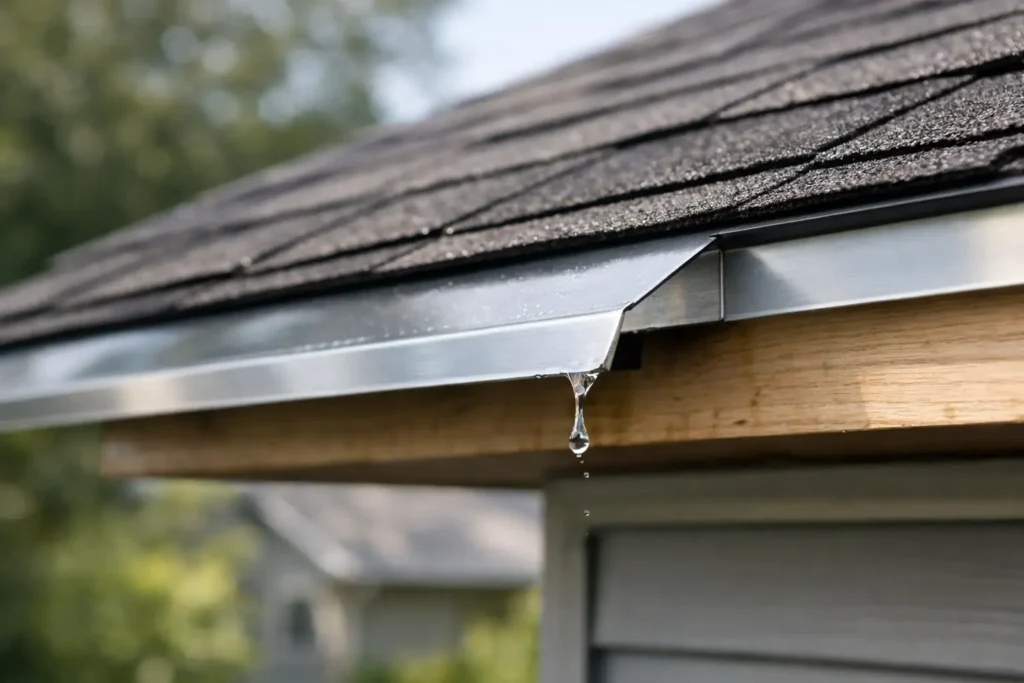
Water damage rarely starts with a dramatic leak through the middle of the roof. More often, it begins quietly at the edges, where rain, wind, and melting snow test every detail of the system. That is why the benefits of drip edge matter more than many homeowners realize. This small metal flashing installed along the roof edge helps direct water away from vulnerable areas and gives the entire roofing system a cleaner, stronger finish.
In Southern Alberta, roof edges take a beating. Wind-driven rain, freeze-thaw cycles, snow buildup, and ice along the eaves can all expose weak points fast. When a roof is missing drip edge, or when the metal is poorly installed, water can work its way under shingles, soak roof decking, stain fascia, and create the kind of repair bill that grows over time.
What drip edge actually does
Drip edge is a shaped metal flashing installed along the eaves and rakes of a roof. Its job is simple, but important. It guides water off the roof and into the gutter instead of letting it curl back underneath the shingles or run down onto the fascia board.
It also helps protect the edge of the roof deck, which is one of the most exposed parts of the whole system. That edge is where water, wind, and temperature swings tend to do their damage first. A properly installed drip edge creates a cleaner path for runoff and adds a layer of defense in an area that gets a lot of stress.
The main benefits of drip edge
It improves water control
This is the biggest reason drip edge matters. Without it, rainwater can cling to the underside of the shingle edge and travel backward toward the roof deck and fascia. That may not seem like much during a light shower, but repeated exposure adds up.
Drip edge creates a clear break so water drops off where it should. When gutters are present, it helps direct runoff into them more reliably. That means less water splashing behind the gutter, less staining on trim, and less risk of moisture getting into places it should never reach.
It protects the roof deck
Roof decking is not something most homeowners see, but it is something they pay for when it fails. Once water reaches exposed decking edges, rot can begin. In colder climates, trapped moisture can also contribute to swelling, warping, and deterioration over time.
One of the practical benefits of drip edge is that it shields that vulnerable decking edge from constant contact with runoff. This helps preserve the structure beneath the shingles and reduces the chance that a simple edge issue turns into a larger roof replacement cost.
It helps prevent fascia damage
Fascia boards sit right below the roof edge, and they are often the first visible area to show signs of water trouble. Peeling paint, soft wood, staining, and rot can all trace back to poor water management at the eaves.
When drip edge is installed correctly, water is pushed away from the fascia instead of being allowed to run down its face or behind the gutter line. That protection matters whether your trim is wood, composite, or wrapped metal. It helps the exterior last longer and keeps small maintenance issues from spreading.
It adds wind resistance at the edge
Roof edges are more vulnerable to wind uplift than many homeowners think. Strong gusts can catch the edge of a shingle and start pulling it upward, especially if the roof system has weak detailing or age-related wear.
Drip edge helps support the shingle edge and reduces the chance of wind getting underneath as easily. It is not a replacement for proper underlayment, fastening, or shingle quality, but it does strengthen a critical transition point. In areas that see strong seasonal winds, that extra protection is worth having.
It helps keep pests out
Openings at the roof edge can invite trouble. Small gaps may allow insects, birds, or even rodents to find their way into the attic or behind fascia and soffit areas. Once that happens, the damage can go beyond roofing and affect insulation, ventilation, and interior spaces.
A well-fitted drip edge helps close off those entry points. It is not a pest-control product, but it does reduce the kind of exposed gaps that attract unwanted visitors. That is one more reason the detail matters.
It supports a longer-lasting roof system
Roofing works best when every component does its part. Shingles handle the surface exposure, underlayment backs them up, ventilation helps manage heat and moisture, and flashing protects transitions and edges. Drip edge is one of those supporting parts that may not get much attention but plays a real role in overall durability.
By improving drainage and protecting exposed materials, it helps the roof age more gracefully. That does not mean it prevents all problems. If shingles are worn out or gutters are failing, drip edge alone will not fix that. But it does reduce avoidable stress at the perimeter of the roof, and that contributes to longer service life.
It gives the roof a cleaner finished look
There is a practical side to drip edge, but there is also a visual one. Roof edges look more complete and more professionally finished when the metal flashing is properly installed. It creates a neat line at the perimeter and helps the shingles terminate with a more intentional appearance.
For homeowners thinking about curb appeal, this matters. A roof is one of the first things people notice about a home, especially when they are looking at the condition of the exterior as a whole. Clean edge details signal quality and care.
Why installation quality matters
Drip edge is not complicated, but it still has to be installed correctly to do its job. Placement matters. Overlap matters. The relationship between the underlayment, shingles, and gutter line matters too.
For example, at the eaves and rakes, installation details can differ based on roof design and local code requirements. If the metal is tucked in the wrong sequence or spaced poorly, water may still bypass the protection. If it is bent incorrectly or left loose, wind can work against it.
This is where craftsmanship shows. Good roofing is often about the small details that homeowners do not notice until something goes wrong. A dependable contractor pays attention to those details from the start.
When drip edge becomes especially important
Any roof can benefit from drip edge, but some homes need it even more. Older homes are a common example, especially if they have aging fascia or evidence of prior water staining near the eaves. Homes with heavy rain exposure, snow accumulation, or recurring ice issues also benefit from stronger edge protection.
If you are replacing a roof, this is the right time to make sure drip edge is part of the system. It is much easier and more cost-effective to address during a full reroof than after moisture damage appears. If you are repairing part of a roof, it is also worth asking whether the existing edge metal is still doing its job or should be upgraded.
Are there any trade-offs?
The biggest trade-off is cost, but in most cases it is a modest one compared to the protection it adds. Drip edge is not usually the part of a roofing project that changes the budget dramatically. What does get expensive is repairing rotten decking, damaged fascia, or interior moisture issues that could have been reduced with better edge flashing.
There can also be aesthetic choices to make. Homeowners may want a color that works with the shingles, fascia, and gutters. That is a minor consideration, but it is worth getting right so the finished roof looks cohesive.
The more important point is this: drip edge is not a luxury add-on. It is one of those foundational details that supports the roof in quiet, practical ways.
What homeowners should ask a roofer
If you are planning roof work, ask whether drip edge will be installed at both the eaves and rakes, what material will be used, and how it will integrate with the underlayment and gutters. You do not need a technical lecture. You just want clear answers that show the contractor is thinking about water management, not just shingles.
A good roofing company should be able to explain how each part of the system protects your home and why those details matter in your local climate. That is especially true in places where harsh weather can expose weak workmanship quickly.
At HighLow Roofing & Exteriors, that practical approach matters because homeowners are not just buying materials. They are trusting someone to protect their home, their investment, and the exterior systems that keep everything working together.
A drip edge may be a small piece of metal, but it does an outsized job. When a roof handles water properly at the edges, a lot of other problems are less likely to start there in the first place.