
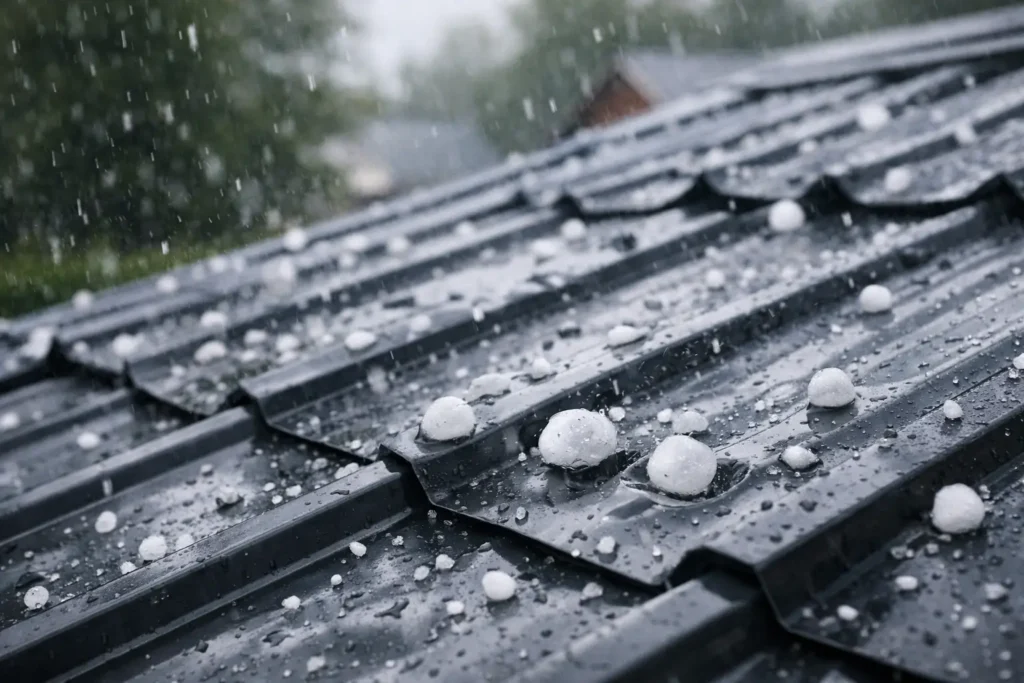
A metal roof can come through a rough hailstorm better than many homeowners expect, but that does not mean it is immune to damage. If you are asking can hail damage metal roofs, the honest answer is yes – but the type and severity of damage depend on the size of the hail, the gauge of the metal, the roof profile, and how the system was installed.
For homeowners in places that see strong storms, that distinction matters. A few cosmetic dings are very different from damage that affects seams, fasteners, flashing, or protective coatings. Knowing the difference can help you make a smart repair decision instead of reacting to every dent like it means full replacement.
Can hail damage metal roofs in a serious storm?
Yes, especially in a severe hail event. Metal roofing is known for durability, fire resistance, and long service life, but hail can still leave its mark. In many cases, the damage is cosmetic. You might see shallow dents or dimples that do not create leaks or shorten the roof’s life in any immediate way.
That said, hail damage is not always just about appearance. Larger hailstones, high wind speeds, or repeated storms can damage panel locks, loosen fasteners, bend trim, or impact flashings around vents, chimneys, and valleys. When that happens, the issue moves beyond looks and into performance.
This is where homeowners sometimes get mixed messages. One person says metal roofs are hail-proof. Another says every dent means the roof is compromised. Neither is completely right. Metal roofs are tough, but they are not indestructible.
What hail actually does to a metal roof
The most common result of hail on metal roofing is denting. Whether those dents are minor or significant depends on several factors. Thicker panels generally resist impact better than thinner ones. Structural standing seam systems often perform differently than exposed-fastener panels. Textured finishes may hide blemishes better than smooth finishes.
The size of the hail matters, too. Small hail may leave no visible effect at all. Larger stones can create visible dents, chip paint finishes, or strike vulnerable roof details with enough force to bend them. If the protective finish is damaged, that can create a longer-term concern because exposed metal may become more vulnerable to wear or corrosion over time.
Location matters as well. Flat or lower-slope sections can show impacts more clearly than steeper areas. Soft support beneath a panel can also make denting more likely. On the other hand, a properly installed metal roof system with quality underlayment and well-secured components often handles hail better than many people assume.
Cosmetic damage versus functional damage
This is the part that usually matters most after a storm. Cosmetic hail damage affects how the roof looks. Functional hail damage affects how the roof works.
Cosmetic damage can include small dents or slight surface marks that do not break seams, open holes, or compromise water shedding. Some homeowners decide to leave this type of damage alone, especially if the roof still has many years of service life and the dents are not visible from the ground.
Functional damage is different. If hail has bent flashing, displaced locks, loosened screws, cracked sealant, or damaged roof penetrations, the roof may become vulnerable to leaks. Functional damage can also show up later, which is why a roof that looks mostly fine from the yard should still be inspected after a major storm.
Insurance discussions often hinge on this difference. Some policies treat cosmetic damage differently than functional damage, so it helps to have a qualified roofing contractor document what is actually happening on the roof rather than guessing from the driveway.
Which metal roofs hold up best against hail?
Not all metal roofs perform the same way in hail-prone areas. Panel thickness, profile, substrate, and installation quality all play a role. Heavier-gauge steel generally offers better impact resistance than thinner products. Stone-coated steel and textured finishes can also make hail effects less noticeable, though appearance is only one part of the equation.
Standing seam systems are often a strong choice for homeowners who want durability and cleaner water management because concealed fasteners reduce some of the exposed points that can become vulnerable over time. Exposed-fastener systems can still perform well when installed correctly, but they may have more components that deserve a careful inspection after a storm.
There is also a practical trade-off. Products built for higher impact resistance can cost more upfront. For many homeowners, that added cost is worth it in a region with regular hailstorms. For others, budget and home design may lead to a different choice. The best answer usually comes from matching the material to the local weather and the home’s specific needs.
Signs your metal roof may need attention after hail
After a storm, obvious damage is only part of the story. A roof can have hidden trouble spots that are easy to miss from the ground. If you notice dents in gutters, downspouts, window trim, or siding, there is a good chance the roof took impacts as well.
Inside the home, water stains on ceilings or around vent penetrations should never be ignored. On the roof itself, a contractor may find bent flashing, deformed ridge caps, chipped coating, punctures around soft metal accessories, or movement at panel seams. Even if the panels themselves held up well, surrounding components may have taken the hit.
This is one reason a professional inspection matters. Hail rarely damages every part of a roof equally. Some slopes take the full force while others are barely touched, and the most important damage may be around transitions and details rather than in the field of the panel.
Does a dented metal roof need to be replaced?
Not always. In fact, many dented metal roofs do not need full replacement. If the damage is limited to appearance and the roof remains watertight, replacement may not be necessary right away. Some homeowners choose to live with cosmetic dents, particularly on less visible roof sections.
But there are times when replacement or repair is the right move. If hail has damaged the finish, opened seams, affected structural integrity, or created ongoing leak risk, waiting can turn a manageable repair into a bigger problem. The same applies if the roof is already older or has previous wear that made it more vulnerable during the storm.
A good contractor will not push replacement when a repair will do the job. They should explain what they found, show you where the concerns are, and separate appearance issues from performance issues. That kind of straightforward guidance is especially valuable when you are trying to make an insurance claim or protect a long-term investment in your home.
What to do after a hailstorm
Start with a visual check from the ground. Look for signs of impact on gutters, metal trim, siding, and other exterior surfaces. If anything looks off, schedule a roof inspection rather than climbing up yourself. Metal roofs can be slippery, and storm conditions may have created additional hazards.
Take photos of anything you can safely document. If you suspect damage, do not wait too long. Small problems around flashing or fasteners can let in water before major panel damage is ever visible inside the home.
For homeowners in Southern Alberta, local experience matters. A contractor who understands hail, wind, freeze-thaw cycles, and the way these systems perform over time can give you a more accurate picture of what your roof actually needs. HighLow Roofing & Exteriors works with homeowners who want clear answers, quality workmanship, and practical recommendations based on real weather conditions, not pressure tactics.
How to reduce the risk of hail damage on a metal roof
You cannot control the next storm, but you can improve how your roof handles it. Choosing the right metal roofing system from the start makes a difference. So does professional installation with proper underlayment, flashing, and fastening methods suited to local weather.
Routine inspections also help. A roof in good condition is better prepared for hail than one with aging sealant, loose trim, or neglected weak points. If you are replacing an older roof and hail resistance is a top concern, ask about panel thickness, impact ratings, and profile options that fit your home and your budget.
The goal is not to find a roof that can never be marked by weather. It is to install a system built to protect your home, perform reliably, and hold its value over time.
A hailstorm can leave you with a lot of questions and not all of them have the same answer for every home. Sometimes a metal roof comes through with little more than a few marks. Sometimes the real problem is hidden in the details. A careful inspection and honest advice can give you peace of mind and help you make the right call before a small issue turns into a bigger repair.