
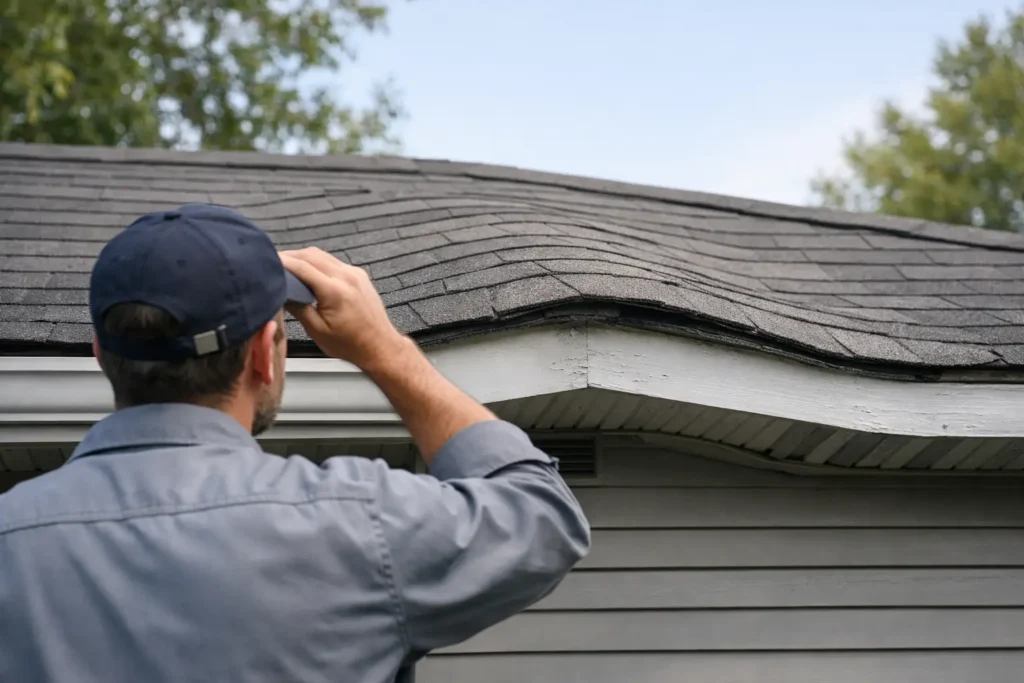
A roofline usually tells the truth before a leak ever does. If you have stepped back from your home and noticed a dip, curve, or uneven section, the question comes fast: why is my roof sagging, and how serious is it?
The short answer is that a sagging roof is almost never something to ignore. In some cases, the problem is limited to damaged sheathing or localized water intrusion. In others, it points to deeper structural trouble in the decking, rafters, trusses, or even the home’s framing. Either way, a sag in the roof means something is no longer carrying weight the way it should.
Why is my roof sagging in the first place?
Roofs are built to carry a lot – shingles, underlayment, ventilation components, ice, snow, wind pressure, and years of seasonal expansion and contraction. When one part of that system weakens, the roof can begin to dip or bow.
In Southern Alberta, weather adds pressure. Heavy snow loads, freeze-thaw cycles, wind exposure, and moisture infiltration can all speed up wear. A small weakness that seems harmless one season can become a noticeable sag after a tough winter.
That is why the cause matters so much. A sagging roof is not one single issue. It is a symptom, and the underlying reason determines whether you need a focused repair or a larger structural solution.
The most common causes of a sagging roof
Water damage and rot
This is one of the most common reasons a roof starts to sag. When water gets past shingles, flashing, vents, or other vulnerable areas, it can soak the roof decking and surrounding framing. Over time, wood loses strength, softens, and begins to deform.
The tricky part is that this can happen slowly. Homeowners may not notice a leak inside right away, especially if moisture is trapped in the attic or spreads through insulation before showing up on a ceiling. By the time the roofline changes, the damage may have been developing for months or years.
Aging materials
No roofing system lasts forever. As materials age, they lose the strength they had when first installed. Wood framing can dry out, split, or weaken. Older decking may not hold its shape as well under load. If a roof is already near the end of its service life, sagging can be a sign that time has simply caught up with it.
Age on its own is not always the full story. Often, it combines with weather exposure, minor past leaks, and years of stress to create visible sagging.
Excess weight on the roof
Roofs are designed for expected loads, but too much weight can push them beyond what they were built to handle. Snow is a major factor in colder climates. Layers of wet, heavy snow put much more strain on the structure than many homeowners realize.
There can also be issues when multiple roofing layers have been installed over older ones. If a new roof was added without removing previous materials, the extra weight can stress the decking and framing. Add snow or trapped moisture to that, and the roof may begin to dip.
Undersized or damaged framing
Sometimes the issue starts below the shingles. Rafters or trusses may have been undersized, altered, or damaged over time. In older homes, framing may no longer meet modern expectations for load-bearing performance. In other cases, improper modifications in the attic, such as cutting or weakening structural members, can affect how the roof carries weight.
This type of sagging often needs more than surface-level repair. If the framing is compromised, the solution has to address the structure itself, not just the roofing materials above it.
Poor installation
Even quality materials can fail early if they were not installed properly. Inadequate support, poor ventilation, incorrect spacing, weak decking attachment, or shortcuts during past roof work can all contribute to sagging later on.
This is one reason roof inspections matter so much. What looks like simple aging from the ground may actually be the result of installation problems that were hidden for years.
What a sagging roof can look like
Not every sag is dramatic. Sometimes it appears as a subtle wave in the roofline. Sometimes one section between the ridge and the eaves seems to dip lower than the rest. In more advanced cases, the ridge line itself may look bowed, or the roof may appear to sink around valleys, low spots, or structural spans.
Inside the home, you may notice sticking doors, ceiling cracks, uneven attic framing, damp insulation, or signs of recurring leaks. These do not always happen together, but when they show up alongside a visible roof dip, they should be taken seriously.
When is a sagging roof an emergency?
It depends on the severity and the cause. A slight sag that has been stable may not mean immediate collapse, but it still deserves prompt inspection. A roof that is actively worsening, showing major deflection, leaking heavily, or creaking under snow load is more urgent.
If the sag appeared suddenly, if the roof feels soft underfoot, or if interior ceilings are starting to bow, that is not a wait-and-see situation. Those signs suggest that materials may be failing in real time.
A good rule for homeowners is simple: if the roofline has changed shape, have it evaluated before the next major weather event. Waiting usually makes the repair larger and more expensive.
Why is my roof sagging if it is not leaking?
This is a fair question, and it catches many homeowners off guard. A roof can sag before leaks become visible inside the house. Moisture may be trapped in the attic, rot may be limited to hidden decking, or the issue may be structural rather than water-related.
For example, snow load, framing fatigue, or long-term compression can cause visible movement without an obvious ceiling stain. That is why a lack of interior leaks should never be treated as proof that the roof is fine.
Repair or replacement – what makes sense?
There is no honest one-size-fits-all answer here. Some sagging roofs can be repaired if the problem is isolated and the surrounding system is still in good shape. A small area of rotted decking near a vent or valley, for example, may be fixable without replacing the entire roof.
But if the sagging is widespread, if the framing is involved, or if the roof is already aging out, replacement often makes better long-term sense. Paying for repeated patchwork on a roof that has structural decline rarely saves money in the end.
This is where a proper inspection matters. You want to know whether the issue is cosmetic, material-related, or structural. Those are very different jobs with very different budgets.
What to expect from a professional inspection
A good roof inspection should look beyond the shingles. The visible dip is only part of the story. A contractor should evaluate the roof surface, decking condition, attic ventilation, moisture signs, and the framing that supports the system.
They should also consider local weather exposure and how the home has aged over time. In a region with strong winds, snow accumulation, and freeze-thaw cycles, the roof has to be assessed in the context of those conditions, not just by appearance.
At HighLow Roofing & Exteriors, that practical approach matters because homeowners need clear answers, not guesswork. If the roof can be repaired responsibly, you should hear that. If the structure points to replacement, you should hear that too.
What homeowners should do right now
If you suspect sagging, start by looking from the ground at several angles. Check for dips, waves, or uneven lines along the ridge and roof planes. Inside, look in the attic for dark stains, wet insulation, cracked wood, or visible bowing.
Then stop short of trying to diagnose everything yourself. Walking on a compromised roof can be dangerous, and the real problem is often hidden beneath the surface. The safest next step is a professional inspection that identifies the cause before more stress, moisture, or weather makes it worse.
A sagging roof does not always mean the worst-case scenario, but it does mean your home is asking for attention. The sooner you deal with it, the more options you usually have, and that is often the difference between a manageable repair and a much bigger project later.