
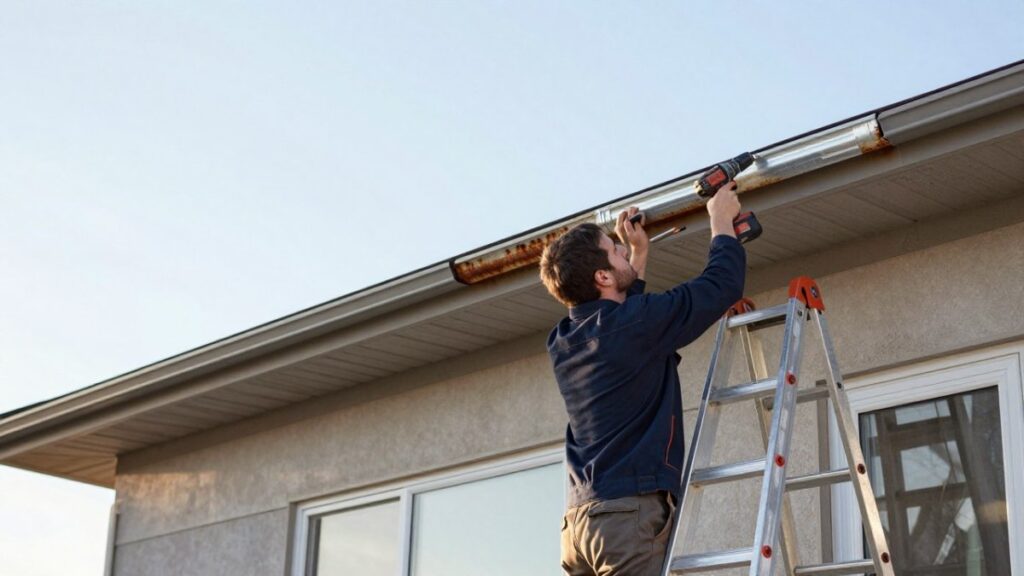
Last Updated: November 21, 2026
Quick Summary
Gutter replacement follows a clear sequence on job day: the crew sets up, tears down the old gutters, inspects the fascia and soffit, installs the new system, tests it, and cleans up. Most jobs take a full day, though hidden fascia damage can extend the timeline.
- Teardown usually takes 1 to 2 hours and is the loudest part of the day.
- Fascia and soffit inspection can take 30 to 90 minutes and often reveals hidden rot.
- Installation and fabrication typically take 3 to 5 hours.
- Ask for a day-by-day schedule during the estimate, including a realistic start and finish window.
- Water-test the new system with a garden hose before the crew leaves.
Table of Contents
- What Happens During Gutter Replacement on Job Day
- How Long Does Gutter Replacement Take?
- Preparing for Gutter Replacement Before the Crew Arrives
- Removing the Old Gutters and Inspecting Fascia and Soffit
- Installing the New Gutter System
- Gutter Replacement Inspection Checklist
- Gutter Replacement vs Repair: Which Your Home Needs
- Booking Your Gutter Replacement Estimate
- Frequently Asked Questions
What Happens During Gutter Replacement on Job Day
Gutter replacement is a job that follows a clear sequence, from the moment the crew pulls up to the moment they leave a finished, working system behind. Knowing that sequence helps homeowners plan their day and know what to expect.
Gutter replacement generally starts with preparing the work area, removing the old gutters, and checking the fascia and soffit. New gutters are then measured, fitted, and sloped so water runs toward the downspouts, and the day ends with cleanup and a final check of the system.
Each stage matters. Skipping one can lead to leaks, sagging runs, or water damage behind the fascia.
How Long Does Gutter Replacement Take?
The duration of a gutter replacement depends less on the number of feet of gutter and more on what the crew finds once the old system is down. Ask your contractor for a projected schedule during the estimate.
A typical job-day sequence looks like this:
- Arrival and setup (30 to 60 minutes): The crew stages ladders, materials, and a disposal area, then protects landscaping and walkways.
- Teardown (1 to 2 hours): Old gutters, hangers, and downspouts come off and are carried to the disposal zone.
- Fascia and soffit inspection (30 to 90 minutes): Installers probe the exposed boards and flag any rot or damage for homeowner approval.
- Fabrication and installation (3 to 5 hours): Seamless gutter is formed on site, cut to length, sloped, and fastened; downspouts and outlets are connected.
- Testing and cleanup (1 hour): The system is water-tested, joints are checked, and debris and old materials are removed.
- Final walkthrough (15 to 30 minutes): The installer and homeowner review the finished system together.
Several factors push the timeline longer:
- Home size and number of gutter runs: More linear feet means more cutting, fitting, and fastening.
- Condition of the fascia and soffit: Rotten boards must be replaced before new gutters go up, and that work is added to the day.
- Weather: Rain, high wind, or temperatures near or below freezing can pause work for safety and material-performance reasons. Seamless aluminum can be formed in cold weather, but sealants and fasteners behave differently, so crews often reschedule rather than risk a poor seal.
- Access: Tight lots, steep roof pitches, and landscaping that needs protecting add setup and handling time.
- Number of downspouts and outlets: Each outlet adds connection and discharge-routing work.
Ask your contractor for a day-by-day schedule during the estimate, including a realistic start and finish window. A clear timeline helps you plan around work hours, pets, parking, and noise. Expect the teardown phase to be the loudest part of the day, and plan to keep children and pets clear of the work zone until the crew packs up.
Watch out: A crew that quotes a firm finish time before inspecting the fascia is guessing. Hidden rot is the most common reason a one-day job becomes a two-day job, and the approval conversation should happen before any new gutter is hung.
The job-day sequence breaks down into stages, each with its own rough time window.
| Stage | Typical time | What happens |
|---|---|---|
| Arrival and setup | 30 to 60 minutes | Ladders, materials, and disposal area staged; landscaping protected |
| Teardown | 1 to 2 hours | Old gutters, hangers, and downspouts removed |
| Fascia and soffit inspection | 30 to 90 minutes | Exposed boards checked for rot or damage |
| Fabrication and installation | 3 to 5 hours | Seamless gutter formed, sloped, fastened, and downspouts connected |
| Testing and cleanup | 1 hour | System water-tested, joints checked, debris removed |
| Final walkthrough | 15 to 30 minutes | Installer and homeowner review the finished system together |
Preparing for Gutter Replacement Before the Crew Arrives
A little preparation makes the day smoother for you and the crew. Most of the work is simple, but it helps to act before the first truck shows up.
- Move your vehicles. Park them away from the house so the crew has room for ladders and materials.
- Clear the area under the eaves. Move patio furniture, planters, and grills away from the walls.
- Protect valuables. Take down wall art or decor near windows that could shake during work.
- Secure pets and children. Keep them inside or away from the work zone for safety.
- Note any known problems. Tell the crew about past leaks, stains on the siding, or soft spots you have noticed.
Talk through any questions before the start date. It is far easier to solve a concern on the phone than in the middle of the job.
Removing the Old Gutters and Inspecting Fascia and Soffit
Removing the old gutters is usually the loudest part of the day. The crew unfastens the gutter sections from their brackets, lowers them to the ground, and removes the downspouts. Old hangers and brackets are taken off so the new system starts clean.
Once the gutters are down, the fascia and soffit are exposed. This is the moment when hidden problems often show up. Installers check the boards for softness, staining, peeling paint, or small holes made by insects. Any damaged sections are noted and discussed with the homeowner before repairs begin.
Hidden Fascia and Soffit Damage
Water that overflows a failing gutter can soak into the fascia board for months or years before anyone sees it. A good installer tests suspect areas by pressing a screwdriver into the wood. If it sinks in easily, the board is likely rotten.
Common signs of hidden damage include:
- Soft or spongy fascia boards
- Paint that bubbles or peels along the roof edge
- Dark stains on the soffit underside
- Gaps where the gutter pulls away from the house
Repairing these areas before the new gutters go up protects the investment. A new gutter hung on rotten wood will not last.
Installing the New Gutter System
Installation begins with measuring the roof edges and planning each gutter run so water drains toward the downspouts without pooling.
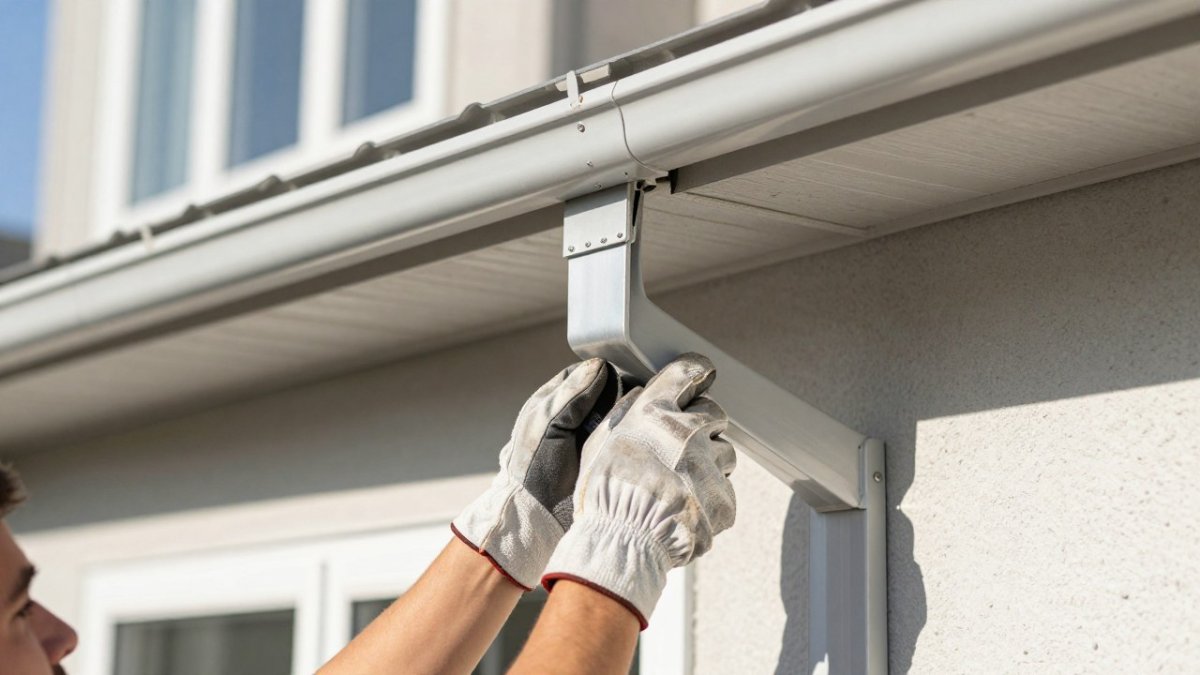
A few installation details separate a durable job from a call-back:
- Slope consistency: The gutter should fall steadily toward the outlet, not dip in the middle or reverse pitch near a corner.
- Hanger engagement: Every hanger should grip the gutter lip fully; a partially engaged hanger lets the gutter pull away under the weight of water.
- Sealant discipline: Sealant is applied to clean, dry surfaces and not smeared across the gutter face, where it traps dirt and looks unfinished.
- Downspout routing: Downspouts should be fastened to the wall at intervals and terminate at a splash block, extension, or drainage connection that moves water away from the foundation.
!A crew member in work gloves fastening a new seamless aluminum gutter section to a fascia board on a residential home in sunny weather
Gutter Replacement Inspection Checklist
Before the crew leaves, a final inspection confirms the system is ready for rain. Ask to walk the property with the installer and check these items together:
- Gutters slope evenly toward each downspout
- Brackets are secure and spaced correctly
- All joints and corners are sealed with no visible gaps
- Downspouts direct water at least several feet from the foundation
- Fascia repairs are finished and painted or sealed
- Debris and old materials are removed from the property
- Landscaping and siding show no damage from the work
Run a garden hose along the gutters to test the flow. Water should move steadily toward the downspouts with no pooling or drips at the joints.
Gutter Replacement vs Repair: Which Your Home Needs
Repairs can fix small leaks, loose brackets, or a single damaged section. Replacement makes more sense when the system is failing in several places at once.
- Choose repair when: The gutters are mostly sound, the damage is limited to a few sections, and the fascia is solid. For a direct side-by-side look at both options, see Gutter Replacement Versus Repair.
- Choose replacement when: The gutters sag in several spots, pull away from the house, show widespread rust or cracks, or when the fascia has rotted.
Booking Your Gutter Replacement Estimate
Pricing depends on the length of your gutters, the material you choose, the condition of the fascia, and how much access the crew needs. We do not publish set prices for this work, because every home is different. For current pricing and a clear scope of work for your property, request a free estimate through HighLow Roofing & Exteriors.
During the estimate, an installer will walk your home, measure the roof edges, check the fascia and soffit, and explain the options in plain language. You will leave with a written scope so you know exactly what is included.
Contact HighLow Roofing & Exteriors today to schedule your free estimate and get a straightforward plan for your gutter replacement.
Frequently Asked Questions
What happens during a gutter replacement?
A gutter replacement usually starts with removing the old gutters, downspouts and hangers, then checking the fascia and soffit for rot or damage. New hangers are set to the correct slope, followed by the new gutter sections and downspouts.
How long does it take to replace gutters on a house?
The length of a residential gutter replacement depends on the linear footage, the number of storeys, and how much fascia repair is needed. Weather can add delays, and extensive hidden damage may extend the timeline. Ask your contractor for a projected schedule in your written estimate so you know what to expect before the crew arrives.
Do installers remove the old gutters before putting up new ones?
Yes. Professional installers remove the existing gutters, downspouts and hangers before fitting the new system. This allows them to inspect the fascia and roof edge underneath, which are not visible while the old gutters are still attached. Removing the old system first also prevents a mismatch between old hanger positions and the new slope.
Can damaged fascia be repaired during gutter replacement?
Larger areas of rot may require additional work and a separate quote, so ask for the repair options and any added scope to be explained before work proceeds.
