
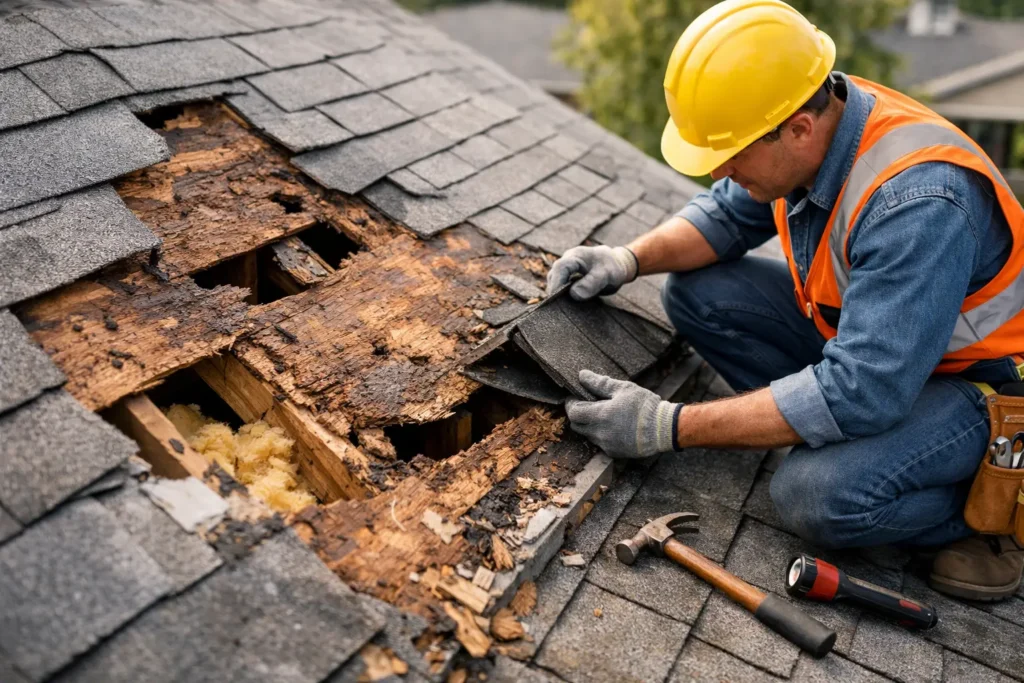
A roof can look acceptable from the driveway while the wood beneath the shingles is quietly weakening. Understanding what causes roof decking damage helps homeowners address small moisture issues before they become sagging rooflines, interior leaks, or a larger replacement project.
Roof decking, also called sheathing, is the structural wood layer fastened to your roof framing. Shingles, underlayment, flashing, and other roofing materials sit above it. When decking becomes soft, swollen, cracked, or rotten, it cannot properly support the roof system. In Southern Alberta, where strong winds, snow, temperature swings, and sudden rain can all test a roof, protecting that layer matters.
What Causes Roof Decking Damage Most Often?
Water is the leading cause, but it rarely gets to the decking through one obvious hole. Moisture can enter around worn shingles, damaged flashing, roof penetrations, valleys, or edges. It can also build up from inside the attic when ventilation and insulation are not doing their jobs.
The challenge is that roof decking damage develops out of sight. By the time a homeowner sees a ceiling stain or notices a dip in the roof, the wood may have been exposed to moisture for months or even years.
1. Leaks Through Aging or Damaged Roofing Materials
Asphalt shingles do not need to be completely missing for water to get underneath them. Cracked, curled, loose, or granule-worn shingles can let wind-driven rain reach the underlayment and decking. Hail, falling branches, and strong winds can create similar vulnerabilities.
Flashing is another common weak point. This metal material seals areas where the roof meets a chimney, wall, skylight, vent, or other transition. If flashing is corroded, improperly sealed, bent, or pulling away, water can bypass the shingles and soak the wood below.
A small leak may only affect one section of decking at first. Left alone, it can spread along the wood grain, create rot, and compromise surrounding materials.
2. Ice Dams and Repeated Freeze-Thaw Cycles
Snow on a warm roof can melt, travel toward colder eaves, and refreeze into an ice dam. As that ice grows, meltwater backs up under the shingles instead of draining safely off the roof. The moisture may then reach the underlayment and decking.
This is not simply a winter roofing problem. Repeated freeze-thaw cycles can widen small gaps in shingles and flashing, making future leaks more likely. Homes with uneven attic temperatures, inadequate insulation, or poor air sealing are often more vulnerable to ice dams.
Removing visible ice without addressing the underlying heat loss may provide temporary relief, but it does not solve the reason the dam formed. A proper assessment should consider the roof, attic ventilation, insulation, and drainage together.
3. Poor Attic Ventilation and Condensation
Not every damaged roof deck starts with rain or snow. Warm, moist indoor air can enter an attic and condense on the underside of cold decking during cooler weather. Over time, that condensation can darken the wood, support mold growth, rust fasteners, and weaken the panels.
Warning signs may include frost in the attic, damp insulation, musty odors, or dark staining on the underside of the sheathing. These symptoms deserve attention even if the roof surface appears intact.
Ventilation is not a one-size-fits-all fix. Adding more vents without ensuring balanced intake and exhaust can fail to improve airflow. The right approach depends on the roof design, attic layout, insulation depth, and sources of air leakage from the living space below.
4. Clogged Gutters and Poor Water Management
Gutters do more than keep water off walkways. They direct roof runoff away from the fascia, soffit, siding, foundation, and roof edge. When gutters are clogged, sagging, improperly pitched, or overflowing, water can repeatedly saturate the eaves.
That recurring moisture may damage fascia boards and work its way back toward the roof decking. In cold conditions, blocked gutters can also contribute to ice buildup along the edge of the roof.
Pay attention to water spilling over gutter sections during rain, peeling paint near the roofline, or streaking on siding. These are often water-management warnings, not just cosmetic concerns.
5. Improper Installation or Weak Roof Details
Even premium shingles cannot make up for poor installation. Decking can be exposed to moisture if roofing materials are installed without correct overlaps, flashing details, fastener placement, or edge protection. A missing or poorly integrated underlayment can allow a minor roof-surface issue to become a decking problem much sooner.
Sometimes the decking itself was not adequately inspected during a previous reroof. Covering soft or deteriorated wood with new shingles may make the roof look refreshed, but it leaves a structural issue below. The compromised area can continue to worsen and may eventually affect the performance of the new roof.
Quality workmanship includes checking the condition of the existing deck when old roofing is removed. Any damaged panels should be repaired or replaced before the new system is installed.
6. Storm Damage and Wind-Driven Rain
High winds can lift shingle edges, loosen flashing, damage vents, and push rain into places that ordinary rainfall would not reach. Hail can bruise shingles and reduce their ability to shed water over time. Flying debris may puncture roofing materials or damage vulnerable roof edges.
After a major storm, it is worth looking for obvious concerns from the ground, such as lifted shingles, debris on the roof, bent gutters, or pieces of flashing. Avoid climbing onto the roof yourself, particularly when conditions are wet, icy, or windy. A professional inspection can identify damage that is difficult to see safely from below.
7. Age, Neglected Maintenance, and Small Repairs Put Off Too Long
Every roof reaches a point where repairs become more frequent and less cost-effective. As materials age, seals dry out, shingle granules wear away, flashing can corrode, and vulnerable areas become more likely to leak.
A minor repair is often the right choice when damage is limited and the overall roof still has useful life remaining. However, repeated leaks, widespread shingle deterioration, or multiple soft decking areas can signal that replacement is the better long-term investment. The right answer depends on the roof’s age, condition, history of repairs, and the extent of water intrusion.
Signs Your Roof Decking May Be Damaged
Some clues are visible inside the home, while others appear along the roofline. Watch for these signs:
- Brown ceiling stains, bubbling paint, or water spots near exterior walls
- A sagging, wavy, or uneven roof surface
- Shingles that appear to dip between rafters or feel unusually soft underfoot during professional inspection
- Moldy or musty attic odors, dark wood staining, or visible moisture on the underside of the roof deck
- Rotting fascia, peeling paint, or persistent gutter overflow at the eaves
None of these symptoms automatically means the entire deck needs replacement. Damage may be localized, especially when a leak was caught early. A thorough inspection is the best way to determine whether the issue is surface-level, limited to a few panels, or part of a larger roofing and ventilation concern.
How to Protect Your Roof Decking
The most effective protection is consistent prevention. Keep gutters clear, address damaged shingles and flashing promptly, and have the roof inspected after severe weather. If you can safely access the attic, check periodically for daylight coming through the roof, damp insulation, frost, staining, or unusual odors.
When planning a roof replacement, ask how the existing decking will be evaluated once the old roofing is removed. This is the stage when hidden soft spots and water-damaged panels can be identified and corrected. It may add cost if repairs are needed, but replacing unsound decking before new materials go on protects the value and lifespan of the entire roof system.
For homeowners in Lethbridge and Southern Alberta, HighLow Roofing & Exteriors can assess visible roofing concerns and help explain what is happening beneath the surface. Clear answers early on can prevent a small repair from becoming an avoidable structural problem.
If your roofline looks uneven, your attic shows signs of moisture, or a recent storm has you wondering about hidden damage, do not wait for water to reach the ceiling. A timely inspection gives you a practical path forward and helps keep the home you have worked hard for protected.