
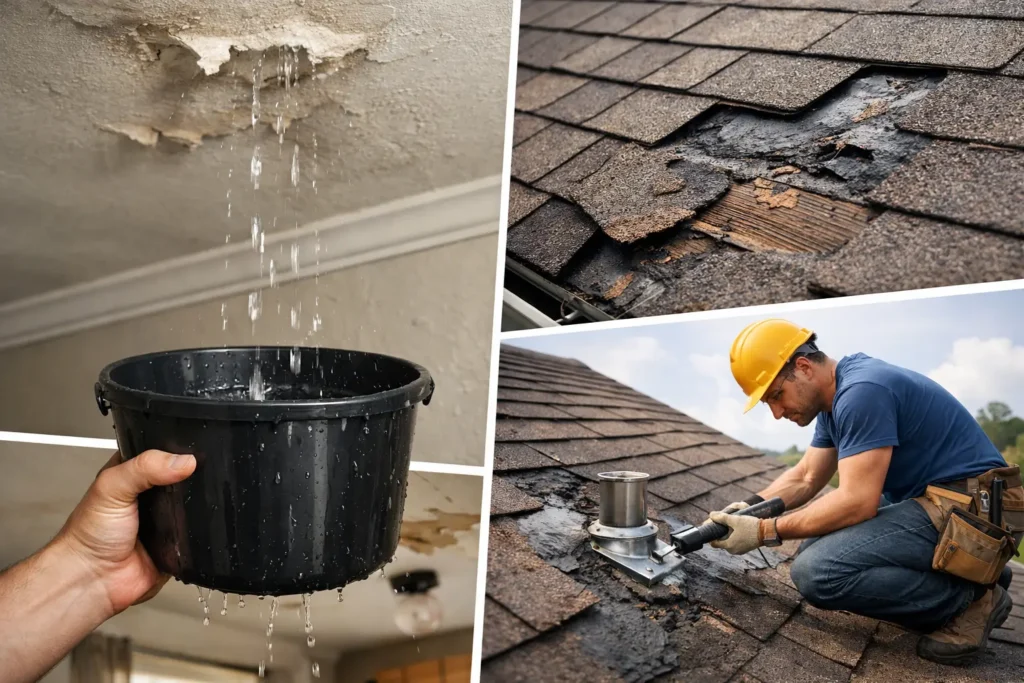
A water spot on the ceiling rarely tells the whole story. Water can enter at one point, travel along roof decking or framing, and appear several feet away inside your home. These roof leak repair examples show why finding the source matters as much as fixing the visible damage – especially for homes facing Southern Alberta wind, snow, freeze-thaw cycles, and heavy rain.
A small, prompt repair can often protect the roof structure and avoid a much larger restoration project. But the right repair depends on the condition of the surrounding roof, the age of the materials, and whether water has reached insulation, decking, or interior finishes.
1. Replacing Wind-Damaged or Missing Shingles
High winds can lift shingle edges, break the adhesive seal, or pull shingles completely free. A missing shingle leaves the underlayment and roof deck exposed to weather. Even when the deck is not immediately visible, wind-driven rain can work beneath the surrounding shingles.
The repair usually involves removing damaged shingles, inspecting the underlayment and decking beneath them, then installing matching replacement shingles with proper fastening and sealing. On a newer roof, this can be a focused repair. On an older roof with widespread lifting, cracking, or granule loss, replacing a few shingles may only delay a larger decision.
Homeowners should also know that shingles can be difficult to match after years of weathering. A reputable contractor can explain whether a close match is practical or whether the condition of the full roof calls for a broader solution.
2. Repairing Leaks Around Chimney Flashing
Chimneys are one of the most common leak locations because they interrupt the roof surface. The metal flashing and protective materials where the roof meets the chimney must direct water away from the joint. If flashing is rusted, loose, improperly layered, or separated from masonry, water has a direct path inside.
A proper chimney leak repair is more than applying sealant along an open edge. The surrounding shingles may need to be lifted so damaged flashing can be replaced or reset correctly. In some cases, deteriorated mortar or cracks in the chimney itself also need attention.
Caulking can be useful as part of a repair, but it is not a permanent substitute for correctly installed flashing. If a chimney leak returns after repeated patching, the flashing system deserves a closer inspection.
3. Sealing a Leaking Roof Vent Boot
Plumbing vents pass through the roof and are protected by a flashing boot. Over time, rubber or neoprene boots can crack from sun exposure and temperature changes. The metal base can also loosen, allowing water to enter around the pipe.
This repair typically requires removing shingles around the vent, replacing the failed boot, and reinstalling the shingles so water sheds over the flashing rather than beneath it. It is a relatively contained repair when caught early. Left unresolved, a vent leak can saturate the roof deck around a small opening and lead to soft wood or interior staining.
A stain near a bathroom, kitchen, or hallway ceiling may point to a vent issue, but assumptions can be costly. The pipe may not be directly above the stain, so inspection should follow the path of the water rather than the location of the mark.
4. Correcting Valley Leaks
Roof valleys carry a large volume of water because two roof slopes meet there. They also collect snow, ice, leaves, and debris. If shingles are worn, flashing is damaged, or the valley was installed with poor overlap, water can work under the roofing materials.
Valley repairs range from replacing a small section of damaged shingles to rebuilding the entire valley with new underlayment and properly installed metal or shingle protection. The appropriate approach depends on the roof design and the extent of deterioration.
This is not an area to cover with roof cement and hope for the best. Valleys experience constant water flow during storms, so they need a repair that restores proper drainage. In Southern Alberta, snow buildup and spring thaw add another reason to address valley concerns before water finds its way below the roof surface.
5. Fixing Leaks Caused by Ice Dams
Ice dams form when snow melts on warmer upper sections of a roof, then refreezes near colder eaves. The ice can trap meltwater behind it, forcing water under shingles and into the roof assembly. The visible problem may be icicles, but the real concern is water backing up where it does not belong.
Immediate work may include safely removing snow buildup and addressing damaged shingles, underlayment, or fascia. Long-term prevention often involves evaluating attic insulation, ventilation, air leakage, and the roof edge protection system. A roof repair alone may not solve an ice dam problem if heat loss from the home continues to create uneven melting.
That is why this example requires a whole-home perspective. Roofing, soffit ventilation, attic conditions, gutters, and fascia can all influence how water behaves at the roof edge.
6. Replacing Damaged Pipe or Skylight Flashing
Skylights bring valuable natural light into a home, but they require careful integration with the roofing system. A leak around a skylight may come from failed flashing, worn seals, cracked glazing, or roofing materials that have reached the end of their service life.
The repair should start by identifying whether water is entering at the skylight unit or around it. Replacing sealant may help with a minor exterior joint issue, but deteriorated flashing usually requires removing nearby roofing materials and rebuilding the water-shedding layers. If the skylight itself is old or damaged, replacement may provide better value than repeatedly repairing the surrounding area.
The same principle applies to other roof penetrations. Every pipe, vent, or mounted component needs correctly layered flashing that works with the roof, not against it.
7. Repairing a Leak at the Roof-to-Wall Connection
Where a sloped roof meets a vertical wall, step flashing should guide water down and away from the joint. This detail is often hidden behind siding, which makes it easy for a problem to go unnoticed until water appears indoors.
A proper repair may require temporarily removing siding or trim to access the flashing. The contractor can then inspect for missing pieces, gaps, deteriorated underlayment, or water-damaged sheathing before rebuilding the area. It can feel like a larger project than a simple shingle repair, but ignoring a wall connection leak can allow water to affect both the roof and exterior wall assembly.
This is one reason homeowners benefit from a contractor who understands roofing and exterior systems together. The roof, siding, soffit, fascia, and gutters all have a role in directing water away from the home.
8. Addressing Leaks From Aging Roof Decking
Sometimes the leak is not caused by one obvious missing shingle or failed flashing detail. Long-term moisture exposure can soften roof decking, corrode fasteners, and weaken the surface beneath the shingles. You may notice a sagging roofline, spongy areas when inspected professionally, recurring leaks, or stains that keep returning after minor repairs.
In this case, the repair may involve removing roofing materials over the affected section, replacing damaged decking, installing fresh underlayment, and restoring the roof covering. If deterioration is widespread, a roof replacement can be the more responsible investment. Repairing isolated sections of a roof that is near the end of its lifespan may create repeated costs without providing dependable protection.
When a Roof Leak Needs Professional Attention
A homeowner can place a container under a drip, move belongings away from the affected area, and document visible damage. Beyond that, climbing onto a wet, steep, icy, or damaged roof is not worth the risk. Water intrusion can also be more extensive than it appears from inside the house.
Arrange an inspection promptly if you see active dripping, ceiling stains that are expanding, curled or missing shingles, loose flashing, moldy odors in the attic, sagging roof areas, or water near electrical fixtures. Temporary protection may limit damage during a storm, but it should not replace a lasting repair.
At HighLow Roofing & Exteriors, the goal of an inspection is to give homeowners a clear explanation of what failed, what the repair requires, and whether a targeted repair makes sense for the roof’s remaining life. Clear answers help you protect your home without paying for work you do not need.
A roof leak is easier to manage when it is addressed early, before a small opening becomes damaged insulation, rotted decking, stained ceilings, and disrupted daily life. Pay attention to the first sign of water, then make the repair decision based on the condition of the entire system – not just the drip you can see.