
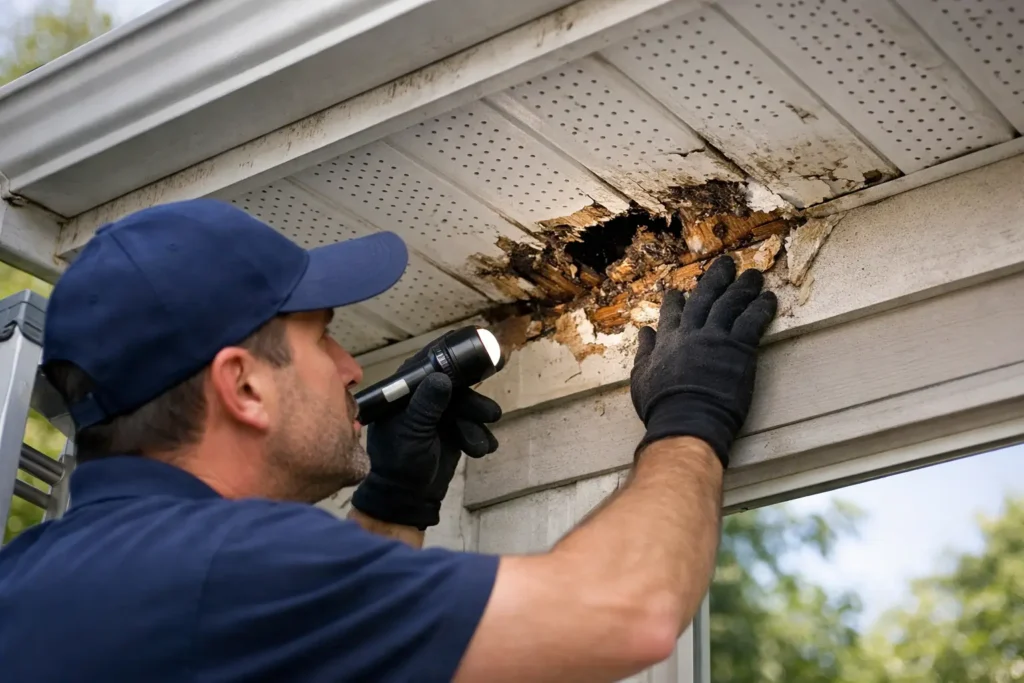
A dark stain under the roof edge, a loose vent panel, or a bird repeatedly returning to the same corner of your eaves can signal a problem that is easy to miss from the ground. Soffit damage often starts small, but because soffits sit beneath the roof overhang, they can reveal moisture, ventilation, gutter, and pest issues before those problems reach deeper into the home. Knowing how to inspect soffit damage gives homeowners a practical way to protect their roof system, attic, and exterior investment.
For homes in Lethbridge and throughout Southern Alberta, soffits endure wind, driving rain, snow buildup, hail, temperature swings, and debris. A quick look during seasonal exterior maintenance can help you identify trouble early, when a focused repair may still be possible.
What Your Soffit Does for Your Home
The soffit is the finished surface on the underside of your roof’s overhang. It runs between the exterior wall and fascia board, which is the vertical board where gutters are typically attached. Some soffits are solid, while others have perforated or vented panels that allow fresh air into the attic.
That ventilation matters. A properly balanced attic ventilation system helps reduce trapped heat and moisture, which can contribute to condensation, ice damming, premature shingle wear, and mold concerns. Soffit panels also close off the underside of the eaves, helping keep birds, squirrels, insects, and wind-driven debris out of the attic area.
Because soffit, fascia, gutters, roofing, and attic ventilation work together, damage in one area is not always isolated. A stained soffit may be caused by a roof leak, an overflowing gutter, failed flashing, or ice buildup at the roof edge. The goal of an inspection is not just to find a damaged panel. It is to look for the source.
How to Inspect Soffit Damage Safely
Start from the ground in good daylight. Walk slowly around the home and inspect each roof edge from several angles. Binoculars or a phone camera with zoom can help you see elevated areas without climbing a ladder. This approach is especially useful after a storm, during spring thaw, or after a period of heavy wind.
If you use a ladder, place it on firm, level ground and avoid leaning it against gutters or fragile soffit materials. Never inspect steep, icy, wet, or snow-covered roof areas on your own. A professional exterior inspection is the safer choice when damage is high up, widespread, or connected to the roofline.
As you walk the perimeter, pay close attention to the sections near gutters, downspouts, roof valleys, and chimney or wall intersections. These areas handle more water and are more likely to show early signs of drainage problems.
Look for visible surface changes
Healthy soffits should look straight, securely fastened, and consistent in color. Small cosmetic marks may not require urgent work, but discoloration, sagging, cracks, and gaps deserve a closer look.
Watch for these common signs:
- Brown, yellow, or black staining that may point to water intrusion or mildew
- Soft, swollen, peeling, cracked, or rotted wood soffit material
- Sagging panels, loose trim, missing sections, or separated seams
- Rusted fasteners, flaking paint, or bubbling finishes near the gutter line
- Holes, chewed edges, nesting material, insect activity, or droppings
Vinyl and aluminum soffits do not rot like wood, but they can crack, dent, warp, or pull loose during high winds. Wood soffits can deteriorate more quietly, particularly where old paint has failed or gutter overflow repeatedly wets the same area.
Check soffit vents without blocking them
Vented soffit panels should be open enough to allow airflow but clear of nests, leaves, dust, cobwebs, and paint buildup. Do not push tools into the openings or remove panels unless you know how the system is assembled. Bending a panel or damaging the vent screen can create another entry point for pests.
From the ground, look for vent sections that appear unusually dark, blocked, crushed, or out of alignment. If one side of the home has noticeably fewer open vent panels than the other, it may have been patched incorrectly in the past. Attic ventilation needs should be assessed as a complete system, not by adding random vents where damage is visible.
Follow water clues upward and outward
Water does not always enter at the spot where staining appears. If you see a damaged soffit, inspect the gutter above it for clogs, standing water, loose hangers, or a section that slopes the wrong way. Look for streaking down the siding, overflowing water marks, and erosion below the downspout.
Then look upward at the roof edge. Missing or damaged shingles, bent drip edge, exposed roof decking, and ice-related wear can all allow water to reach the soffit and fascia. On older homes, a gutter may also hide decayed fascia behind it. That is why replacing a stained soffit panel without correcting the water-management problem can lead to repeat damage.
Check Inside the Attic, If It Is Safe
An attic check can add useful context, especially if exterior soffit damage appears near a vented section. Go during daylight, bring a flashlight, and walk only on properly supported framing or a designated walkway. Do not step on insulation or drywall between ceiling joists.
Look along the underside of the roof deck and around the eaves for damp insulation, water stains, frost, mold-like growth, wet wood, or daylight coming through unexpected gaps. During a cold Southern Alberta winter, frost in an attic can be a sign that warm, moist indoor air is escaping upward or that ventilation is not functioning as intended.
You may also notice pest evidence, such as shredded insulation, nesting material, or droppings near the outer edges of the attic. That does not automatically mean the soffit is the entry point, but it is a strong reason to have the roofline and exterior openings assessed.
Know When Soffit Damage Needs Professional Attention
A small loose vinyl panel can sometimes be resecured, but homeowners should be cautious about treating soffit damage as a simple cosmetic repair. The right solution depends on the material, the condition of the fascia, whether water has reached the roof deck, and whether attic ventilation has been affected.
Arrange a professional inspection when soffit damage is accompanied by active leaking, widespread staining, soft wood, repeated gutter overflow, visible roof-edge damage, pest entry, or interior ceiling stains. You should also call for help after hail or major wind events if panels are missing or the roofline has shifted.
A qualified exterior contractor can determine whether the issue is limited to soffit replacement or whether repairs are needed to the fascia, gutters, roof edge, ventilation, or siding. This broader assessment protects you from paying for a new panel while the actual source of the problem continues behind it.
Prevent Future Soffit Problems
The most effective prevention is keeping water moving away from the roof edge. Clean gutters regularly, confirm downspouts discharge away from the foundation, and have damaged or poorly pitched gutter sections repaired. Trim back branches that scrape against the roofline or provide easy access for animals.
After winter, inspect the eaves for signs of ice buildup, staining, or pulled gutters. After strong winds, look for loose panels and debris lodged in the vents. A yearly roof and exterior inspection is also a sensible investment for aging homes, particularly when you are planning a roof replacement, new gutters, or other exterior improvements.
Soffits rarely demand attention until they start showing visible damage, but they do quiet, essential work every day. If something along your eaves looks different, do not wait for a stain to become a leak. A careful inspection and an honest professional assessment can keep a small roof-edge issue from becoming a much larger repair.