
Last Updated: November 19, 2026
Quick Summary
A metal roof is worth it for residential homes when you plan to stay long term and face harsh weather, since it wins on longevity, snow shedding and low upkeep but costs more upfront than asphalt shingles. It tends to win on long horizons and harsh exposures, while shingles win on short horizons and tight budgets.
- Standing seam panels use hidden fasteners and are chosen for wind uplift and snow shedding.
- Exposed-fastener panels cost less but need periodic fastener and seal inspection.
- Lifespan depends on panel material, coating quality, roof pitch and installation quality.
- Manufacturer warranties typically cover the panel and finish, not the installation.
- Check with your insurance provider before committing, since coverage varies by insurer and region.
Table of Contents
- Why Metal Roofing Draws So Much Attention
- Metal Roof Pros and Cons for Residential Homes
- Metal Roof vs Asphalt Shingles: A Side-by-Side Comparison
- Residential Metal Roof Lifespan and What Affects It
- Metal Roof Maintenance: What It Really Involves
- Installation Quality, Warranty Exclusions, and Insurance
- Request an Estimate for Your Home
- Frequently Asked Questions
Why Metal Roofing Draws So Much Attention
Ask any homeowner weighing a roof replacement what they’re curious about, and the answer usually comes back the same: are metal roofs worth it for residential homes? At HighLow Roofing & Exteriors, we hear that question constantly from homeowners across Southern Alberta, and the honest answer is that it depends on the house, the budget, and how long you plan to stay. Metal roofing is a system of interlocking steel or aluminum panels coated to resist weather and corrosion, and it has moved well past the barn-and-shed reputation it carried a generation ago.
The appeal is easy to understand. A metal roof looks sharp, sheds snow and rain quickly, and doesn’t need the periodic replacement that shingles do.
But “worth it” is a math question as much as a taste question. Below, we’ll walk through the real pros and cons, compare metal against asphalt shingles side by side, and explain what drives lifespan, maintenance, and warranty outcomes so you can decide with your eyes open.
Metal Roof Pros and Cons for Residential Homes
The short version: metal roofing wins on longevity, weather resistance, and low upkeep, and falls short on upfront cost, noise expectations, and installation skill requirements.
Where Metal Roofing Wins
Metal panels handle the freeze-thaw cycle that punishes roofs in this region. Snow slides off a low-friction surface instead of sitting and refreezing at the eaves. Standing seam panels, where the seams are raised and hidden fasteners hold each panel down, are a common choice where wind uplift is a concern. Metal also doesn’t rot, crack in cold, or support mold growth the way organic materials can.
Curious about how the residential version actually looks on a home? You can see the residential metal roofing options we install and judge the style fit for yourself.
Where It Falls Short
The upfront number is the big one. Metal costs more per square installed than asphalt shingles, and that gap is real. You’re paying for a product designed to outlast the loan you might take to buy it.
Noise is the other objection we hear. A metal roof does amplify heavy rain and hail compared to shingles, though proper sheathing and underlayment soften it considerably. If that’s your main worry, read our straight answer on whether metal roofs are noisy before you rule them out.
Metal Roof vs Asphalt Shingles: A Side-by-Side Comparison
Asphalt shingles remain the default choice for most homes because they’re affordable and quick to install. Metal asks for more money up front and returns it over decades, but only if you compare like with like. A generic “metal vs shingles” table hides the fact that both categories contain products with very different performance and price points.
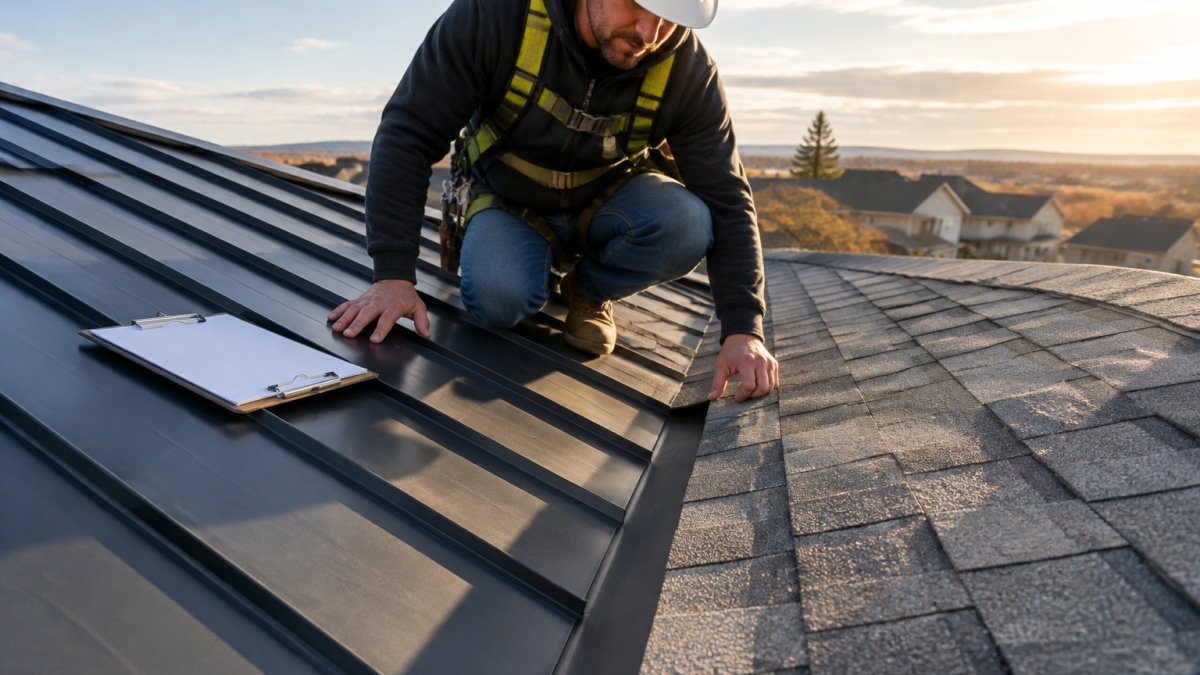
Compare the right products, not the categories
On the metal side, the two systems homeowners actually choose between are standing seam and exposed-fastener panels. Standing seam panels have raised seams and hidden fasteners, which are often chosen for wind uplift, snow shedding, and long-term leak resistance. Exposed-fastener panels, often called screw-down or corrugated panels, cost less and install faster, but the fasteners and their washers are the wear point, and they need periodic inspection and re-sealing. Comparing a premium standing-seam roof to a builder-grade asphalt shingle overstates the metal premium; comparing an exposed-fastener panel to a premium architectural shingle narrows it considerably.
On the shingle side, the meaningful distinction is between entry-level three-tab shingles and heavier architectural (laminated) shingles. A fair comparison pits standing seam against architectural shingles, and exposed-fastener metal against three-tab.
The comparison that matters
| Factor | Standing Seam Metal | Exposed-Fastener Metal | Architectural Asphalt Shingles |
|---|---|---|---|
| Fasteners | Hidden, concealed clips | Exposed screws with washers | Nails |
| Wind uplift resistance | Strongest of the four | Good, but fastener-dependent | Moderate |
| Snow shedding | Excellent on low-friction coated panels | Good | Poor, snow sits and refreezes |
| Hail performance | Depends on panel gauge and coating; dents possible | Dents more readily than standing seam | Granule loss and bruising common |
| Maintenance focus | Seams, flashing, clips | Fasteners, washers, seals | Granule wear, flashing, occasional shingle replacement |
| Repair approach | Replace individual panels | Replace panels or re-seat fasteners | Patch or replace shingles |
| Expected service life | Longest | Long, but fastener-limited | Moderate |
| End of life | Recyclable | Recyclable | Landfill-bound |
Think in replacement cycles, not sticker price
The honest way to compare is to line up the number of roofs you’ll buy over your ownership horizon. That doesn’t automatically make metal cheaper, it makes the decision depend on how long you stay, how harsh your exposure is, and whether you’d rather pay once or pay in stages.
Watch out: comparing a metal quote that includes tear-off, new underlayment, and upgraded ventilation against a shingle quote that reuses existing decking and skips ventilation is not a real comparison. Ask each contractor to itemize tear-off, deck repair, underlayment, flashing, and ventilation so the numbers line up.
Residential Metal Roof Lifespan and What Affects It
A residential metal roof lifespan depends on panel material, coating quality, roof pitch, and, above all, installation quality. A well-installed coated steel roof on a properly ventilated deck can serve a home for decades, while a rushed install with poor flashing can fail far sooner regardless of the panel’s pedigree.
What actually drives lifespan
Panel material. Steel and aluminum are the two common residential substrates. Steel is stiffer and holds a standing seam profile well; aluminum resists corrosion better in coastal or salt-exposed settings but moves more with temperature. The substrate determines how the panel behaves; the coating determines how long it lasts.
Coating system. The paint system on a metal panel is what defends the steel or aluminum from moisture and UV. Coating quality varies widely between products, and a premium coating is the difference between a panel that holds its finish for decades and one that chalks or fades early.
Roof pitch and snow behavior. Steeper pitches shed snow and water faster and reduce the time moisture sits on seams and fasteners. Low-slope sections are where ice damming and standing water do their damage, so transitions and valleys deserve extra attention.
Ventilation and the deck beneath. Metal panels survive; the deck beneath them doesn’t if moisture can’t escape. Proper intake and exhaust ventilation keeps the roof assembly dry and is a lifespan factor most homeowners never think to ask about.
Installation quality. Underlayment, ice-and-water protection at the eaves, flashing details at penetrations and walls, and correct clip or fastener placement all determine whether the system performs as designed. This is the single largest variable, and it’s the one the homeowner controls by choosing the installer.
Cold-climate performance
Freeze-thaw cycles stress every roof, and how the system handles them determines whether you get the full life out of your investment. Snow sliding off a low-friction coated panel instead of sitting and refreezing at the eaves is a real advantage in cold climates, but it also means snow guards and eave protection need to be planned, not added later. Our guide on metal roofing for cold climates explains the details that matter in this region.
Total cost of ownership, with assumptions stated
Broad claims that metal “pays for itself” are not useful without the assumptions behind them. A transparent total-cost-of-ownership comparison over a defined horizon, say, 25 or 30 years, should include:
- The installed cost of each option, itemized the same way (tear-off, deck repair, underlayment, flashing, ventilation).
- Expected replacement cycles for the shingle option within that horizon.
- Routine maintenance for each system: annual inspection and fastener/seal checks for metal; granule wear, flashing, and patch repairs for shingles.
- Storm repair exposure, which varies by local hail and wind history rather than by national averages.
- Any insurance premium differences your provider actually applies, confirmed in writing rather than assumed.
Run those inputs with your own numbers and the answer usually becomes clear: metal tends to win on long horizons and harsh exposures, shingles tend to win on short horizons and tight budgets. Neither wins universally.
Warranty exclusions that affect real-world protection
Manufacturer warranties on metal roofing typically cover the panel and finish, not the installation. Workmanship problems, improper fastening, inadequate ventilation, poor flashing, are usually excluded, which is why the installer’s own workmanship warranty matters as much as the panel warranty. Finish warranties often carry limitations on fading and chalk, and hail coverage varies by product and by insurer. Before you sign, ask what the warranty covers, what voids it, and who honors it. Our breakdown of roof warranty coverage walks through the exclusions homeowners most often miss.
Metal Roof Maintenance: What It Really Involves
Metal roof maintenance is lighter than shingle upkeep, but it isn’t zero.
That’s the routine. The bigger variable is hail, which is a genuine concern in this part of the province. Whether metal actually resists hail damage, and what to look for after a storm, is covered in our piece on whether hail can damage metal roofs.
A common mistake is assuming a metal roof is maintenance-free and never looking at it again. Small seal failures caught early are cheap. Water finding its way into the attic is not.
Installation Quality, Warranty Exclusions, and Insurance
Warranty coverage is only as good as the installation behind it, which is why choosing the right contractor matters.
Before you sign, ask what the warranty actually covers and what voids it. Our breakdown of roof warranty coverage walks through the exclusions homeowners most often miss.
On insurance, check with your provider before committing, since coverage terms vary by insurer and region.
Request an Estimate for Your Home
Deciding whether a metal roof is worth it comes down to three things: how long you plan to stay, what your insurance and warranty terms actually say, and whether the installer will stand behind the work. Get those answers before you commit, not after.
At HighLow Roofing & Exteriors, we provide roof repairs and replacements, along with Hardie Board and vinyl siding, eavestrough, and soffit and fascia work, so your exterior can be handled by one team.
If you’re weighing metal against shingles and want a straight answer for your specific roof, get a free estimate from HighLow Roofing & Exteriors and we’ll walk you through the options, the warranty terms, and what your home actually needs.
Frequently Asked Questions
Are metal roofs worth the investment for residential homes?
It depends on how long you plan to stay and your local weather. A metal roof costs more upfront than asphalt shingles, but its longer service life and lower maintenance can make it cheaper per year of protection. In Southern Alberta, where hail and heavy snow are common, the durability and weather resistance often tip the math in metal’s favor. Request a quote from a local roofing contractor to compare options for your specific home.
How long does a residential metal roof last?
Most residential metal roofs are designed to last several decades. Actual lifespan depends on the metal type, protective coating, roof pitch, and installation quality. Homes in regions with heavy snow, high winds, or frequent hail may see faster wear on lower-grade panels. Proper installation and routine metal roof maintenance are the biggest factors in reaching the upper end of that range.
Are metal roofs noisy when it rains?
Not usually. When installed over solid decking and underlayment, a metal roof sounds similar to asphalt shingles during rainfall. The old reputation for noise comes from metal roofs installed over open purlins, which is more common on barns and sheds than on homes. If noise is a concern, ask your contractor about the decking and insulation details of the installation.
Do metal roofs require a lot of maintenance?
Maintenance needs depend on the roof and its exposure. Annual inspections after severe weather are a good idea to catch small issues before they become roof repairs.
