
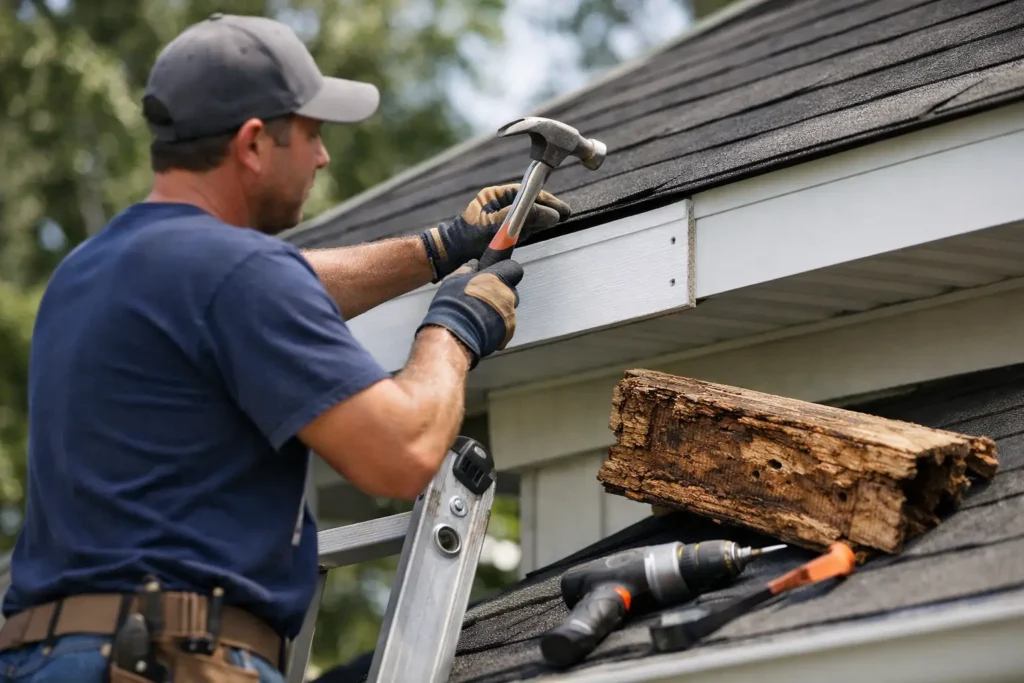
Water dripping behind a gutter can turn a small fascia problem into a much larger exterior repair. The board along your roof edge may look like simple trim, but it supports the gutter system, protects the roof structure, and gives the eaves a finished appearance. This homeowner guide to fascia repair explains what to look for, what repair options make sense, and when professional help is the safer investment.
What Fascia Does for Your Home
Fascia is the horizontal board mounted at the end of the roof rafters, directly beneath the roof edge. Gutters are commonly fastened to it, while the soffit sits beneath it. Together, these components protect the eaves from wind-driven rain, snow, pests, and moisture.
When fascia is solid and properly installed, water from the roof moves into the gutters and away from the foundation. When it is damaged, loose, or rotted, gutters can pull away from the house. Water can then run behind the gutter, soak the roof decking and soffit, and eventually reach interior areas.
That is why fascia repair is not only a curb-appeal project. It is part of the home’s water-management system and a practical way to protect the roof’s lifespan.
Signs Your Fascia Needs Repair
A close look from the ground can reveal early warning signs. Peeling paint, dark streaks, visible gaps at the roof edge, and sagging gutters all deserve attention. In many cases, the damage starts behind the gutter where it is difficult to see, so an apparently minor issue can be more advanced than it looks.
Watch for soft or crumbling wood when inspecting accessible areas, especially near gutter joints and downspouts. Staining on soffit panels, rusted gutter fasteners, or water marks on exterior siding can also point to a fascia or gutter issue.
Inside the home, damp spots near exterior walls or attic moisture may indicate that water is getting past the roof edge. Those symptoms do not automatically mean fascia is the cause, but they warrant a full roof, gutter, soffit, and fascia inspection rather than a quick cosmetic patch.
Southern Alberta homes face a demanding mix of snow, freeze-thaw cycles, heavy rain, high winds, and intense sun. These conditions can accelerate paint failure, loosen gutter hardware, and expose small installation flaws. Regular inspections after severe weather help catch damage before the next season makes it worse.
Why Fascia Fails
Most fascia damage comes back to persistent moisture. Overflowing gutters are a common culprit. When leaves, granules, ice, or debris prevent drainage, water can spill over the gutter edge or pool behind it. Over time, wood fascia absorbs that moisture and begins to rot.
Improper gutter slope can create the same result, even if the gutters are clean. A gutter that does not drain toward the downspout allows standing water to stress its fasteners and the fascia behind it. Ice buildup can add substantial weight, pulling gutters away from the roofline and splitting weakened boards.
Roofing details matter as well. Drip edge flashing should guide roof runoff into the gutter. If flashing is missing, damaged, or incorrectly positioned, water may travel behind the gutter instead. Failing shingles, damaged roof decking, inadequate attic ventilation, and ice dams can also contribute to wet fascia.
Paint failure is another concern, but it is usually a symptom rather than the root cause. Repainting a board without correcting the moisture source may improve its appearance for a while, but it will not stop rot from returning.
Repair or Replace? The Right Call Depends on the Damage
A small area of surface damage does not always require replacing every fascia board. If the wood is structurally sound, the issue may be limited to scraping loose paint, treating minor deterioration, sealing exposed edges, and applying a high-quality exterior coating. This approach is appropriate only after the gutter and roof-edge drainage problem has been corrected.
Localized rot may allow for a section repair. A contractor can remove the damaged portion, inspect the rafter ends and roof decking, then install new material that matches the existing profile. The key is making sure the repair extends beyond soft wood and that the new section is securely tied into sound material.
Replacement is often the better choice when fascia is extensively rotted, gutters are sagging across long sections, fasteners no longer hold, or water has reached the soffit, roof deck, or rafter tails. Replacing compromised boards may cost more upfront, but repeated patching can become more expensive if the underlying structure continues to deteriorate.
A professional inspection should also determine whether the gutter system needs re-hanging or replacement. New fascia paired with improperly sloped or undersized gutters leaves the same water problem in place.
Choosing Fascia Materials
Wood fascia remains a traditional choice and can provide a clean, classic look. It is easy to shape and repair, but it requires careful priming, painting, and ongoing maintenance. In areas exposed to frequent moisture, neglected wood can deteriorate quickly.
Aluminum-wrapped fascia covers wood with a formed metal finish. It reduces painting needs and offers a tidy appearance, but the wood beneath still needs to be sound and properly protected. If moisture is trapped behind the wrap, hidden rot can continue.
Composite and PVC-style trim materials can be highly resistant to moisture and insects. They can be an excellent low-maintenance option, though material cost and installation requirements vary. Not every product is suitable for every roof edge or gutter setup, so the choice should account for local weather, the home’s exterior design, and how gutters will be fastened.
For many homeowners, the best value is not simply the least expensive board. It is a properly detailed roof-edge system that includes sound fascia, correctly installed flashing, secure gutters, and adequate drainage away from the foundation.
What a Proper Fascia Repair Should Include
Fascia work is safest and most effective when treated as part of the complete eave system. A quality repair starts with identifying where water is coming from, not just removing damaged material. The contractor should inspect the shingles at the edge, drip edge flashing, roof decking, soffit ventilation, rafter ends, gutters, hangers, and downspouts.
During replacement, damaged wood should be removed far enough to expose solid framing. Any affected roof decking or rafter tails should be addressed before new fascia is installed. The new material needs to be aligned straight, securely fastened, sealed where appropriate, and prepared to carry the gutter load.
Gutters should then be rehung with the proper slope toward the downspouts. Downspouts need to discharge water far enough from the foundation to prevent pooling. These details may not be as visible as fresh trim, but they are what protect the repair over the long term.
Can You Repair Fascia Yourself?
Small paint touch-ups on accessible, sound fascia may be manageable for a confident homeowner. Cleaning gutters, checking for loose fasteners, and monitoring drainage are also worthwhile maintenance tasks.
Structural fascia repair is different. It often requires removing or supporting gutters, working from ladders at roof height, handling flashing, and identifying hidden rot. There is also a real risk of damaging shingles, soffit, or gutter sections if the work is rushed. If gutters are pulling away, the board feels soft, or water damage has spread beyond one small spot, a professional exterior contractor is the better choice.
A contractor who understands roofing, gutters, soffit, and fascia can assess the full picture in one visit. HighLow Roofing & Exteriors helps homeowners in Lethbridge and Southern Alberta identify the cause of roof-edge damage and recommend repairs built for local weather, not just a temporary visual fix.
Preventing Future Fascia Damage
The most reliable prevention is simple: keep water moving where it belongs. Clean gutters regularly, particularly after leaf fall and major storms. Check that downspouts are clear and that extensions direct water away from the home. Look up at the gutter line a few times each year for sagging, overflow marks, or separation from the fascia.
It also helps to schedule an exterior inspection after hail, strong winds, or a difficult winter. Early attention to loose flashing, damaged shingles, or failing gutter hangers can prevent water from reaching vulnerable wood at the eaves.
A straight gutter line and freshly finished fascia can improve curb appeal, but the real benefit is quieter: confidence that the roof edge is directing water away from the home as it should. Addressing a small problem now can protect far more than the trim board beneath your shingles.