
Last Updated: November 26, 2026
Quick Summary
Yes, you can replace roof in winter when the forecast is dry, wind is manageable, and the crew can clear snow and ice from the surface. Cold weather makes shingles stiffer and hand-sealing necessary, but preparation and experience make winter replacement possible.
- Shingle manufacturers publish cold-weather guidance rather than one minimum temperature figure.
- Below the preferred temperature, every shingle tab must be hand-sealed with roofing cement.
- Ask your contractor to show the product spec sheet, installation instructions, and warranty document.
- Roofers often work in sections and cover the exposed deck the same day in winter.
- The best time to replace a roof is late spring through early fall.
Table of Contents
- Can You Replace a Roof in Winter?
- Minimum Temperature for Roof Replacement
- Installing Shingles in Cold Weather: What Changes
- Winter Roof Replacement Preparation
- Pros and Cons of a Winter Roof Replacement
- Best Time of Year to Replace a Roof
- Comparing Winter Bids and Booking Your Estimate
- Frequently Asked Questions
Can You Replace a Roof in Winter?
Yes, you can replace a roof in winter when conditions allow. Cold-weather roofing is common, and many crews install asphalt shingles right through the season.
The catch is that winter changes how the job runs. Shingles get stiffer in the cold. Adhesive strips need help to seal. Snow and ice have to be cleared before tear-off. None of that makes a winter replacement impossible. It makes preparation and experience matter more.
Below, we explain what changes, when to hold off, and how to judge a winter bid.
What Makes Winter Work Different
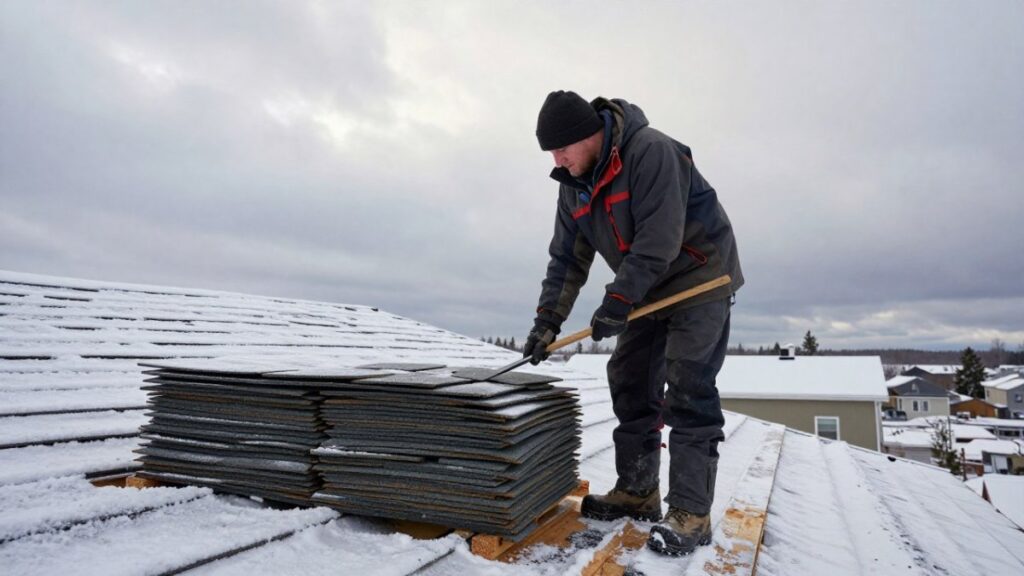
Cold weather affects three things: the shingles, the roof deck, and the crew’s footing.
Many asphalt shingles are made with a self-sealing adhesive strip that needs warmth and sun to activate. In cold weather it may not seal on its own. Shingles also stiffen in the cold and can crack if they are bent or dropped.
The roof deck matters too. Ice and water shield, underlayment, and flashing all behave differently on a cold surface. Snow and ice must come off before tear-off starts.
The Short Answer and the Conditions Behind It
You can replace roof in winter when the forecast is dry, the wind is manageable, and the crew can clear snow and ice from the roof surface. Manufacturers publish installation guidelines for cold-weather roofing, and those rules set the working limits.
The conditions that matter most:
- Temperature: shingles need to be workable. Check the manufacturer’s stated minimum.
- Wind: high wind makes shingles hard to place and unsafe to handle.
- Precipitation: rain or heavy snow stops work.
- Roof condition: snow, ice, and frost must be removed before tear-off.
When any of those fail, the job waits. That is normal, and a good contractor will say so up front.
Minimum Temperature for Roof Replacement
There is no single number that applies to every roof. The minimum temperature for roof replacement depends on the shingle product and the manufacturer’s written instructions.
Most asphalt shingle manufacturers publish a range of cold-weather guidance rather than one figure. A common pattern is:
- A preferred installation temperature at which the self-sealing adhesive strip is expected to activate from normal sun exposure.
- A lower handling limit below which the shingles must be kept warm before installation and handled with extra care to avoid cracking.
- A hand-sealing requirement that kicks in below the preferred temperature, where every shingle tab must be manually sealed with roofing cement.
- A hard stop below which the manufacturer does not approve installation at all, even with precautions.
Those limits differ by product. A standard three-tab shingle, a laminated architectural shingle, and a premium designer shingle can each carry different cold-weather terms, even from the same manufacturer. So can different underlayment and ice-and-water-shield products, which have their own application temperature ranges.
How to Verify the Limit for Your Roof
Ask your contractor to show you the product specification sheet, the installation instructions packaged with the shingle, and the warranty document for the chosen product.
If a contractor cannot produce those documents, or waves off the question with a rule of thumb, that is a warning sign. The written instructions, not a general number, set the working limit, and following them is what protects your warranty.
A bid that promises installation “at any temperature” without referencing the manufacturer’s cold-weather terms deserves a closer look.
Manufacturers publish cold-weather guidance rather than one number, and it generally follows this pattern.
| Guidance level | What it means |
|---|---|
| Preferred installation temperature | Self-sealing adhesive strip expected to activate from normal sun exposure |
| Lower handling limit | Shingles must be kept warm and handled with extra care to avoid cracking |
| Hand-sealing requirement | Every shingle tab must be manually sealed with roofing cement |
| Hard stop | Manufacturer does not approve installation at all, even with precautions |
Installing Shingles in Cold Weather: What Changes
Cold-weather shingle work adds steps. Shingle bundles are kept warm until installation and carried carefully so the tabs do not crack, and nails must go in at the right depth and angle.
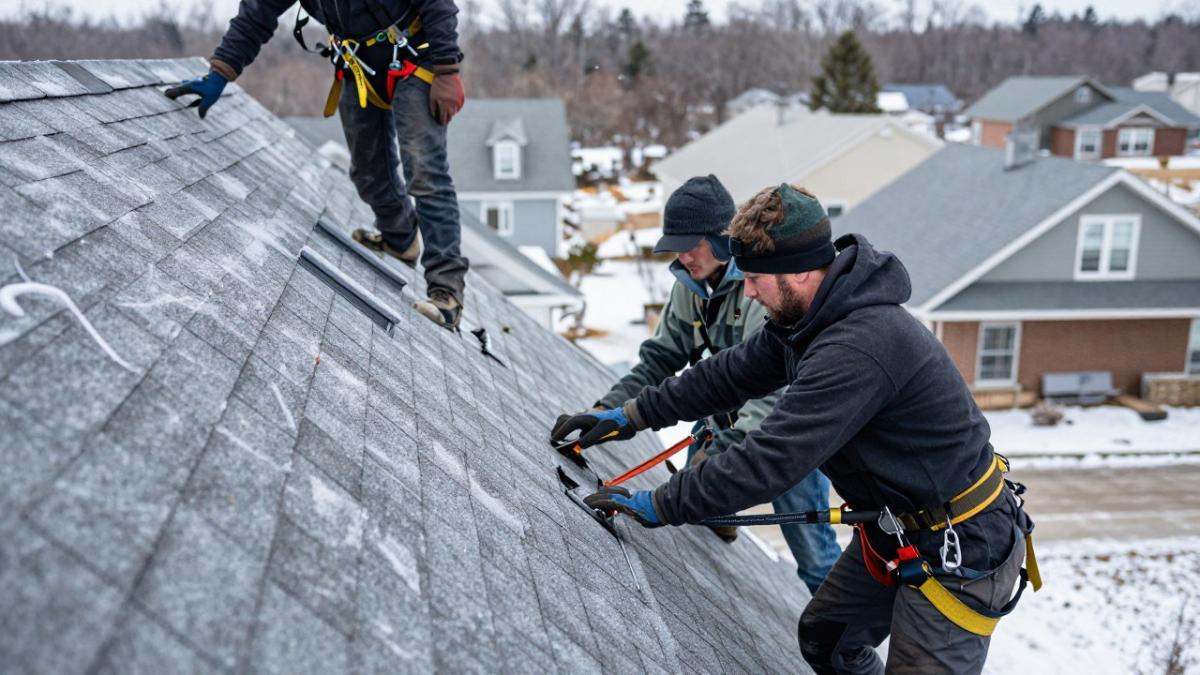
If you want to follow what the crew is doing, it helps to know the basics of asphalt shingle roof installation. And because material choice drives most of these steps, our guide to the best materials for Alberta roofs explains which products suit a cold climate.
Sealing, Adhesion, and Hand-Sealing
Shingle sealing relies on thermal activation. Sun warms the adhesive strip, and the shingle bonds to the one below it. In winter that heat is missing, so the crew hand-seals each shingle with roofing cement.
Hand-sealing takes time and has to be done correctly, with the right amount of cement in the right spot.
How Crews Protect the Exposed Roof
Tear-off leaves the roof deck open. In summer that is a minor concern. In winter, an open deck can take on snow or rain fast.
In winter, the open deck can take on snow or rain quickly, so roofers often work in sections and cover the exposed deck the same day.
Winter Roof Replacement Preparation
Preparation starts before the crew arrives. Clearing the driveway and walkways, moving vehicles, and trimming branches that overhang the roof helps materials and workers get in.
Inside the house, expect some noise and vibration. Take down fragile items from walls near the work area. Keep pets and kids away from the drop zone.
Our guide on preparing your home for exterior construction walks through the full list so nothing gets missed.
Pros and Cons of a Winter Roof Replacement
Winter work has real upsides and real trade-offs. Here is the honest split.
Pros:
- Fewer homeowners book in winter, and scheduling can be faster when the forecast holds.
Cons:
- Weather delays are likely, and cold-weather steps can make the job take longer.
If you want to check the finished work yourself, our 7-step exterior inspection guide shows what to look for once the crew is done.
Best Time of Year to Replace a Roof
The best time of year to replace a roof is late spring through early fall. Warm, dry weather lets shingles seal naturally and keeps the schedule predictable.
That said, “best” is not “only.” A roof that is leaking or storm-damaged should not wait months for ideal weather. A temporary repair can bridge the gap, and a full replacement follows when conditions allow.
If your roof is sound and you simply want to plan ahead, book for the warmer months. If it is failing now, call for an assessment.
Comparing Winter Bids and Booking Your Estimate
Winter bids should be compared on more than the bottom line. Ask each contractor:
- Which shingle product do you plan to use, and what does its cold-weather instruction say?
- How do you handle hand-sealing?
- How do you protect the open deck between stages?
- What happens to the schedule if the weather turns?
- Is the cold-weather work covered in writing?
Before you compare numbers, it helps to know what roof replacement typically costs in Alberta. That way you can spot a bid that is too low to be real.
To get a quote, contact HighLow Roofing & Exteriors for a free estimate.
A winter roof replacement is a judgment call, and it should be made with a contractor who knows cold-weather roofing. HighLow Roofing & Exteriors handles roof replacements across Southern Alberta, with proven installation methods and a focus on standing behind the work. We also cover siding and eavestrough, so one crew can handle the whole exterior. Request a free estimate and we will tell you honestly whether your roof can wait for spring or should be done now.
Frequently Asked Questions
Can shingles be installed in cold weather?
Yes, asphalt shingles can be installed in cold weather when the crew follows the manufacturer’s cold-weather instructions. The main changes are handling and sealing: shingles stiffen in the cold, so they need to be stored and carried carefully to avoid cracking, and the adhesive strip may not activate on its own. Crews often hand-seal or spot-seal shingles and plan the work around dry, low-wind days. Check that your contractor will follow the shingle maker’s written cold-weather guidance and note it on the quote.
Will shingles seal properly after a winter roof replacement?
They can, but sealing may take longer in cold weather. The adhesive strip on asphalt shingles needs warmth and sun to activate, so a winter installation often relies on hand-sealing or careful placement until warmer weather arrives. Ask your roofer whether the shingles will be hand-sealed, and keep the manufacturer’s warranty paperwork. Once spring temperatures return, the shingles should bond as intended. If you notice lifted or loose shingles after the first warm spell, call the contractor back to check them.
What weather conditions can delay a roof replacement?
Snow, ice, rain, high wind, and extreme cold can all delay a winter roof replacement. Crews need a dry roof deck and safe footing, so snow and ice must be cleared before tear-off begins. High wind makes shingle handling and fall protection harder, and precipitation can expose the open roof to water. Build a buffer into your schedule and ask the contractor how they handle weather delays in the contract. A written start date plus a weather clause protects both sides.
What should I ask a roofer before scheduling winter work?
Ask four things: how they handle cold-weather shingle installation and sealing, what their written warranty covers for winter work, how they protect the exposed roof during tear-off, and how they price weather delays. Also ask for references from winter jobs and proof of fall protection training. Get the scope, materials, and cold-weather steps in writing. Comparing two or three bids on those points, rather than price alone, shows which contractor actually plans for winter conditions.
