
Last Updated: November 1, 2026
Quick Summary
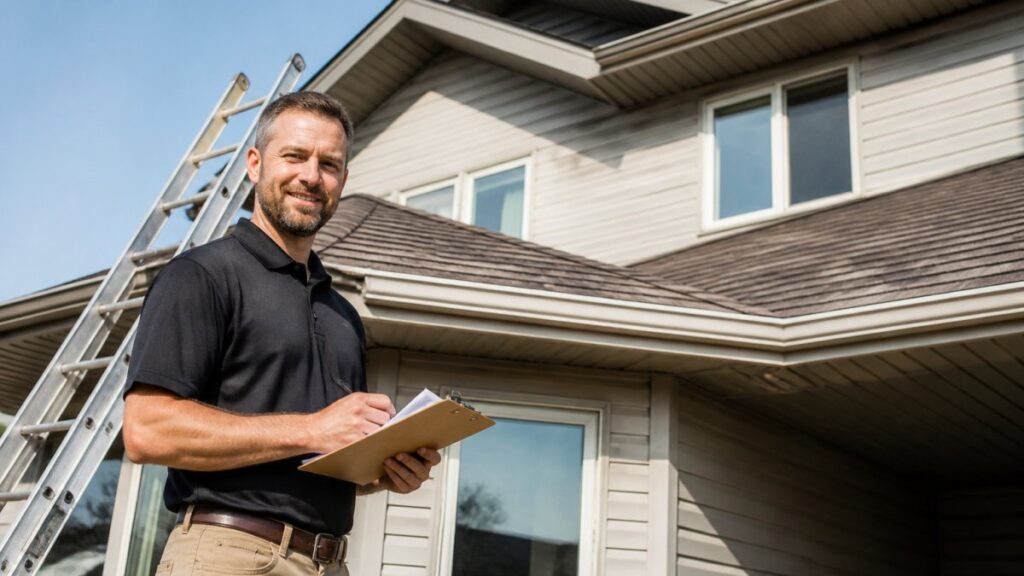
A professional roof inspection is a systematic check of your roof’s surface, flashing, gutters, vents and underlying structure by a trained professional. It catches wear, weather damage and small defects early, before they become leaks, water damage or structural problems. Scheduling one regularly helps homeowners avoid costly repairs and extend the roof’s lifespan.
- Inspectors find hidden problems such as lifted shingles, failed sealant and attic sheathing moisture that are invisible from the ground.
- Catching flashing or sealant issues early usually means a small maintenance repair rather than interior restoration.
- Asphalt roofs over 20 years old should be inspected twice a year, in spring and fall, plus after severe weather.
- Inspect after hailstorms, windstorms or heavy snowfall, even when nothing looks wrong from the ground.
- Documented inspection reports support insurance claims, warranty decisions and property value.
Table of Contents
- Why a Professional Roof Inspection Matters for Your Home
- Early Detection of Leaks and Hidden Roof Damage
- Preventing Costly Repairs and Water Damage
- Extending Roof Lifespan and Protecting Your Home’s Value
- Professional Roof Inspection Checklist: What an Inspector Checks
- How Often to Inspect a Roof in Southern Alberta’s Climate
- Reading Your Roof Inspection Report and Choosing Repair or Replacement
- Booking Your Professional Roof Inspection with HighLow Roofing & Exteriors
- Frequently Asked Questions
Why a Professional Roof Inspection Matters for Your Home
A roof takes more punishment than almost any other part of a house. In Southern Alberta, it faces hail, heavy wind, snow loads and sharp freeze-thaw swings, often all within the same season. Most of that damage is hidden from ground level, which is why a professional roof inspection is one of the most useful things a homeowner can schedule.
A roof inspection is a systematic check of your roof’s surface, flashing, gutters, vents and underlying structure by a trained professional. It looks for wear, weather damage and small defects before they grow into leaks or structural problems. Here are the main benefits homeowners get from one:
- Early detection of problems that are invisible from the ground
- Avoided repair costs by catching issues while they are still small
- Protection against water damage to the attic, insulation and interior
- A longer roof lifespan through timely maintenance
- Protected property value and a documented record of the roof’s condition
- Clearer insurance and warranty decisions supported by a written report
Many homeowners only call a roofer after a leak appears. A scheduled inspection shifts the approach from reacting to problems toward managing them.
Early Detection of Leaks and Hidden Roof Damage
Most roof leaks start small, and the earliest signs are rarely visible from the driveway.
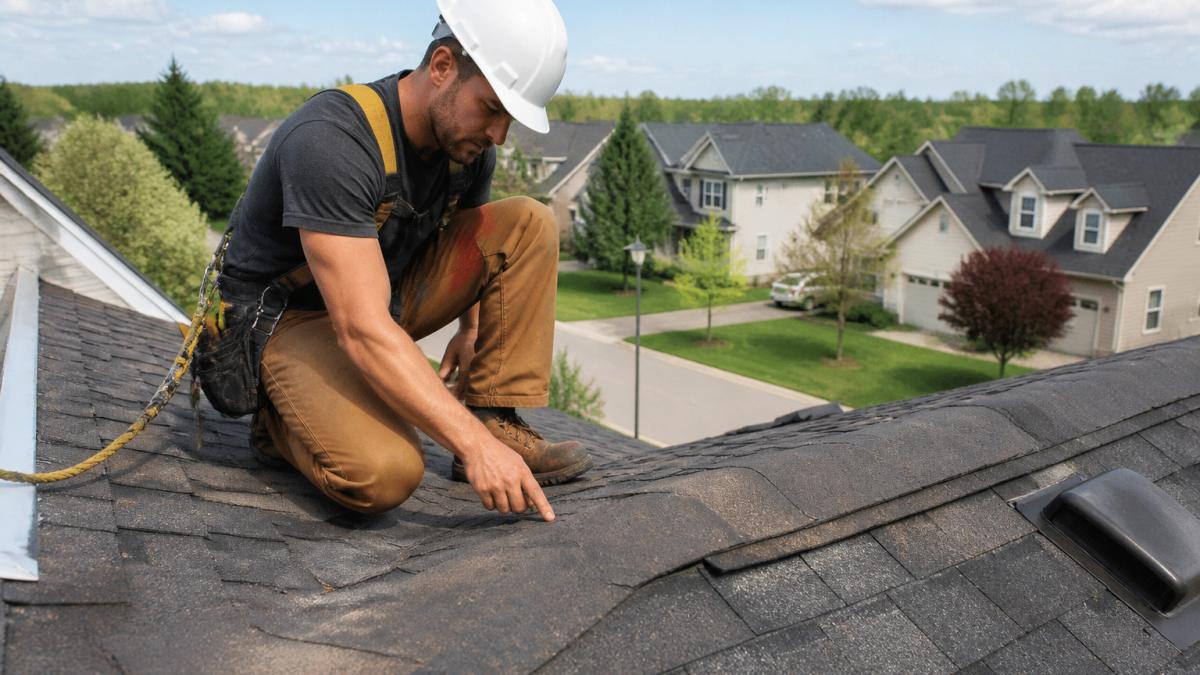
Common hidden problems include:
- Lifted or cracked shingles that let wind-driven snow and rain underneath
- Deteriorated sealant around penetrations such as vent pipes
- Hail bruising that weakens the shingle mat even when no granules are visibly missing
A common mistake is waiting for a stain on the ceiling. By that point, water has often been travelling through the structure for some time.
Watch out: after a major hailstorm, damage may not show from the ground. Have the roof checked even if nothing looks wrong.
Preventing Costly Repairs and Water Damage
Water is the most destructive force acting on a roof, but the reason inspections save money is not simply that they find leaks.
The typical failure chain runs in four stages:
- A localized breach, a lifted shingle, a cracked sealant bead around a vent pipe, a nail pop, or a hairline gap in flashing. At this stage the repair is a single visit and a small amount of material.
- Water entry and tracking, water passes the breach and travels along the roof deck, sheathing, or framing. It rarely drips straight down; it follows the path of least resistance, which is why the visible stain is often far from the actual entry point.
- Material saturation, insulation, drywall, and wood framing absorb moisture. Insulation loses R-value when wet, drywall softens and stains, and framing becomes vulnerable to rot and mould. Now the repair involves interior finishes and possibly structural material.
- Structural and health consequences, prolonged moisture leads to rot, mould growth, and in severe cases compromised framing. Remediation at this stage is a multi-trade project, not a roofing repair.
A professional inspection is designed to catch problems at stage one.
A professional inspection helps prevent this chain of damage by:
- Identifying small gaps in flashing and sealant before they widen, flashing is the most common leak source on a roof, and most flashing failures begin as a sealant or fastener issue that is cheap to correct early.
- Flagging clogged or sagging gutters that cause water to back up under shingles, when water cannot leave the roof, it pools at the eaves and wicks under the roofing material, rotting the fascia and soffit before it ever shows inside.
- Noting missing or damaged shingles so they can be replaced in one visit, a single missing shingle exposes the underlayment beneath it, and that exposure accelerates with every wind event.
Clogged gutters and blocked drains are an often-overlooked contributor.
After any significant weather event, walk your property at ground level and look for granules in the downspout outlets or on the ground beneath the roof edge. Granule loss is one of the few hail indicators a homeowner can spot safely without climbing.
The cost comparison is not really inspection versus repair. It is small repair versus large repair. Catching a flashing issue early often means a maintenance item rather than an interior restoration project.
The article breaks the damage chain into four stages, showing how a small breach grows into a larger repair.
| Stage | What happens | Repair scope |
|---|---|---|
| Localized breach | Lifted shingle, cracked sealant or nail pop | Single visit, small material |
| Water entry and tracking | Water follows the deck and framing | Often far from the entry point |
| Material saturation | Insulation, drywall and framing absorb moisture | Interior finishes, possibly structural |
| Structural and health consequences | Rot, mould and compromised framing | Multi-trade remediation |
Extending Roof Lifespan and Protecting Your Home’s Value
Roofing materials are designed to last a set number of years, but that lifespan depends heavily on maintenance.
The value of a well-maintained roof extends beyond the roof itself.
Here’s the part most homeowners miss: a roof that looks fine from the street can still have an aging underlayment or failing flashing. Visual appearance alone is not a reliable measure of condition.
Professional Roof Inspection Checklist: What an Inspector Checks
A thorough professional roof inspection goes component by component. While every roof is different, a good inspection typically covers the following areas:
- Shingles or roofing surface: cracks, curling, missing pieces, granule loss, and hail impact marks
- Flashing: around chimneys, skylights, vent pipes, walls and roof valleys
- Sealants and penetrations: caulk and seals around pipes, vents and fixtures
An inspector usually documents findings with notes and photographs, so you can see exactly what was found and where. That documentation is useful later when you compare repair options or speak with an insurer.
Inspection limitations are worth knowing. Roofs with steep pitch, fragile materials or unsafe access may be assessed partly from the ground or attic. A professional applies safety practices, including proper fall protection, which is a good reason not to climb onto a roof for a DIY check.
How Often to Inspect a Roof in Southern Alberta’s Climate
Inspection timing depends on your roof type, its age, and the weather it faces. Southern Alberta’s conditions, with hail, strong winds, heavy snow and wide temperature swings, mean roofs here benefit from attention more often than in milder regions.
A practical schedule by roof type and situation:
- Asphalt shingle roofs, under 10 years old: once a year, ideally in spring after the snow has cleared and before the storm season. Add a post-hail check if a significant event passes over.
- Asphalt shingle roofs, 10-20 years old: once a year plus a fall check before winter. Aging shingles lose granules and flexibility, and the fall check catches loose or lifted pieces before snow load and freeze-thaw work on them.
- Asphalt shingle roofs, over 20 years old: twice a year, spring and fall, plus after any severe weather. At this age the underlayment and flashing are the likely failure points even when the shingles look intact.
- Metal roofs: once a year, with attention to fasteners, seam sealant, and any ponding or snow-shedding patterns. Metal is durable but fasteners and sealants age.
Post-storm inspections are especially important. Hail and high winds can cause damage that appears minor at first but progresses over time.
Do not wait for a leak to schedule an inspection. By the time water reaches the ceiling, the breach has typically been open for at least one full season, and the interior damage is already underway.
Many homeowners ask whether a roof needs checking when the house seems fine. Usually, the answer is yes. The most damaging problems are often the ones that give no obvious warning. A roof that has just come through a freeze-thaw winter and a hail season is exactly the roof that warrants a look, even if nothing is dripping.
If you are unsure which schedule fits your roof, the age of the roof and the material are the two facts an inspector will ask for first. Have both ready when you book, and the inspection can be scoped to the likely failure points for your roof type rather than a generic walkaround.
Reading Your Roof Inspection Report and Choosing Repair or Replacement
A good inspection report does more than list defects. It should indicate which issues are urgent, which can wait, and what the options are. Look for clear descriptions, photographs and a priority ranking for each finding.
Once you have the report, the next question is whether to repair or replace. Repair is often the right choice when damage is localized, the roof is relatively young, and the underlying structure is sound.
Booking Your Professional Roof Inspection with HighLow Roofing & Exteriors
HighLow Roofing & Exteriors provides professional roofing and exterior services for homeowners across Lethbridge and Southern Alberta.
If you are ready to schedule, you can request a free estimate through our website.
Request an estimate today and let us help protect your home for the years ahead.
Frequently Asked Questions
How often should you have your roof professionally inspected?
Most homeowners benefit from a professional roof inspection once a year, and also after severe weather such as hail, high winds, or heavy snow loads. Annual timing lets an inspector catch wear before it becomes a leak. In Southern Alberta, where freeze-thaw cycles and hailstorms are common, scheduling a check in spring to assess winter damage is a practical habit. Ask your inspector to note any changes since the last visit so you can track how the roof is aging over time.
What does a professional roof inspection include?
A thorough professional roof inspection covers the shingles or roofing surface, flashing around chimneys and vents, valleys, eavestroughs, downspouts, soffits, and fascia. The inspector also looks at attic ventilation and signs of moisture on the underside of the roof deck. A written inspection report usually documents the condition of each component with photos, so you can see exactly what was found and what it may cost to address.
Can a roof inspection tell me whether I need a repair or a full replacement?
Yes. An inspection shows whether damage is localized, such as a few missing or cracked shingles or a failed flashing seal, or whether it is widespread, such as granule loss across the whole surface or deteriorated decking. Localized problems usually suit a repair, while widespread aging or repeated leaks often point toward replacement. The inspection report gives you the evidence to compare options with a contractor before you commit.
Is a professional roof inspection better than checking the roof myself?
A homeowner can spot obvious problems from the ground, such as sagging areas or clogged eavestroughs. A trained inspector goes further: they check flashing details, underlayment signs, and attic conditions that are hard to see from below, and they document findings in a report. Walking on a roof also carries fall risk, so a professional inspection is usually the safer and more thorough choice, with DIY checks used as a supplement between visits.
What happens after a roof inspection?
After the inspection, you receive a report that outlines the condition of the roof and recommended actions, usually ranked by urgency. Minor items can often be scheduled for routine maintenance, while active leaks or storm damage should be addressed quickly to prevent water entering the attic or home. If you have an insurance claim, the inspection report can also serve as documentation. Contact HighLow Roofing & Exteriors for a free estimate to discuss next steps.
Does a roof inspection help with insurance claims?
A dated inspection report with photos can be useful when filing an insurance claim after hail, wind, or other storm damage, because it establishes the condition of the roof before and after an event. Keep copies of past reports with your home records. Coverage decisions depend on your specific policy, so review your policy wording or speak with your insurer about what documentation they require.
