
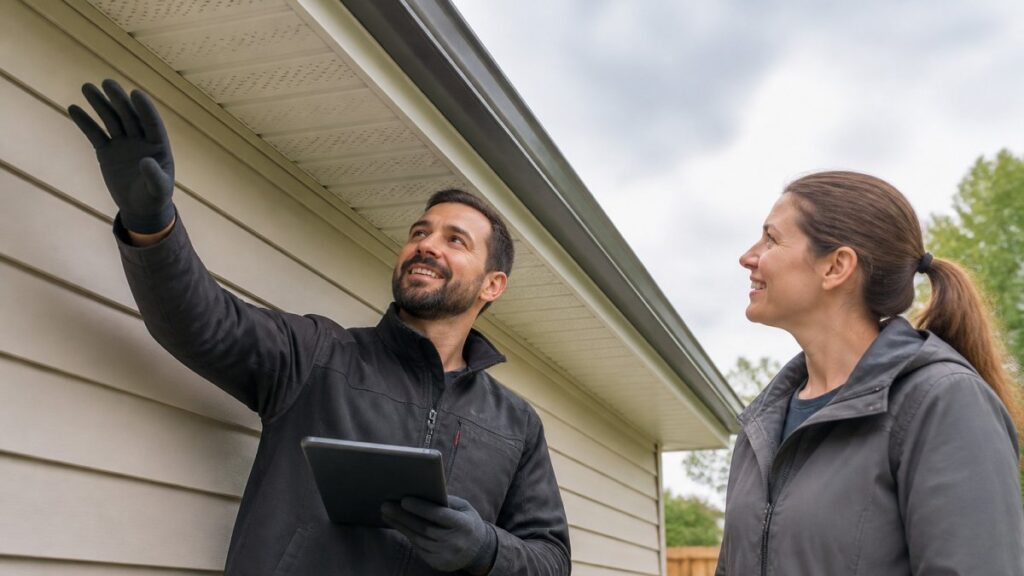
Last Updated: November 2, 2026
Quick Summary
Soffit and fascia repair protects the roof edge by re-securing gutters, closing pest entry points, and restoring attic airflow. Isolated damage is usually a cut-out-and-replace job, while recurring moisture or soft framing calls for a larger scope and a professional assessment.
- Fascia holds gutters in place and covers the ends of the rafters.
- Soffit closes the gap under the overhang so pests cannot get in.
- Replace a run when moisture returns to the same spot more than once.
- Stay off the roof and use a second person to foot any ladder.
- Inspect the roofline at least twice a year, in spring and fall.
Table of Contents
- What Soffit and Fascia Do for Your Roofline
- Soffit and Fascia Problems That Lead to Costly Damage
- Signs of Fascia Damage to Check For
- Soffit Ventilation Benefits for Your Attic
- Soffit and Fascia Repair Benefits: Protection, Efficiency and Longer Roof Life
- Soffit and Fascia Maintenance Between Repairs
- Booking Your Soffit and Fascia Inspection in Southern Alberta
- Frequently Asked Questions
What Soffit and Fascia Do for Your Roofline
Soffit and fascia repair starts with understanding the trim pieces that finish the edge of your roof.
These components do more than decorate the roofline. They shield the home from rain, wind, and pests, and they help air move through the attic.
Here is what they do for your home:
- Fascia holds the gutters in place and covers the ends of the rafters
- Soffit closes the gap under the overhang so pests cannot get in
- Soffit vents let fresh air into the attic
When these pieces fail, the damage often spreads. A small crack in the fascia can let water reach the roof deck and rafters.
Soffit and Fascia Problems That Lead to Costly Damage
Most soffit and fascia problems start small. A loose panel or a bit of peeling paint looks minor. Left alone, it can lead to rot, pest entry, and attic moisture.
Common problems include:
- Water damage from clogged gutters that overflow onto the fascia
- Rot in wood fascia after years of moisture exposure
- Warped or cracked soffit panels that let animals in
Homeowners in Southern Alberta face weather that tests these components hard. Freeze-thaw cycles, hail, and strong winds all wear on the roof edge. A repair now costs far less than repairing the rafters and attic insulation later.
Signs of Fascia Damage to Check For
You can spot many fascia problems from the ground with a pair of binoculars. A closer look from a safe ladder position can catch the rest. Check for these warning signs:
- Peeling or blistered paint on the fascia board
- Soft or spongy wood when you press it gently
- Gaps between the fascia and the roof edge
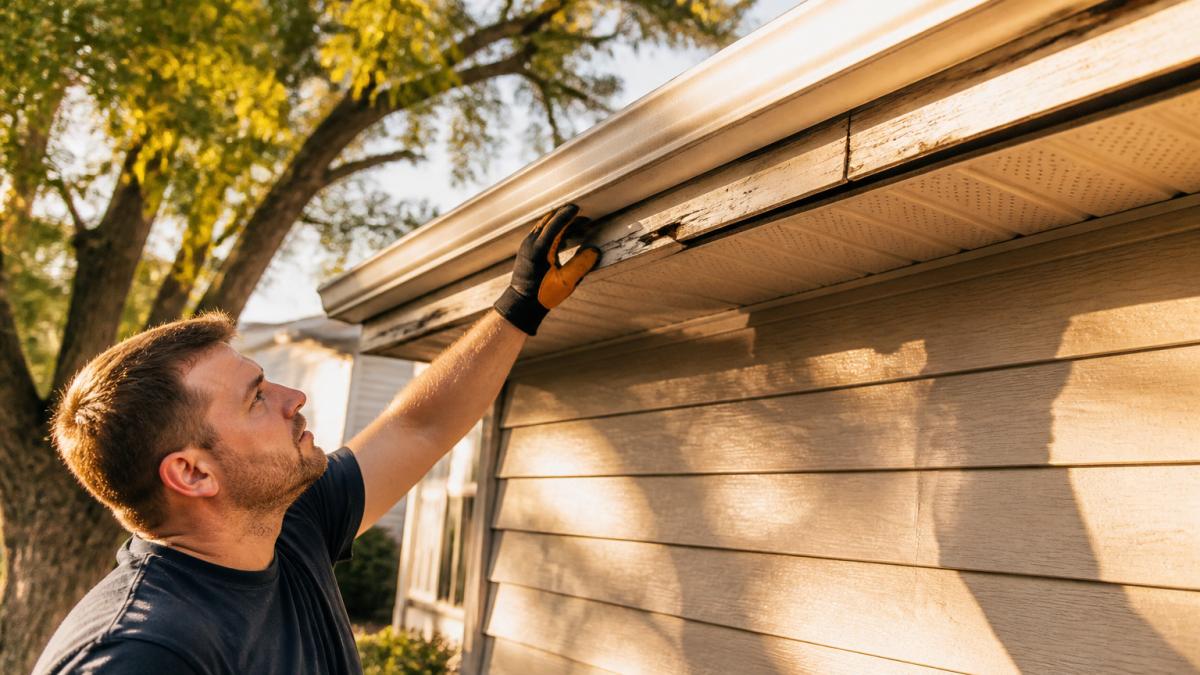
Work from the ground when you can. If you need a ladder, have a second person hold it and never lean out past your hips.
Soffit Ventilation Benefits for Your Attic
Soffit vents do more than look neat. They pull cool air into the attic from below, and that air pushes warm, moist air out through the roof vents above. This cycle is called attic ventilation.
Good airflow helps in several ways:
- Less heat buildup in the attic during warm months
- Less moisture that can cause condensation and mould
- Longer life for shingles and roof framing
If your soffit vents are blocked by insulation or paint, the attic can trap moisture. Clearing the vents is often a simple fix.
Soffit and Fascia Repair Benefits: Protection, Efficiency and Longer Roof Life
Repairing soffit and fascia can help protect the whole roof assembly. The benefit is not just cosmetic trim, each repaired component restores a specific line of defense, and understanding the mechanism helps you judge whether a repair is worth doing now or whether the scope needs to grow.
How each repair translates into a benefit
- Fascia repair restores the gutter anchor. Fascia is the structural board the eaves trough fastens to. When it softens or pulls away, gutters sag, water spills behind them, and the roof deck and rafter tails get wet. Re-securing or replacing the fascia board re-establishes the gutter’s pitch and keeps runoff moving to the downspouts instead of into the wall.
- Soffit repair closes the pest and wind envelope. A cracked or warped soffit panel is an open door for wasps, birds, squirrels, and mice, and it lets wind-driven rain reach the underside of the roof deck. Fitting a new panel and sealing the joint removes both pathways.
- Vent repair restores attic airflow. Blocked or damaged soffit vents starve the attic of intake air, so the exhaust vents above cannot pull moist air out. Clearing or replacing vented panels restores the intake-to-exhaust balance that keeps the deck dry.
Repair versus replacement: a decision framework
Not every damaged section needs the same scope of work. Use these thresholds as a starting point:
- Repair a section when damage is isolated, the wood is firm once the surface is probed, and the surrounding panels and vents are intact. A single rotten fascia length or a cracked soffit panel is usually a cut-out-and-replace job.
- Replace a run when moisture has returned in the same spot more than once, when several adjacent boards are soft, or when the existing material is at the end of its service life. Recurring moisture usually points to a gutter or flashing problem upstream that a patch will not solve.
- Escalate to a professional assessment when damage is concealed behind the soffit, when the roof edge is hard to reach safely, or when you find soft framing behind the trim. Rafter or deck damage changes the scope from trim work to structural repair.
Material matters for repair decisions
Fascia and soffit are not one product, and the material changes both the repair method and the expected service life:
- Wood is repairable and takes paint well, but it needs repainting on a regular cycle and is the most vulnerable to rot when gutters overflow.
- Aluminum resists rot and is lightweight, but it dents under hail and impact, and a dented panel may need replacement rather than repair.
- Vinyl is low-maintenance and cost-effective, but it expands and contracts with temperature and can become brittle in extreme cold, so cracked panels are usually replaced rather than patched.
Matching the repair material to the existing product matters for appearance and for how the joint behaves through freeze-thaw cycles.
The bottom line on repair benefits
Timely repair keeps the roof edge sealed, the attic ventilated, and the gutters working. It also keeps the job small: a single rotten section can often be cut out and replaced, while a failed fascia run usually means a larger scope. Pricing depends on the length of trim, the material, access difficulty, and the extent of concealed damage, so request an on-site estimate for a current quote through the business website.
Repair is the right call when damage is isolated and the surrounding material is sound. When moisture keeps returning to the same spot or the framing behind the trim is soft, the scope needs to grow beyond a patch.
The table below summarises how each repair restores a specific part of the roofline and when a patch is enough versus when the scope needs to grow.
| Component | Repair benefit | When to choose it |
|---|---|---|
| Fascia | Re-secures gutters and stops water reaching rafter tails | Damage is isolated and the wood is firm |
| Soffit panel | Closes the pest and wind-driven rain entry point | A panel is cracked, warped or missing |
| Soffit vents | Restores attic airflow and moisture removal | Vents are blocked or damaged |
| Edge sealing | Protects rafter ends from water wicking into the grain | Trim is intact but the joint is open |
| Repeat moisture | Points to an upstream gutter or flashing problem | Same spot is wet more than once: replace a run |
| Soft framing | Changes the job from trim work to structural repair | Soft wood is found behind the trim: get a professional assessment |
Soffit and Fascia Maintenance Between Repairs
Simple maintenance keeps small problems from becoming big ones, but the value comes from doing the check in a consistent order and knowing when to stop and call a professional. Plan a full inspection at least twice a year, once in spring after the freeze-thaw season and once in fall before snow loads the gutters.
A safe inspection sequence
Work from the ground first and only move to a ladder when the ground-level check flags something.
- Walk the perimeter with binoculars. Look along the fascia line for sagging, staining, peeling paint, or gaps between the fascia and the soffit. Check that the gutter is straight and still fastened.
- Check the gutters and downspouts. Clear debris and confirm water flows to the downspouts. Overflow onto the fascia is the most common cause of rot.
- Look up at the soffit from below. Scan for cracked, warped, or missing panels, and for nests, droppings, or debris at the vents.
- Probe suspect wood gently. From a stable ladder position, press the fascia with a screwdriver handle. Soft or spongy wood means moisture has reached the board.
- Confirm vent airflow. Check that insulation has not been pushed against the soffit vents and that paint or debris is not blocking the openings.
Ladder and roof-edge work is a leading source of serious falls. Keep three points of contact, never lean out past your hips, and have a second person foot the ladder. Stay off the roof itself, the roof edge and gutter line are not designed as walking surfaces. If the inspection requires reaching past the gutter, working at height on an uneven surface, or dealing with wasp nests or electrical fixtures near the eaves, stop and book a professional.
Material-specific maintenance
What keeps the trim healthy depends on what it is made of:
- Wood fascia needs repainting before the old coat fails. Scrape loose paint, prime bare spots, and caulk joints where the fascia meets the soffit. Check the end grain at corners, which absorbs water first.
- Aluminum fascia and soffit should be washed annually and checked for dents and loose fasteners after hail. Touch up scratches to protect the finish.
- Vinyl soffit needs little beyond cleaning, but inspect for cracks at the fastening points and confirm panels are still locked into the channel.
When maintenance is not enough
Maintenance prevents problems; it does not fix concealed damage. If you find soft framing behind the fascia, moisture that returns to the same spot after caulking, or a soffit that is sagging along a run, the next step is a professional assessment rather than another patch.
Request an estimate today to get a clear picture of what your roofline needs. Early attention keeps repairs small, protects your attic, and helps your roof last longer through Alberta’s weather.
Booking Your Soffit and Fascia Inspection in Southern Alberta
If you see any warning signs, a professional inspection is the next step. A trained crew can check the full roofline, find hidden rot, and recommend the right repair.
Request an estimate today to get a clear picture of what your roofline needs. Early attention keeps repairs small, protects your attic, and helps your roof last longer through Alberta’s weather.
Frequently Asked Questions
Is soffit and fascia repair expensive?
Cost depends on how much board needs replacing, the access height, and the materials you choose, so there is no single figure that fits every home. Small repairs such as sealing a split fascia board or replacing a few sections of soffit are usually far cheaper than full replacement. The most reliable way to know is a written quote from a contractor who has inspected the roofline in person. Ask for the scope of work to be itemized so you can compare options fairly.
What are two common problems with soffits and fascia?
The two problems homeowners see most often are rot and water damage, and pest entry. Fascia boards take the brunt of rain running off the roof, so the wood softens and paint peels over time. Soffits can be damaged by wind, or they can sag, crack or pull loose, opening gaps where insects and small animals can enter the attic. Both problems often start small and become costly when they go unnoticed.
How can you tell when soffit or fascia needs repair?
Look for peeling or bubbling paint on the fascia, soft spots when you press the wood, gaps between the soffit and the wall, and sagging or discoloured panels. Stains on the ceiling near the exterior wall or unusual attic odours can also point to a problem at the roofline. Check the condition after storms, since wind and hail often loosen panels. If you find any of these signs, arrange an inspection before water reaches the attic framing.
Is soffit and fascia necessary?
Yes. The fascia closes the ends of the rafters and gives gutters a secure attachment point, while the soffit covers the underside of the eaves and allows air to move into the attic. Without them, rain and wind can reach the roof structure, and the attic loses the airflow it needs to stay dry. Both components are a standard part of a weather-resistant roof edge, which is why repairing them is usually worthwhile.
