
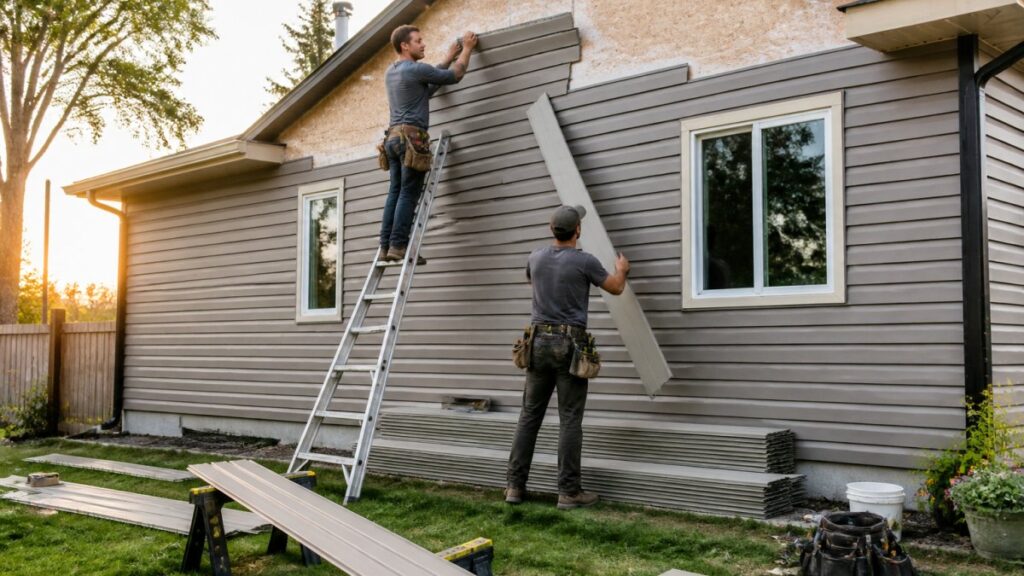
Table of Contents
- How Long Does Siding Replacement Take on Average?
- On-Site Workdays vs. Total Calendar Time
- The Siding Removal and Installation Process, Stage by Stage
- How Long Does It Take to Install Vinyl Siding?
- Siding Installation Time Factors That Change Your Schedule
- Your Siding Project Preparation Checklist
- What Can Delay a Siding Replacement Project?
- Frequently Asked Questions
Last Updated: October 21, 2026
How Long Does Siding Replacement Take on Average?
Most siding replacement projects take two to five on-site workdays for a typical single-family home, though the full calendar span from first call to final walkthrough usually runs two to four weeks.
Here is the core distinction that trips people up: workdays are the days a crew is physically at your house. Calendar days include everything else. The two numbers rarely match.
A common mistake is comparing quotes by the “days to complete” line alone. A three-day estimate that sits behind a two-week material order is not faster than a five-day estimate that starts Monday.
Below, we break down each stage, what changes the clock, and how to keep your project moving.
On-Site Workdays vs. Total Calendar Time
On-site workdays are the days a crew spends removing old siding, preparing walls, and installing new material. Total calendar time is the full span from signed contract to final cleanup, including permits, material delivery, and weather holds.
For a one-story home with straightforward access, expect three to four workdays. A two-story home with complex trim and corners often runs five to seven. The calendar version of that same project might stretch to three weeks once you add scheduling and delivery.
Three things stretch calendar time without adding a single workday:
- Permit review and scheduling inspections
- Siding material lead times, especially for fiber cement
- Rain days and seasonal crew backlogs
Ask your contractor for two dates in writing: the scheduled start date and the estimated completion date. A quote that lists only “days on site” hides the gap where most delays live.
The Siding Removal and Installation Process, Stage by Stage
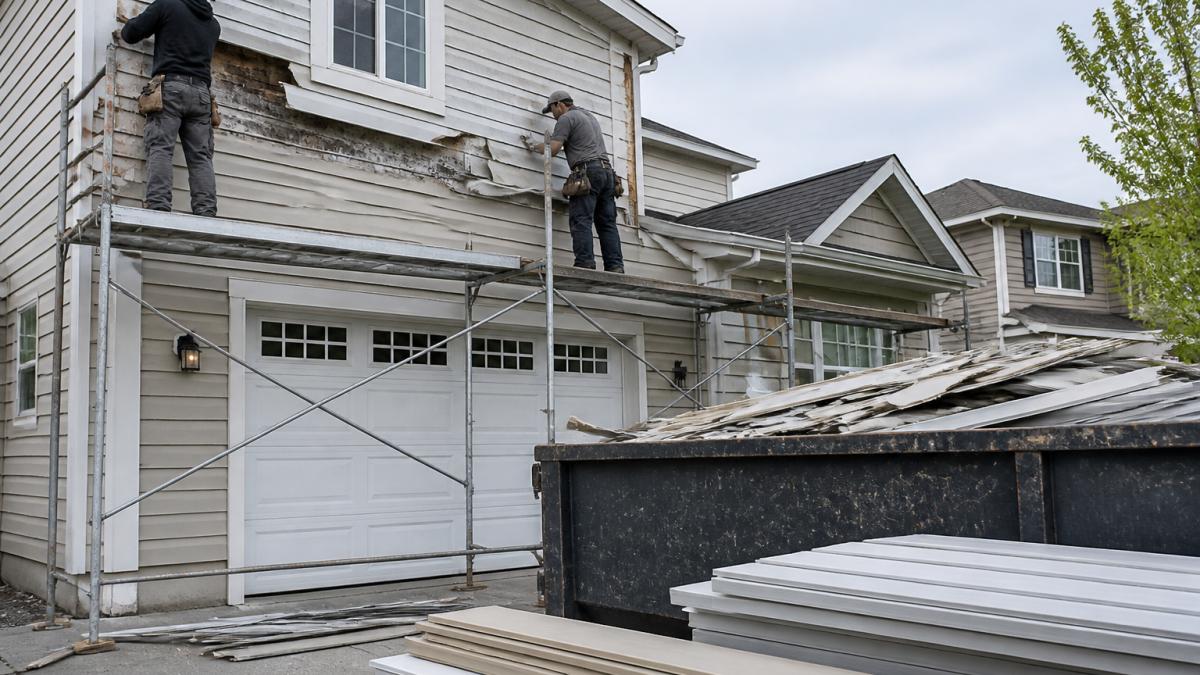
The process follows a fixed order, and each stage has its own rough duration. Skipping or rushing a stage is where hidden problems surface later.
- Initial consultation and site assessment (1 to 2 hours): measure the home, inspect existing siding, and check for moisture damage.
- Quote and project planning (a few days): confirm materials, scope, and schedule.
- Permits and material ordering (one to three weeks): the biggest calendar wildcard.
- Material delivery and staging (1 day): boards, trim, flashing, and fasteners arrive on site.
- Tear-off of existing siding (1 to 2 days): remove old panels and haul away debris.
- Surface preparation and sheathing inspection (1 day): check wall sheathing for rot and moisture damage, then repair.
- Installation (2 to 4 days): new siding, trim, and flashing go up.
- Cleanup and final inspection (half a day): site cleared, work reviewed with you.
A step-by-step process like this keeps expectations honest. When a crew quotes “four days,” they usually mean stages five through eight.
How Long Does It Take to Install Vinyl Siding?
Vinyl siding installation typically takes two to four workdays on an average single-family home, making it the fastest common siding option. The material is light, cuts quickly, and arrives pre-finished, so crews spend less time on prep and finishing.
Compare that to fiber cement, which is heavier, requires more careful cutting, and often needs painting after installation. Fiber cement jobs commonly run three to six workdays for the same house.
What changes vinyl installation time:
- House size and square footage: a larger home means more panels and more time.
- Stories: two-story homes need scaffolding and slower, safer movement.
- Trim and corners: complex trim work adds hours.
- Removal of existing siding: tear-off adds one to two days on its own.
Installing new siding over old siding to save a day is a false economy. Trapped moisture behind the old layer can rot wall sheathing, and you will pay far more to fix that later than you saved upfront.
Siding Installation Time Factors That Change Your Schedule
No two homes run on the same clock. The variables below move your completion date the most, and they interact: a large home with a small crew and a complex trim package compounds every hour. Use the tables as a planning range, not a promise.
House Size, Stories, and Crew Size
Square footage is the clearest driver, but wall area matters more than floor area. A compact two-story with a simple rectangular footprint can have less siding than a sprawling one-story with wings, bump-outs, and a attached garage.
Crew size helps, but with diminishing returns. A two-person crew works steadily and suits smaller jobs. A four-person crew can split tear-off from installation and compress workdays on larger homes.
| Home Profile | Typical Workdays (vinyl) | Typical Workdays (fiber cement) | Main Time Driver |
|---|---|---|---|
| Small one-story, simple shape | 2-3 | 3-4 | Minimal trim, easy access |
| Average one-story with garage | 3-4 | 4-6 | Trim and corners |
| Two-story, standard footprint | 4-6 | 5-7 | Scaffolding, height safety |
| Large two-story, complex trim | 6-8+ | 8-10+ | Gables, dormers, detailing |
These ranges assume a two- to four-person crew, full tear-off of the existing siding, and no significant hidden damage. Add one to two workdays for tear-off if the old material is cemented or nailed through sheathing that needs repair.
Material and Installation Complexity
Material choice changes both workdays and calendar time. Vinyl is light, cuts quickly, and arrives pre-finished, so crews spend less time on prep and finishing. Fiber cement is heavier, requires more careful cutting and fastening, and often needs painting or a factory finish coordinated in advance. Engineered wood and metal sit between the two depending on trim detail and panel size.
Complexity adds hours in ways that are easy to underestimate:
- Trim and corners: wide fascia, crown molding, and custom corner boards add cutting and fitting time.
- Flashing and weather barrier: proper integration around windows, doors, and rooflines takes longer than hanging field panels.
- Access: steep grades, tight side yards, and landscaping that blocks scaffolding slow movement.
- Height: two-story and taller walls require scaffolding setup and teardown, which can consume half a day on its own.
Weather, Season, and Hidden Damage
Weather is the single biggest cause of calendar delays. Rain, high winds, and extreme cold all stop siding work, and the shoulder seasons can wipe out days at a time. Crews schedule around forecasts, but no one controls the sky. In cold conditions, some materials become brittle and sealants cure slowly, so crews may pause rather than risk a poor install.
Hidden damage is the other wildcard. Once old siding comes off, crews sometimes find wood rot, moisture damage, or failed sheathing. Repairs add time, and the scope is impossible to know until the wall is open. A contractor who inspects during the quote and builds a repair allowance into the schedule is protecting you from a mid-project surprise.
Build a small buffer into your calendar for weather and repairs. A project quoted at five workdays is safer planned as a two-week window than a five-day one.
Your Siding Project Preparation Checklist
A little prep on your side keeps the crew moving and protects your schedule. Use this checklist before work starts:
- Clear the work zone: move vehicles, patio furniture, and planters away from the walls
- Trim back shrubs and branches at least a metre from the house
- Confirm the material delivery date and where boards will be staged
- Ask when the permit is approved and when inspections are scheduled
- Note any moisture issues, leaks, or soft spots you have seen and share them early
- Plan for pets and kids to stay clear of scaffolding and debris
- Confirm daily work hours so you know when crews arrive and leave
- Get the start and completion dates in writing
Expect some disruption while the home exterior is open. Crews typically work standard daytime hours, and the noise and foot traffic are part of the job.
What Can Delay a Siding Replacement Project?
Delays usually come from a short list of causes, and most are avoidable with planning. The difference between a smooth project and a stalled one is often whether the contractor front-loads the approval and material steps before the crew arrives.
Permits, Inspections, and Material Delivery
These pre-installation steps are the most common source of calendar time that never shows up as a workday.
- Permit review: many municipalities require a building permit for siding replacement, especially when sheathing or structural work is involved. Review timelines vary widely, and a permit that takes two weeks pushes the start date, not the workdays.
- Inspections: some jurisdictions require inspection of the weather barrier or sheathing before cladding goes on. An inspection that lands a day late can idle a crew that is already on site.
- Material delivery: fiber cement and specialty trim can take weeks to arrive, and a partial delivery can split the job into two mobilizations. Confirming the delivery date and staging area before tear-off starts prevents a crew from standing around waiting on boards.
A contractor who orders material and pulls permits as soon as the contract is signed compresses calendar time without adding a single workday. Ask for the permit application date and the material order date in writing.
Hidden Damage and Repair Contingencies
Rot, moisture damage, and failed sheathing are the wildcards that no quote can fully predict. The mechanism is simple: once the old siding is off, the wall is open, and the true condition of the sheathing is visible. Repairs add days because the crew must stop, document the damage, agree on scope with you, and then complete the repair before cladding can resume.
How a contractor handles this matters more than the delay itself. A good process includes:
- A pre-quote inspection that looks for soft spots, staining, and prior patch jobs.
- A written repair allowance or a clear hourly rate for unforeseen work.
- Photo documentation of the damage before repair so you can see what was found.
- A revised completion estimate once the scope is confirmed.
A contractor who quotes a firm day count without acknowledging hidden damage is either guessing or planning to surprise you.
Weather, Crew Backlogs, and Change Orders
- Weather conditions: rain and wind stop work and push schedules back. In cold seasons, crews may pause for material performance rather than safety.
- Crew backlogs: seasonal demand can push your start date out by weeks, even when the work itself is quick.
- Change orders: switching materials, adding scope, or changing trim mid-project resets the clock and can trigger new material lead times.
A quote that accounts for these upfront is worth more than one with the lowest day count. Ask how each risk is handled before you sign.
Frequently Asked Questions
How long does siding replacement take on an average-sized house?
Most single-family homes land in the three to ten on-site workday range. A one-story home with straightforward vinyl siding and a full crew can finish in three to five days. A two-story home with fiber cement siding, more trim work, and some sheathing repairs typically runs six to ten days. Add one to three weeks of calendar time for the initial consultation, material delivery, and any permit or inspection steps before work starts.
What factors can delay a siding replacement project?
Rain and cold snaps are the most common cause, since most siding materials need dry conditions and moderate temperatures to install correctly. Hidden wood rot or moisture damage behind the old siding adds repair days once the wall is opened. Material backorders, permit turnaround, and limited crew availability also push the start date. A contractor who inspects the sheathing during the site assessment can flag most of these risks before the schedule is set.
Does removing old siding add time to the project?
Yes. Tear-off is a full stage on its own, usually one to two days for an average home, and it happens before any new panel goes up. The crew has to strip the old siding, pull nails, inspect the wall sheathing, and dispose of the debris. If the tear-off reveals rot or failed flashing, repairs add another day or more. Skipping tear-off by layering new siding over old is not recommended and can void material warranties.
Can siding be installed in cold or wet weather?
Wet weather stops work because trapped moisture behind panels leads to rot and premature failure. Cold is a separate issue: vinyl siding becomes brittle below roughly -10°C and needs special handling, while fiber cement and sealants have their own temperature limits set by the manufacturer. In Southern Alberta, late fall and winter often mean scheduling slips. Spring through early fall gives the most reliable window, and a contractor will build weather contingency days into the quote.