
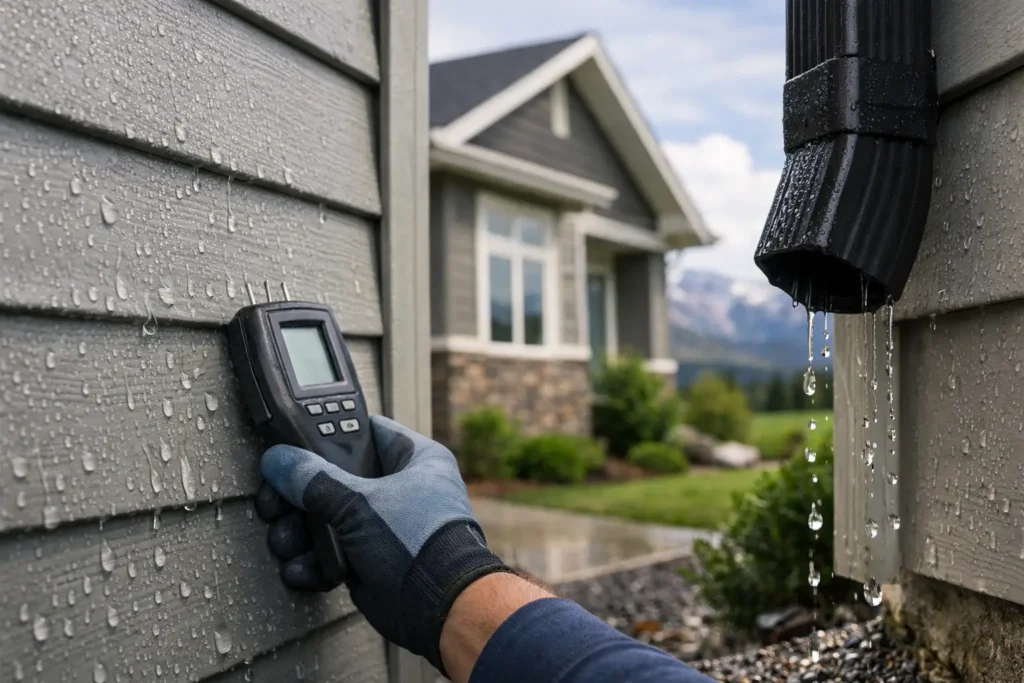
A dark streak below a window, paint that bubbles near a corner, or siding that feels soft when pressed can all point to the same problem: water is getting where it should not. Effective siding moisture prevention protects far more than your home’s appearance. It helps preserve wall framing, insulation, interior finishes, and the long-term value of your property.
Southern Alberta homes deal with a demanding mix of wind, driving rain, snow, sudden temperature changes, and freeze-thaw cycles. Siding can handle those conditions when it is properly installed and maintained as part of a complete exterior system. When one detail fails, such as a clogged gutter or loose piece of flashing, moisture can begin working behind the siding long before there is an obvious leak indoors.
Why moisture behind siding causes expensive damage
Siding is the visible outer layer of your wall, but it is not the only thing keeping water out. A properly built exterior includes layers that direct rain away from the home and allow incidental moisture to dry. Those layers typically include weather-resistant barrier material, flashing around openings, drainage space where appropriate, and carefully sealed transitions.
When water bypasses those details, it may soak sheathing or framing instead of running safely down and out. Repeated wetting can lead to wood rot, mold growth, rusted fasteners, warped trim, peeling paint, and reduced insulation performance. By the time drywall stains or a musty smell appear indoors, the exterior damage may already be more extensive than expected.
The good news is that most moisture issues start at predictable weak points. Regular inspections and timely repairs are usually far more affordable than waiting for widespread siding or structural replacement.
The exterior details that matter most
Gutters and downspouts control the first line of water
Gutters are often treated as a separate maintenance item, but they play a major role in siding moisture prevention. If gutters overflow, water repeatedly runs down the face of the siding and collects near trim, window openings, and the foundation. During cold weather, ice buildup can make the problem worse by forcing meltwater into vulnerable joints.
Keep gutters clear of leaves, shingle granules, and debris, especially after storms and before winter. Downspouts should carry water well away from the house rather than releasing it beside the foundation. If a gutter is pulling away from the fascia or has an incorrect slope, it needs attention before overflow becomes a siding issue.
Flashing protects windows, doors, roofs, and wall transitions
Flashing is the material that directs water away from joints where siding meets another surface. It is especially important above windows and doors, around roof-to-wall connections, near chimneys, and where siding meets decks, porch roofs, or exterior trim.
A gap in caulking may look like the obvious culprit, but relying on caulk alone is not a lasting water-management strategy. Caulk eventually shrinks, cracks, or separates as materials move with temperature changes. Proper flashing creates a path for water to shed outward, even when sealant ages.
Look for bent, loose, corroded, or missing flashing. Water stains beneath window corners, streaks below roof-wall intersections, or repeated peeling paint around trim are reasons to have these areas professionally assessed.
Roof edges and soffit need to work with the siding
A roof’s edge details have a direct impact on the walls below. Damaged drip edge, short overhangs, missing kick-out flashing, or poorly positioned gutters can send concentrated water onto the siding. Kick-out flashing is a small but valuable detail at a roof-to-wall intersection that directs runoff into the gutter instead of behind the siding.
Soffit and fascia also deserve attention. Soffit helps ventilate the attic, while fascia supports the gutter system and finishes the roof edge. Rotting fascia can allow gutters to sag and overflow. Blocked or damaged soffit can contribute to attic moisture, which may create separate condensation concerns within the home’s exterior walls.
Warning signs homeowners should not ignore
Not every siding issue means there is hidden rot, but certain signs warrant a closer look. Walk around your home after a hard rain or during snowmelt. Notice where water collects, splashes, or pours over gutters. Check wall areas beneath windows, roof valleys, and downspouts first.
Watch for these recurring problems:
- Warped, buckled, cracked, loose, or unusually soft siding panels
- Blistering paint, swollen wood trim, or caulk that repeatedly pulls away
- Green or black staining that returns after cleaning
- Rust marks around fasteners or discolored areas below windows and doors
- A musty odor, damp drywall, or staining on interior walls near exterior openings
Vinyl siding deserves a special note. It is designed with seams that allow drainage and movement, so it should not be sealed tightly at every panel joint. Over-caulking can trap water rather than solving the problem. Fiber cement, engineered wood, natural wood, and metal siding each have different installation requirements, which is why repairs should match the material and the wall system behind it.
Practical siding moisture prevention through the seasons
A simple seasonal routine can catch trouble early. In spring, inspect the home after thawing snow and heavy rain. Clear gutters, confirm that extensions are in place, and look for frost-related movement around trim and siding joints. Spring is also a good time to check grading, since soil should slope away from the foundation so water does not pool against the home.
During summer, look for sun-exposed sealants that are cracking or pulling away. Trim shrubs and tree branches back from the siding. Vegetation pressed against the wall holds moisture, reduces airflow, and can hide developing damage. Sprinklers should never spray directly onto the exterior for extended periods.
In fall, remove debris from gutters and roof valleys before freezing weather arrives. Check that downspouts are secure and that water will not discharge onto walkways where it can freeze. If siding repairs, roof repairs, or flashing improvements are needed, addressing them before winter can prevent meltwater from finding an open path behind the exterior.
Winter inspections do not need to be extensive, but they are useful after severe weather. Look for ice dams, gutter ice, wind-damaged siding, or unusual icicles at roof-wall transitions. Do not chip ice aggressively from siding or roofing materials. That can create more damage. A contractor can identify the source and recommend the safest repair.
When a repair is enough and when replacement makes sense
Localized damage does not always mean the entire siding system needs replacement. A loose panel, damaged trim board, failed flashing detail, or gutter issue can often be corrected if the surrounding materials remain sound. The key is finding the source of water before replacing visible pieces.
Replacement becomes more practical when damage is widespread, the siding has reached the end of its service life, or moisture has affected the sheathing and wall components behind it. This is also an opportunity to improve the full exterior system with updated weather barrier details, better flashing, durable trim, properly integrated gutters, and materials suited to local weather conditions.
The lowest upfront repair is not always the best value. Covering a stained section without correcting the drainage or flashing issue may make the wall look better temporarily while moisture continues behind it. A thorough inspection helps separate a cosmetic concern from a problem that could affect the home’s structure.
Professional installation makes the difference
Quality siding materials need quality installation. Fastener placement, clearance from roofing and grade, flashing sequence, ventilation details, and water-resistive barriers all influence how well a wall handles wind-driven rain and snow. These are not details that should be guessed at or hidden by extra caulk.
HighLow Roofing & Exteriors approaches exterior work as connected home protection. Roofing, gutters, soffit, fascia, and siding all need to direct water in the right direction. When those systems are evaluated together, homeowners get clearer answers and repairs that address the cause rather than only the symptom.
If you see persistent stains, loose siding, overflowing gutters, or signs of water around windows, do not wait for an interior leak to confirm there is a problem. A careful exterior inspection now can protect your home through the next storm season and give you confidence that water is staying where it belongs: outside.