
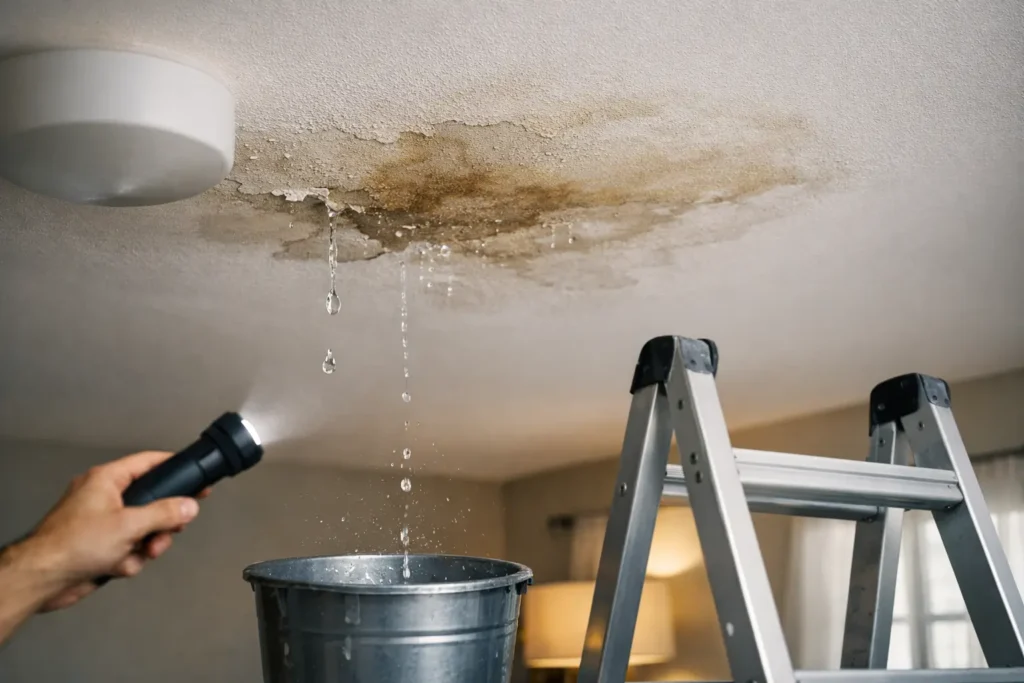
A yellow-brown ring over the living room is more than a paint problem. Water stains on ceiling causes can range from a small roof leak after a storm to a plumbing issue hidden between floors. The stain may have dried, but the moisture source can still be active. Finding that source early helps protect your insulation, framing, drywall, and indoor air quality.
What Water Stains on a Ceiling Usually Mean
A ceiling stain forms when moisture moves through drywall, paint, or textured ceiling material. As the water dries, it leaves behind minerals, dirt, rust, or tannins that create the familiar yellow, brown, or gray discoloration. The size of the stain does not always tell you how serious the problem is. A small spot can come from a long-term slow leak, while a large stain may appear quickly after one major event.
The location offers useful clues. A stain directly below an attic, along an exterior wall, or near a chimney often points toward a roof or flashing issue. A stain below a bathroom, laundry room, or kitchen may be tied to plumbing, an appliance connection, or condensation. If the mark appears in the middle of the ceiling below a second floor, the source may be a pipe, drain, shower, or toilet above it.
Do not assume a stain that feels dry is resolved. Water can travel along roof decking, framing, pipes, or insulation before it reaches the ceiling. The visible spot may be several feet away from the actual entry point.
Common Water Stains on Ceiling Causes
Roof leaks and damaged flashing
Roof leaks are a common concern, especially after wind, heavy rain, snow, or a freeze-thaw cycle. Missing or damaged shingles can allow water beneath the roof covering. Worn pipe boots, deteriorated chimney flashing, open valleys, damaged vents, and improperly sealed penetrations can create the same result.
In cold climates, wind-driven snow can also work into vulnerable roof details and melt after temperatures rise. The resulting moisture may appear indoors days later, making the connection to a weather event less obvious. An older roof is not automatically leaking, but age, granule loss, cracked shingles, and previous repairs deserve a closer inspection.
Ice dams at the roof edge
Ice dams occur when heat escaping into the attic warms the upper roof surface, melting snow. That water runs down to the colder eaves, refreezes, and builds a ridge of ice. As more snow melts, water can back up beneath the shingles and enter the roof assembly.
The evidence often appears as stains near exterior walls, peeling paint, or damp insulation around the perimeter of the attic. Ice dam problems are not solved by simply removing interior stains. They usually call for a closer look at attic insulation, air sealing, ventilation, roof drainage, and the condition of the roof itself. The right fix depends on how those systems work together.
Plumbing leaks above the ceiling
A leaking supply line, drainpipe, toilet seal, shower connection, or bathtub overflow can send water into the ceiling cavity. Unlike a roof leak, plumbing-related staining may worsen when someone showers, flushes, runs the dishwasher, or uses a washing machine.
Fresh water from a supply line can cause substantial damage quickly, even if it looks clear. A drain leak may develop more slowly and can carry odors or leave darker staining. If the ceiling is below a bathroom, check whether the stain changes after water is used upstairs. Avoid opening walls or ceilings unless you can do so safely and know what utilities may be present.
Condensation and poor ventilation
Not every ceiling stain comes from water entering through a hole. Warm, humid indoor air can condense on cold surfaces in attics, around bathroom exhaust ducts, or near poorly insulated areas. Over time, that moisture can dampen insulation, stain ceiling drywall, and support mold growth.
Bathrooms are a frequent trouble spot. A fan that vents into the attic instead of outdoors, a disconnected duct, or a fan that is too small for the room can leave moisture trapped overhead. Kitchen moisture and whole-house humidity can add to the problem. Condensation tends to be more likely during cold weather, but it can happen anytime warm, damp air meets a cold surface.
Gutter and exterior drainage problems
Clogged, damaged, or poorly pitched gutters can overflow against the roof edge and fascia. Water may then find its way into soffit areas, exterior walls, or the roof assembly. Downspouts that discharge too close to the home can also contribute to foundation and siding moisture issues, although they are less likely to cause a ceiling stain directly.
Look for overflowing gutters during rain, loose sections, sagging runs, or water marks on the fascia. Proper gutter performance matters because it moves roof runoff away from the home instead of allowing water to collect where it does not belong.
HVAC equipment and attic appliances
Air-conditioning condensate lines, attic-mounted furnaces, humidifiers, and other mechanical equipment can leak. A blocked condensate drain can create a slow but persistent ceiling stain, often near a utility closet or mechanical area. If the stain appears during warmer months or when cooling equipment is running, an HVAC source is worth investigating.
What to Do When You Notice a Ceiling Stain
Start with safety. If the ceiling is sagging, bulging, actively dripping, or close to a light fixture, stay clear of the area and turn off power to that circuit if it is safe to do so. A water-filled ceiling can collapse without much warning. Place a container beneath an active drip, move furniture and valuables, and contact the appropriate professional promptly.
Next, document what you see. Take photos of the stain, note its size, and record whether it appeared after rain, snowmelt, plumbing use, or a change in weather. This information helps narrow down the source. If you can safely access the attic, look for damp insulation, wet roof decking, darkened wood, frost, active drips, or daylight at roof penetrations. Do not walk on drywall between joists.
Then focus on stopping the water, not hiding the evidence. A roofing professional can assess roof coverings, flashings, vents, gutters, and attic conditions. A licensed plumber is often the right call when the issue is connected to a bathroom, kitchen, laundry area, or water line. In some cases, both trades are needed because the visible location alone cannot confirm the source.
Drying is just as important as repair. Wet insulation may need to be removed or dried, and drywall that has softened, crumbled, or developed mold may need replacement. Painting over a stain before the area is fully dry and repaired usually leads to another visible mark later.
Signs the Problem Needs Immediate Attention
Call for help without delay if you notice active dripping, a spreading stain, a soft or bowed ceiling, a musty smell, visible mold, or staining that returns after repainting. These signs suggest moisture is ongoing or materials have already been affected.
You should also schedule an inspection after a major weather event if staining appears near a chimney, skylight, vent, exterior wall, or roof valley. Small roof defects are generally less disruptive and less costly to address before repeated moisture damages the roof deck, attic insulation, and interior finishes.
How to Prevent Future Ceiling Stains
Prevention begins with regular exterior maintenance. Keep gutters clear, make sure downspouts carry water away from the house, and address loose or damaged shingles before they become a leak path. Roof penetrations and flashing deserve particular attention because they manage water where the roof surface is interrupted.
Inside the home, use bathroom exhaust fans during and after showers, watch for plumbing drips, and maintain mechanical equipment according to its service schedule. In colder regions, proper attic insulation, air sealing, and ventilation can reduce the conditions that lead to condensation and ice dams. More ventilation is not always the answer on its own. The attic system must be evaluated as a whole.
For homeowners in Lethbridge and Southern Alberta, HighLow Roofing & Exteriors can help assess whether a ceiling stain is connected to roof damage, flashing, drainage, or attic moisture conditions. A clear inspection gives you a practical next step instead of guessing at a problem hidden above the ceiling.
A clean ceiling is worth restoring, but the lasting repair starts above it. Once the moisture source is identified and corrected, allow the area to dry completely, repair any compromised materials, and then refinish with confidence.