
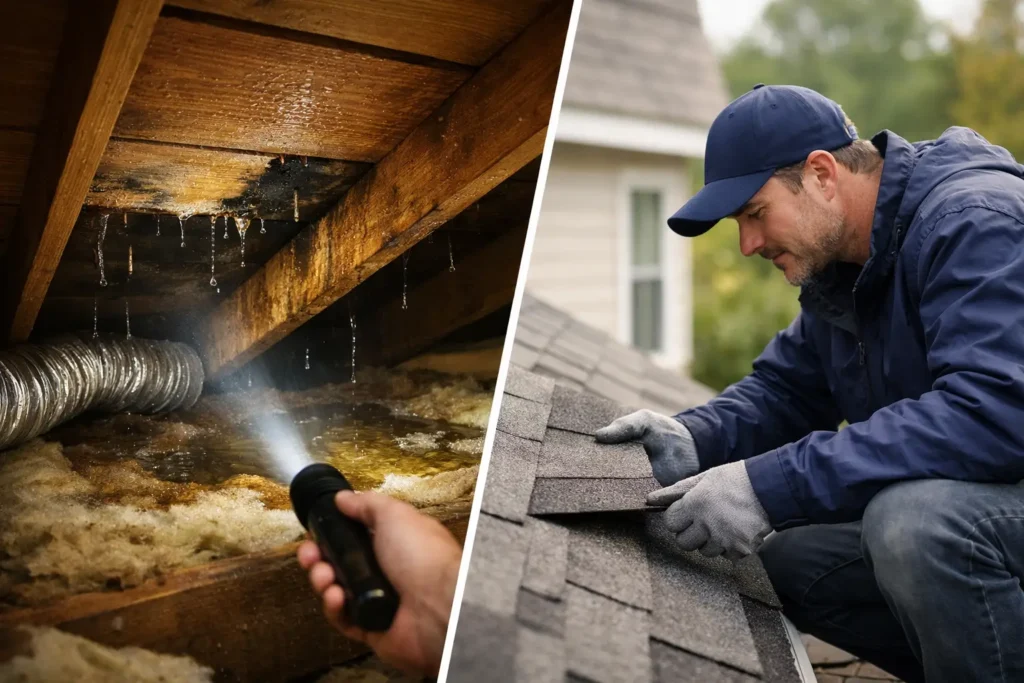
A thin layer of frost on attic nails may not look urgent in January. But when that frost melts during a Chinook or spring warm-up, it can soak insulation, stain ceilings, feed mold growth, and shorten the life of the roof system above it. This attic moisture and roofing guide explains what Southern Alberta homeowners should look for, why the problem happens, and when professional roof repair is the right next step.
Attic moisture is rarely caused by one issue alone. It is usually the result of warm indoor air reaching a cold attic, combined with gaps in insulation, poor air sealing, limited ventilation, or water getting past the roof covering. Finding the real source matters because treating only the visible symptom can leave your home vulnerable to more expensive damage.
Why Attic Moisture Is Common in Southern Alberta
Lethbridge and surrounding communities experience cold winters, strong winds, sudden temperature swings, and occasional heavy snow. Those conditions put pressure on every part of a home’s exterior, especially the transition between the heated living space and the unheated attic.
Warm air naturally rises. When it escapes through openings around ceiling fixtures, bathroom fans, attic hatches, plumbing stacks, or unsealed framing gaps, it carries moisture with it. Once that warm, humid air reaches cold roof sheathing or nails, it condenses or freezes. The result may be frost, damp wood, wet insulation, or water droplets on the underside of the roof deck.
A roof leak can create similar signs, but the pattern is often different. Condensation tends to appear broadly across the attic, particularly around fasteners and roof sheathing during cold weather. A leak is more likely to be concentrated near a roof penetration, valley, chimney, damaged shingle area, or flashing detail. Both need attention, but they call for different repairs.
Attic Moisture and Roofing: The Four Systems That Matter
A dry attic depends on more than shingles. It relies on several connected systems doing their jobs together.
1. Air sealing keeps indoor moisture out of the attic
Air sealing is the first line of defense against condensation. Insulation slows heat transfer, but it does not stop air movement on its own. If warm household air can flow through gaps in the ceiling plane, it will carry moisture into the attic even if the insulation looks thick.
Common trouble spots include attic access hatches, recessed lights, electrical boxes, plumbing penetrations, open wall cavities, and the areas around bath fan ducts. An attic hatch without weatherstripping or insulation can allow a surprising amount of warm air to escape.
2. Insulation protects the ceiling plane
Insulation helps keep the attic colder in winter and the living space more comfortable year-round. It also reduces the chance that heat loss will warm the roof deck unevenly and contribute to ice buildup at the eaves.
That said, more insulation is not always the complete answer. If insulation is wet, compressed, missing in key areas, or installed over major air leaks, its performance drops. Before adding material, it is wise to address the gaps allowing warm air and moisture into the attic.
3. Ventilation manages the moisture that remains
A properly designed attic ventilation system allows air to move through the attic space and helps roof sheathing dry. Intake ventilation near the soffits and exhaust ventilation near the roof peak must work as a balanced system.
Adding a few extra roof vents is not automatically a fix. If soffit intake is blocked by insulation, if ventilation is poorly distributed, or if the attic has significant air leakage from the home below, more exhaust ventilation alone may not solve the problem. In some cases, it can even draw more warm indoor air into the attic through existing gaps.
4. The roofing system keeps weather outside
Shingles, underlayment, flashing, vents, valleys, and roof penetrations form the weather barrier. Wind-driven rain and snow can expose weak points that are not obvious from the ground. Cracked shingles, lifted flashing, aging pipe boots, loose fasteners, or damaged vent caps can allow water into the attic and wall cavities.
A sound roof also needs dependable drainage. Gutters, downspouts, soffit, and fascia all play a role in directing water away from the roof edge and foundation. When gutters are clogged or fascia is deteriorating, water can back up where it does not belong.
Signs You Should Not Ignore
A quick attic check twice a year can catch issues before they become major repairs. Use a flashlight, step only on framing or a properly supported walkway, and avoid disturbing insulation unnecessarily. If the attic is difficult to access or you see active water damage, schedule an inspection instead.
Watch for these warning signs:
- Frost or water droplets on roof nails, sheathing, or rafters
- Dark staining, mold-like spotting, or a persistent musty odor
- Wet, matted, or discolored insulation
- Rust around metal roof components, electrical boxes, or fasteners
- Ceiling stains, peeling paint, or bubbling drywall below the attic
- Daylight showing around roof penetrations or visible gaps in the roof deck
A small amount of frost after an extreme cold snap is still a signal to investigate. The key question is whether the attic can dry safely when temperatures rise. Repeated moisture, dripping, staining, or mold growth means the issue has moved beyond normal seasonal conditions.
Start With the Most Likely Source
Homeowners often assume any attic moisture means the roof is leaking. Sometimes it does. But a clear diagnosis avoids spending money on the wrong repair.
If moisture is widespread and appears mainly in winter, start by looking at indoor humidity, air leaks, insulation coverage, and ventilation. Bathrooms, kitchens, laundry rooms, and high-occupancy households produce significant moisture. Bath fans should vent outdoors through properly installed ducting, not into the attic. Ducts also need to be insulated and securely connected so warm moist air does not condense inside them or escape at a joint.
If staining is isolated, worsens after rain or melting snow, or appears near a chimney, vent, valley, skylight, or roof edge, a roofing inspection should be the priority. The same is true if shingles are curling, missing, damaged by wind, or nearing the end of their service life.
Ice dams deserve attention as well. They form when heat escaping from the home melts snow higher on the roof, then the water refreezes at colder eaves. Ice dams can force water beneath shingles and damage roof decking, insulation, ceilings, and exterior trim. The long-term answer is usually better air sealing and insulation, along with a roof system designed and maintained for local weather exposure.
When Repair Is Enough and When Replacement Makes Sense
A targeted repair can be the right solution when the roof is otherwise in good condition and the issue is limited to a damaged flashing detail, vent boot, shingle section, or roof penetration. Correcting a blocked soffit intake, reconnecting a bath fan duct, or sealing attic bypasses can also make a meaningful difference without replacing the entire roof.
Replacement becomes more practical when moisture has contributed to widespread deck damage, the roof is near the end of its expected lifespan, or recurring leaks show that multiple components are failing. During a full roof replacement, it is easier to address ventilation details, damaged sheathing, flashing, and the roof-edge components that protect your home from wind and water.
Material choice matters, but installation quality matters just as much. Asphalt shingles remain a practical option for many homes, while metal roofing can offer excellent durability and snow-shedding performance. The best fit depends on roof design, budget, ventilation needs, and the condition of the surrounding exterior systems.
Protect the Home Before Moisture Spreads
Attic moisture has a way of staying hidden until the damage reaches a ceiling, wall, or roof deck. Acting early protects more than the roof. It helps preserve insulation performance, indoor air quality, energy efficiency, and the value of your home.
If you have noticed frost, damp insulation, stains, or signs of a leak, a professional assessment can separate condensation concerns from roofing failures and identify the repairs that will actually last. HighLow Roofing & Exteriors helps homeowners in Lethbridge and Southern Alberta evaluate the full exterior picture, so the next repair supports long-term protection rather than simply covering up the evidence.