
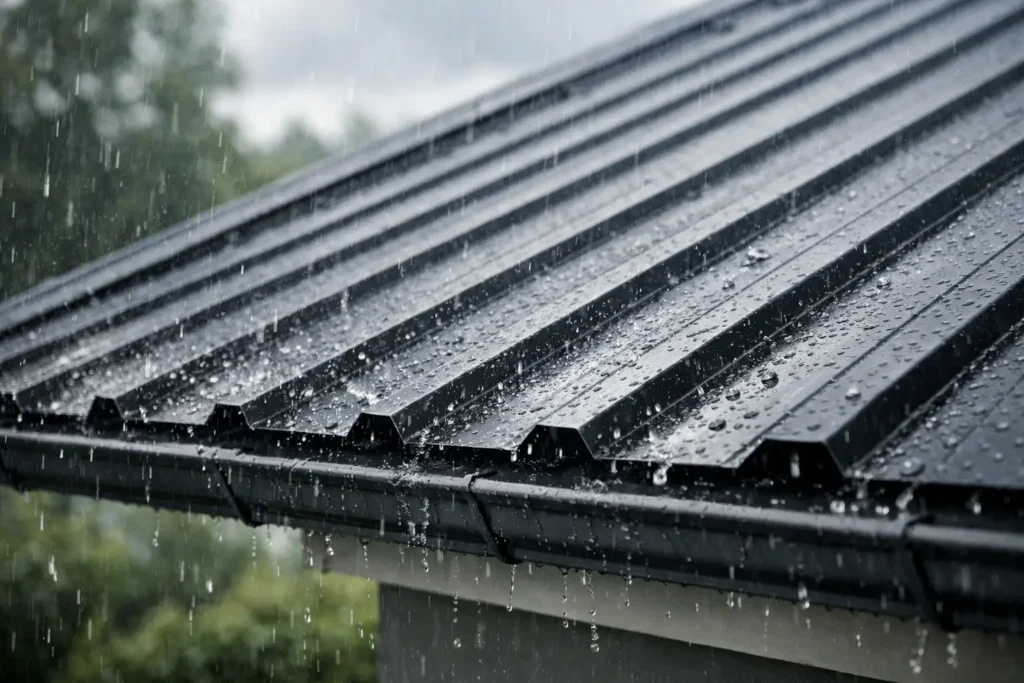
A hard rain at night can make any homeowner pay attention to the roof overhead. If you’re weighing a replacement and wondering, are metal roofs noisy, the short answer is usually no – not when the system is built correctly. Most of the noise stories people remember come from old barns, sheds, or exposed panels installed over open framing, not from modern residential metal roofing on a properly insulated home.
That distinction matters. A metal roof on a house is part of a full roofing assembly, not just a sheet of metal fastened overhead. Underlayment, decking, attic insulation, ventilation, and installation quality all affect what you hear inside. In many homes, the sound difference between a metal roof and an asphalt roof is much smaller than people expect.
Are metal roofs noisy in rain or hail?
Rain is the sound most people picture first. They imagine a sharp drumming overhead, especially during a storm. In reality, a residential metal roof installed over solid roof decking with quality underlayment tends to soften that effect significantly. The decking acts as a sound barrier, and the insulation in the attic or roof assembly helps absorb vibration before it reaches living space.
Hail is a little different because the impact is harder and more sudden. During a strong hailstorm, you may hear more noise on a metal roof than you would with asphalt shingles. That said, hail is loud on almost any roofing material when the storm is intense enough. Windows, siding, and gutters often contribute just as much to the overall sound homeowners notice.
The real question is not whether metal can make noise. It can. The better question is how much noise gets transmitted into the home. In a well-built roofing system, that sound is usually controlled to a level most homeowners find very manageable.
Why old metal roofs got a noisy reputation
Metal roofing earned its reputation honestly, but the context is often missing. People think of farm buildings, workshops, and older cabins where metal panels were installed directly over purlins or minimal framing. In that setup, there is very little material to block or absorb sound. Rain hits the panel, and the panel broadcasts that sound into the open interior.
A house is different. Most residential metal roofs are installed over plywood or OSB decking, then layered with underlayment and supported by insulation below. That creates separation between the weather outside and the rooms inside. It is a much quieter assembly than the exposed-roof structures many people grew up around.
That is why two metal roofs can sound completely different. The material alone does not tell the whole story. The assembly does.
What actually affects roof noise inside the home
If you want a practical answer, there are four factors that matter most: the roof deck, underlayment, insulation, and installation quality. Together, they determine whether sound gets dampened or amplified.
Solid decking is one of the biggest reasons modern metal roofs are quieter than expected. Instead of acting like a hollow drum, the roof has a firm base that reduces vibration. Underlayment adds another buffer between the metal and the deck. Some products are designed with moisture protection as the main priority, but they also help reduce sound transfer.
Insulation may matter even more from the homeowner’s perspective. A well-insulated attic or roof assembly helps regulate temperature and can noticeably reduce the sound of rainfall and hail. If a home already has thin or aging insulation, a roof replacement can be a good time to look at the whole system instead of focusing only on the top layer.
Then there is installation. Fastener placement, panel attachment, trim details, and transitions all play a role. Loose components can rattle. Poorly planned flashing can create vibration. A roof installed with care tends to sound tighter and more solid in bad weather.
The profile of the metal matters too
Not all metal roofing sounds the same. Standing seam systems and metal shingles generally perform differently than exposed-fastener panels. Panel shape, thickness, and how the system locks together can all influence vibration and acoustics.
That does not mean one option is always noisy and another is always quiet. It means details matter. Homeowners comparing quotes should be asking about the full system, not just the panel color or gauge.
How metal compares to asphalt shingles
Some homeowners assume asphalt is automatically quieter because it is thicker and more textured. Sometimes that is true, but the gap is often overstated. Asphalt shingles can soften impact noise, yet they are still installed over decking and underlayment on the same house structure. The difference in interior sound is often modest when both roofs are installed properly.
Where metal often pulls ahead is in durability, lifespan, and weather resistance. For homeowners in areas that see strong wind, snow, temperature swings, and occasional hail, that trade-off can make sense. If the noise difference is small but the performance gains are meaningful, metal becomes much easier to justify.
Still, it depends on the home. A house with vaulted ceilings and limited attic insulation may reveal more sound from any roof type. A home with deep attic space and strong insulation may make the roof material almost irrelevant from a noise standpoint.
When a metal roof might sound louder
There are situations where homeowners are more likely to notice noise. One is when metal is installed over an older structure without adequate insulation or without a solid deck. Another is when the attic has poor air sealing and sound travels more easily through gaps around fixtures, vents, or access points.
Large open interior spaces can also make a difference. If you have a great room with high ceilings, the acoustics of the room itself may amplify storm sounds. Some homeowners actually like that. Others prefer a quieter interior and may want to improve insulation as part of the project.
The local weather pattern matters too. In places where storms bring frequent hail or hard, wind-driven rain, roof noise may be more noticeable simply because the weather is more aggressive. That does not mean metal is the wrong choice. It just means the system should be planned with real climate conditions in mind.
How to make a metal roof quieter
If sound is one of your main concerns, the solution is usually straightforward. Start with the right installer and ask about the whole assembly. A quality underlayment, solid decking, proper attic insulation, and careful installation do more for noise control than marketing claims ever will.
If your home is older, it may be worth evaluating ventilation and insulation before the new roof goes on. Sometimes the best result comes from combining roof replacement with attic improvements. That approach can help with noise, energy efficiency, and year-round comfort at the same time.
This is also where working with a contractor who understands local weather helps. In Southern Alberta, for example, roofing choices need to stand up to wind, snow, and sudden weather shifts. A practical contractor will not just tell you metal is quiet or loud. They will explain how to build the system so it performs well on your specific home.
The bottom line for homeowners
So, are metal roofs noisy? On a modern home with proper decking, underlayment, insulation, and skilled installation, they are usually not nearly as noisy as people expect. During heavy rain or hail, you may hear some impact sound, but that is true of most roofs in a serious storm.
The bigger issue is not the material by itself. It is whether the roof system is designed and installed to fit the house. That is where long-term comfort comes from.
If you are considering metal roofing, ask better questions than just whether it makes noise. Ask how the roof will be assembled, what underlayment will be used, whether your attic insulation is doing its job, and how the system will hold up in your local weather. A good roof should protect your home, hold its value, and give you confidence when the forecast turns rough. Quiet is part of that, but peace of mind is the bigger win.